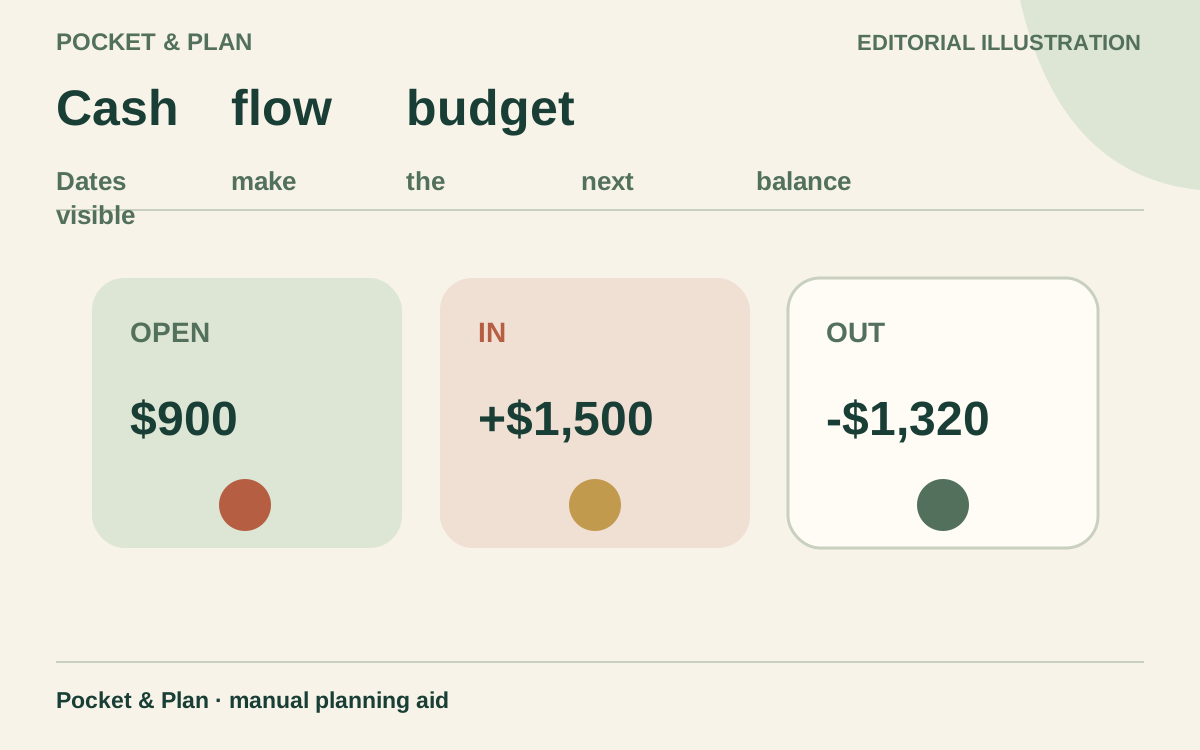
Cash flow budget: plan the week money actually arrives
Build a cash flow budget that follows deposits, bills, and spending by week, then carries each closing balance into the next period.
Read the guideBuild a budget around the way you actually get paid. Work through realistic examples, organize your bills, and give every priority a place in your plan.
22 guides · Page 2 · Research with transparent sources
Build a cash flow budget that follows deposits, bills, and spending by week, then carries each closing balance into the next period.
Read the guide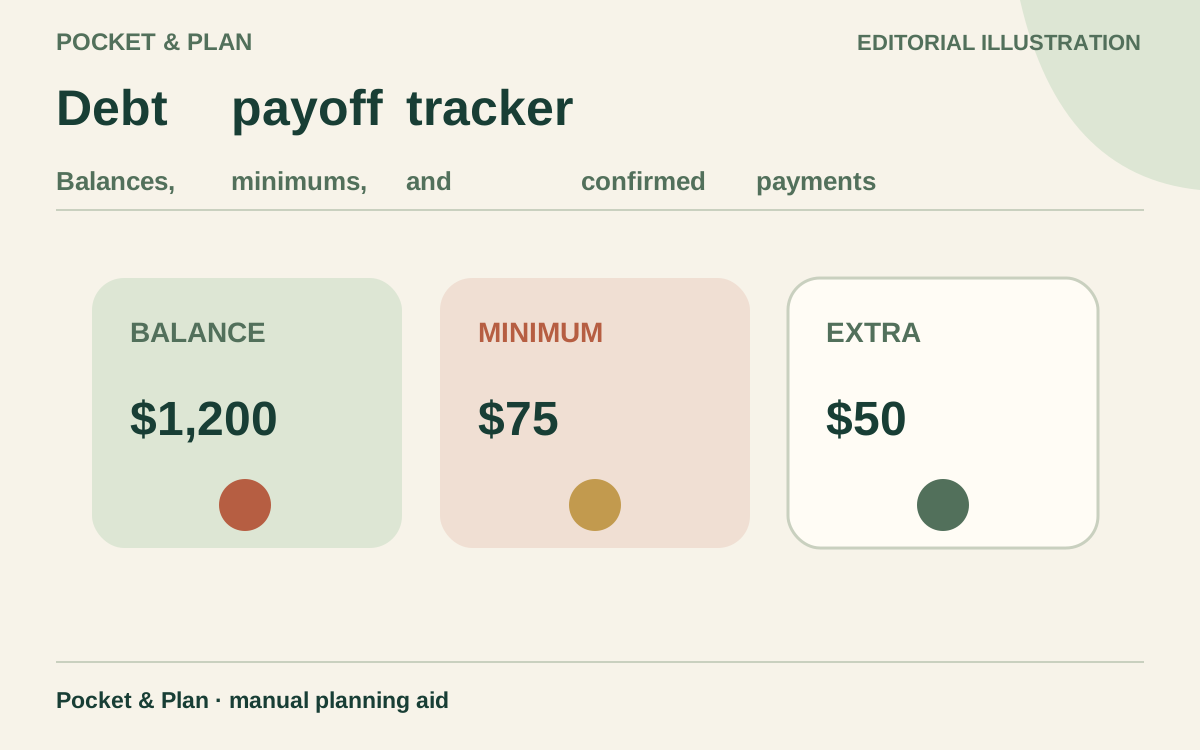
Use a debt payoff tracker to record balances, interest details, minimums, payment dates, and remaining amounts without losing the history.
Read the guide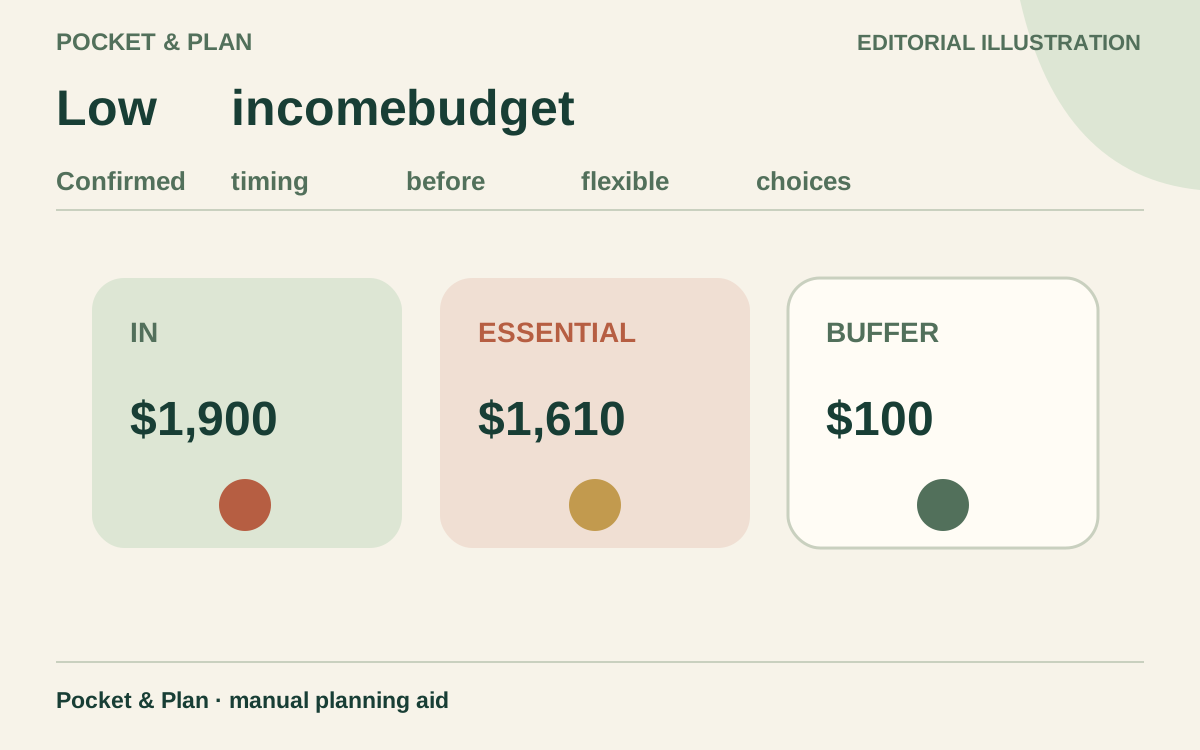
Create a low income budget that handles changing pay, essential bills, and uneven due dates without pretending one fixed percentage fits everyone.
Read the guide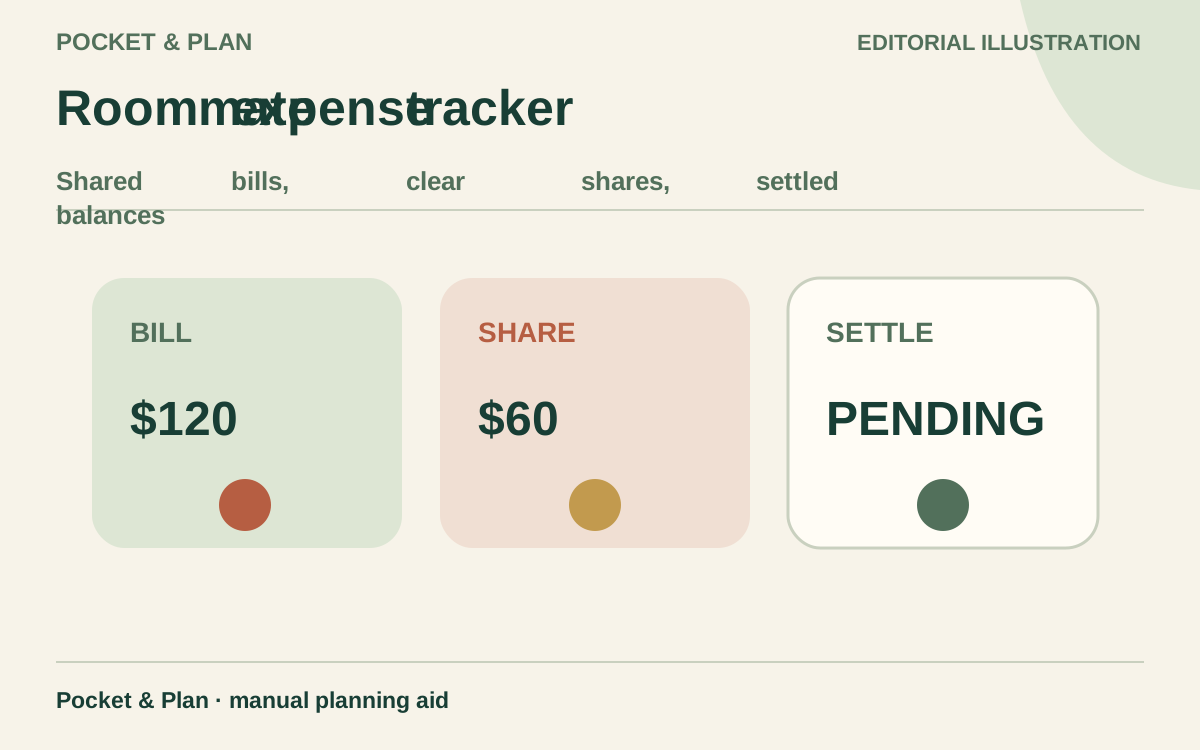
Use a roommate expense tracker to record shared bills, agreed shares, payments, reimbursements, and balances without mixing private spending.
Read the guide
Download a bill payment tracker as Excel, printable PDF, or CSV. Track confirmed payments, remaining amounts, due dates, and separate overpayment credits.
Read the guide
Build a biweekly budget around actual paydays, upcoming bills, weekly spending, and a buffer with a clear worked example.
Read the guide
Build a shared household budget with clear categories, an agreed contribution method, and a short review without assuming you combine every account.
Read the guide
Close last month's budget, check card payments and reserved money, then forecast upcoming bills with a repeatable monthly money reset checklist.
Read the guide
Download a subscription tracker in Excel, PDF, or CSV. Compare recurring costs, check renewal dates, and keep cancellation decisions and evidence together.
Read the guide