The short answer
A cash flow budget puts dates beside money in and money out so a monthly total does not hide a short week.
General educational guide. Sources checked September 11, 2026. Examples are illustrative; amounts should be adjusted to your household. Read our disclosure.
A cash flow budget answers a timing question: how much money is available after the transactions scheduled for this period, and will that amount cover the next period? A monthly budget can show that income is larger than expenses while still hiding a short week between two paydays.
The CFPB cash flow budget tool uses a beginning balance, money received, expenses, and an ending balance that becomes the next period’s beginning balance. This is a recording method, not a promise that a forecast will be correct. Mark expected income and estimates clearly until the account record confirms them.
Download the cash flow budget worksheet to write one period at a time. It is a manual worksheet with no bank connection or automatic reminders.
Start with a balance you can identify
Choose an as-of date and a balance type. For example, use the cleared balance in one checking account at the start of Monday. Do not mix a current bank balance with a card balance or with cash kept elsewhere unless you label each source.
List deposits and other receipts by the date they are expected to be available. A paycheck with a scheduled Friday deposit belongs in Friday’s row, not in Monday’s opening balance. If a deposit is uncertain, write “expected” and keep it out of the confirmed total until it arrives.
Then list the outflows that will reduce the same balance: rent, automatic payments, card payments, transfers to a reserve, and everyday purchases. A card purchase belongs in the spending record when it happens; the later card payment is a cash outflow from the checking account. Keeping those events distinct prevents double counting.
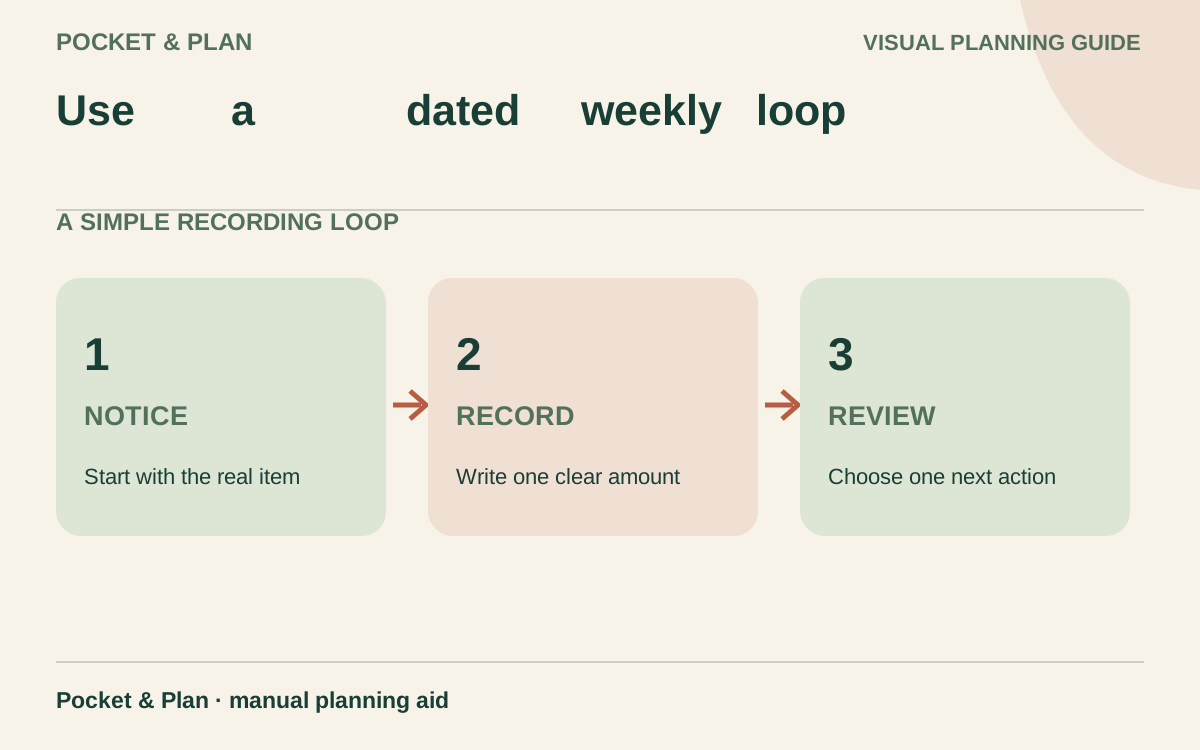
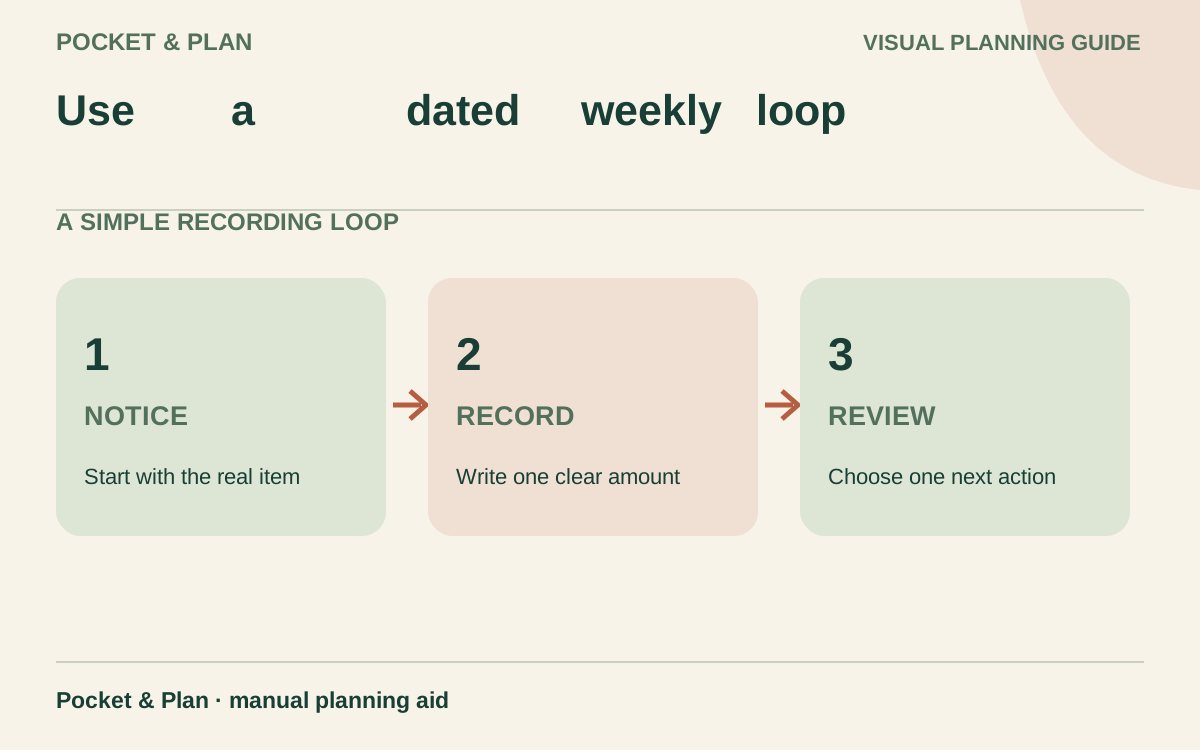
Use a dated weekly loop
For each period, write four values:
- Opening balance from the prior period’s checked closing balance.
- Confirmed or expected money in, separated by date and certainty.
- Outflows by date, with pending amounts labeled rather than silently entered as zero.
- Closing balance: opening balance plus money in minus money out.
Carry the closing balance to the next row only after deciding which transactions are included. The Consumer.gov budgeting process also recommends comparing actual spending with the plan before preparing the next period. A dated review makes that comparison specific: “the utility cleared on Wednesday for $74,” not “utilities were about $70.”
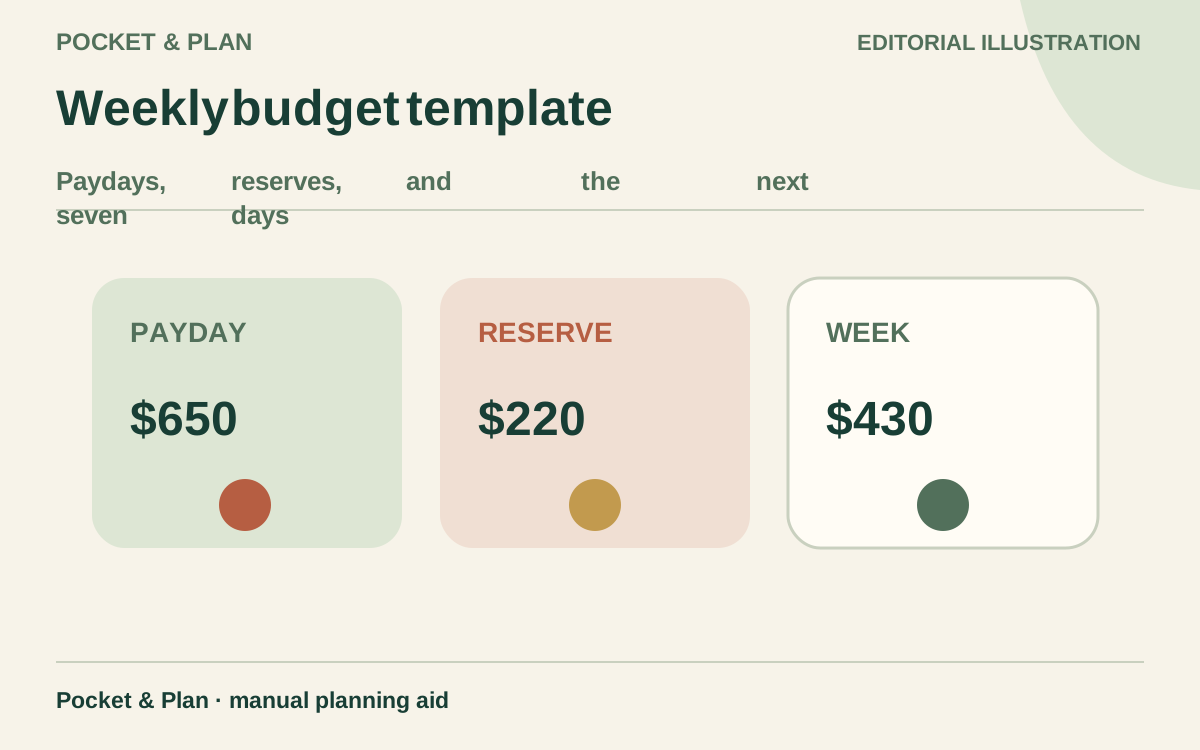
Use the weekly budget template when you want assignments for a payday. Use the cash flow worksheet when the decision is whether available cash reaches a particular bill date. They can share the same numbers while answering different timing questions.
Work through a hypothetical week
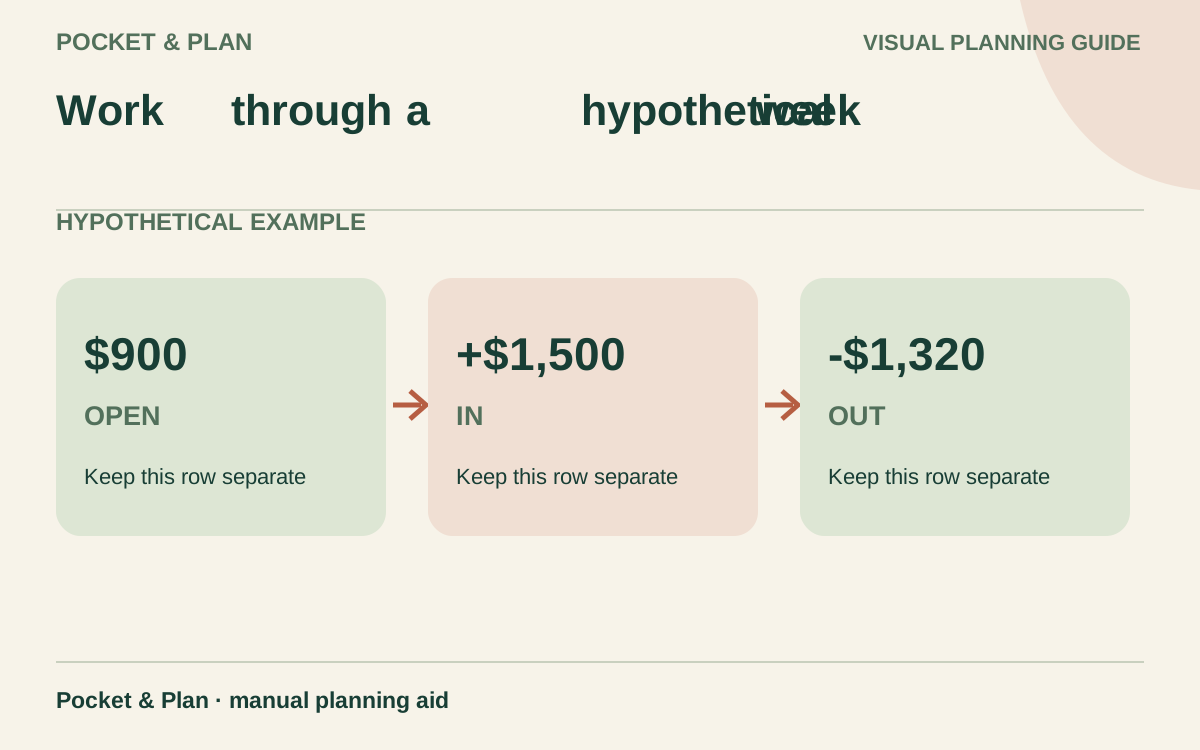
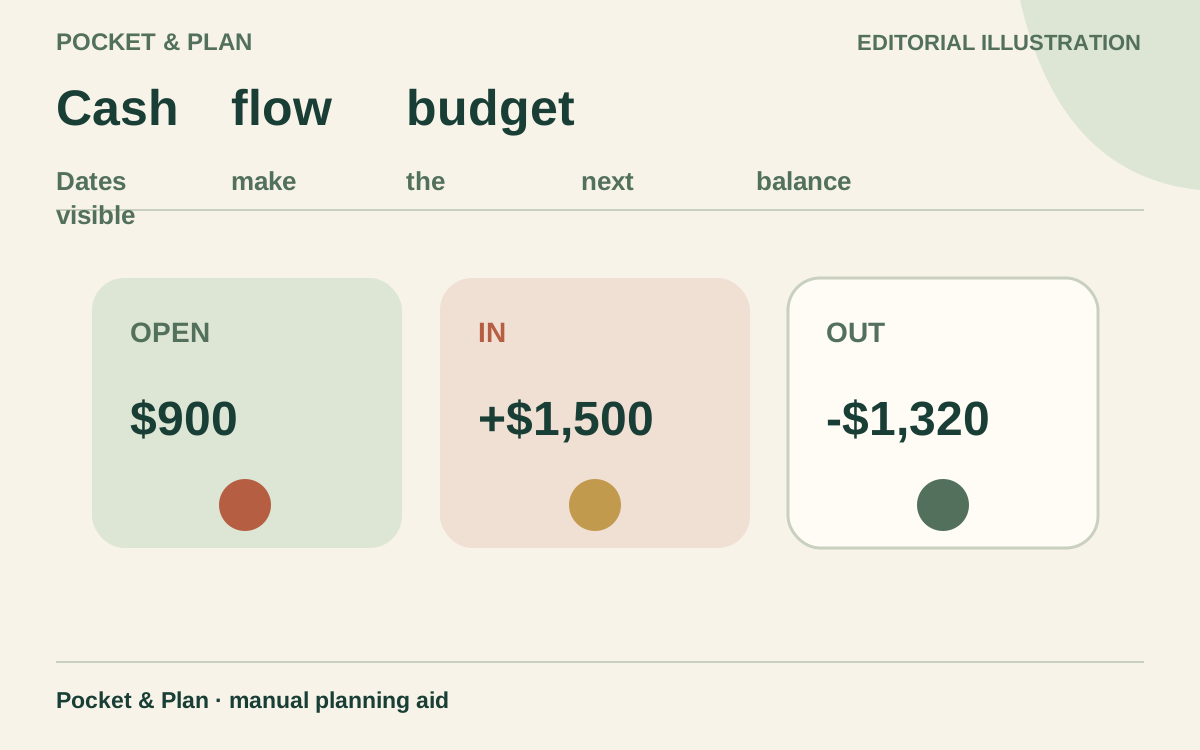
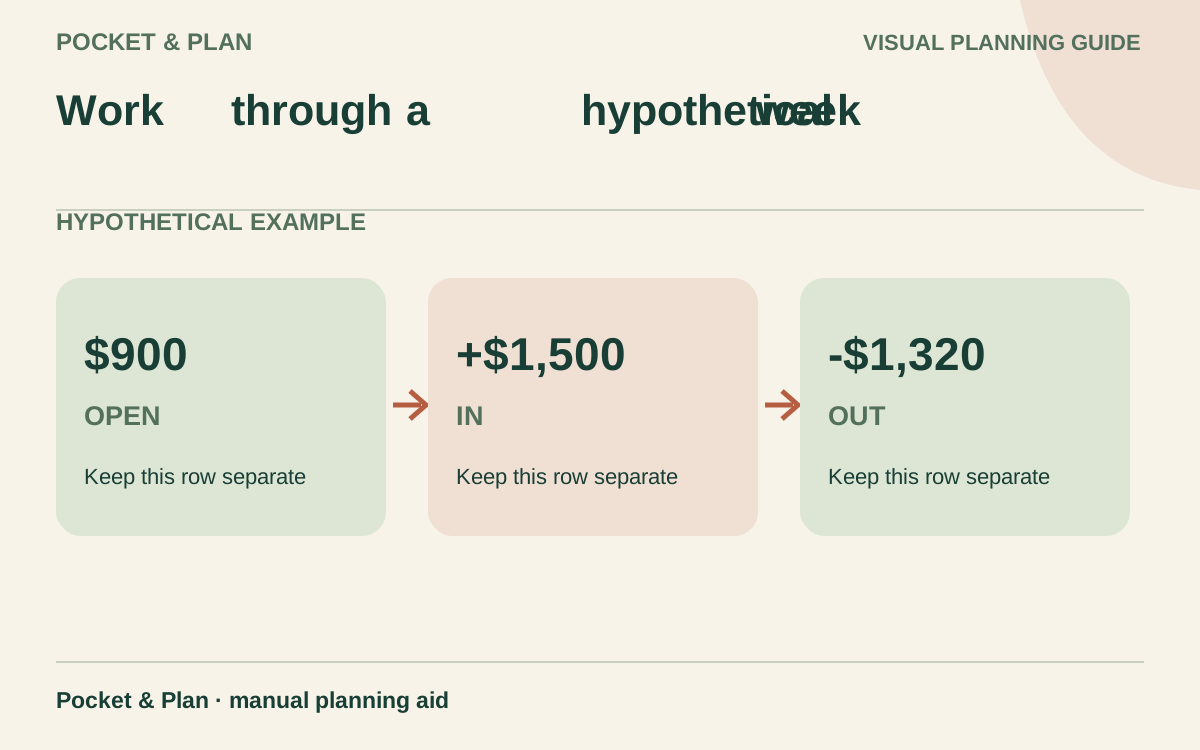
Imagine a fictional checking account with a $900 Monday opening balance. A $1,500 paycheck arrives Wednesday. The period’s confirmed or planned outflows are rent of $850 on Thursday, utilities of $120 on Friday, and everyday purchases of $350 across the week.
| Cash flow line | Amount |
|---|---|
| Opening balance | $900 |
| Money in | +$1,500 |
| Outflows | -$1,320 |
| Closing balance | $1,080 |
The arithmetic is $900 + $1,500 - $1,320 = $1,080. If rent is due before Wednesday’s deposit, the monthly total does not solve the timing gap; the dated rows show that the account would need another source or a different arrangement. That is the useful finding, even if the monthly total remains positive.
The amounts above are invented to demonstrate the ledger. They are not a recommended balance, rent amount, or spending limit.
Keep forecasts honest at review time
At the end of the period, compare each line with the account record. Replace an estimate with the confirmed amount, move an unreceived deposit forward, and explain a transaction you did not recognize. Do not erase the original forecast; a short note such as “deposit moved to Tuesday” explains why the next forecast changed.
Keep reserves visible. Money set aside for a later bill can remain in the closing balance while still being unavailable for optional spending. Add a “reserved for” note or link the row to your bill payment tracker.
If the closing balance is lower than the reserve or the next required payment, write the gap and its decision date. A cash flow budget reveals when a change is needed; it does not choose a lender, payment arrangement, or financial product for you.
Sources & verification
These primary reference sources support the guide. Worked examples are our own illustrations, not national averages or reported personal results.
- CFPB — Creating a cash flow budget ↗Checked September 11, 2026
- Consumer.gov — Making a budget ↗Checked September 11, 2026
Published · Last substantive update .
Found a factual error or a calculation that needs checking? Suggest a correction by email with this guide's link. The link opens a draft in your email app; you send it yourself. Contact details · Corrections policy