The short answer
A practical low income budget begins with money you can confirm, protects essentials, and makes shortfalls visible before a due date.
General educational guide. Sources checked September 11, 2026. Examples are illustrative; amounts should be adjusted to your household. Read our disclosure.
A low income budget is a timing and priority plan for money that may be limited, variable, or both. It should not assume that every household can use the same percentage split. Begin with income you can identify, essential costs and due dates, then decide what remains for flexible spending and a buffer.
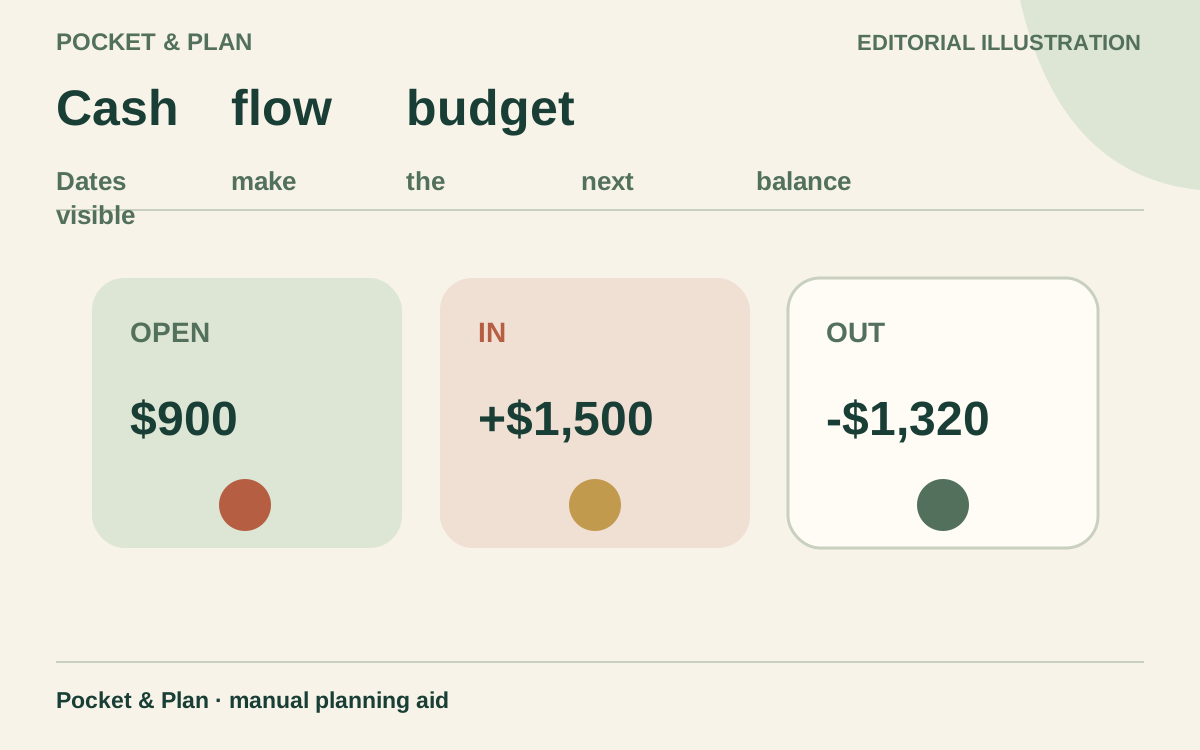
Consumer.gov’s budgeting guide recommends listing expenses, estimating income, subtracting expenses from income, and using the result to prepare the next month. When money changes from week to week, the CFPB cash flow tool adds a dated beginning and ending balance so a monthly total does not hide a short period.
Use the low income budget worksheet to write a plan by hand. It does not decide eligibility for benefits, replace an application, or provide individualized financial advice.
Define income and timing before categories
Write the amount and date for each confirmed paycheck, benefit, support payment, or other receipt. Keep uncertain money in a separate “expected” line until it is available. If income arrives on different days, do not average it into a monthly number before checking the dates of rent, utilities, transportation, and food.
Some households may use public programs or local assistance. Eligibility, payment timing, and rules vary by location and change over time, so check the administering agency directly. Record only the amount and date you can confirm for this plan.
Separate gross income from take-home income. A budget that pays bills from the amount deposited should use the deposit amount, while a benefits or tax record may show a different figure. Label the source so the same money is not entered twice.
Build an essentials-first sequence
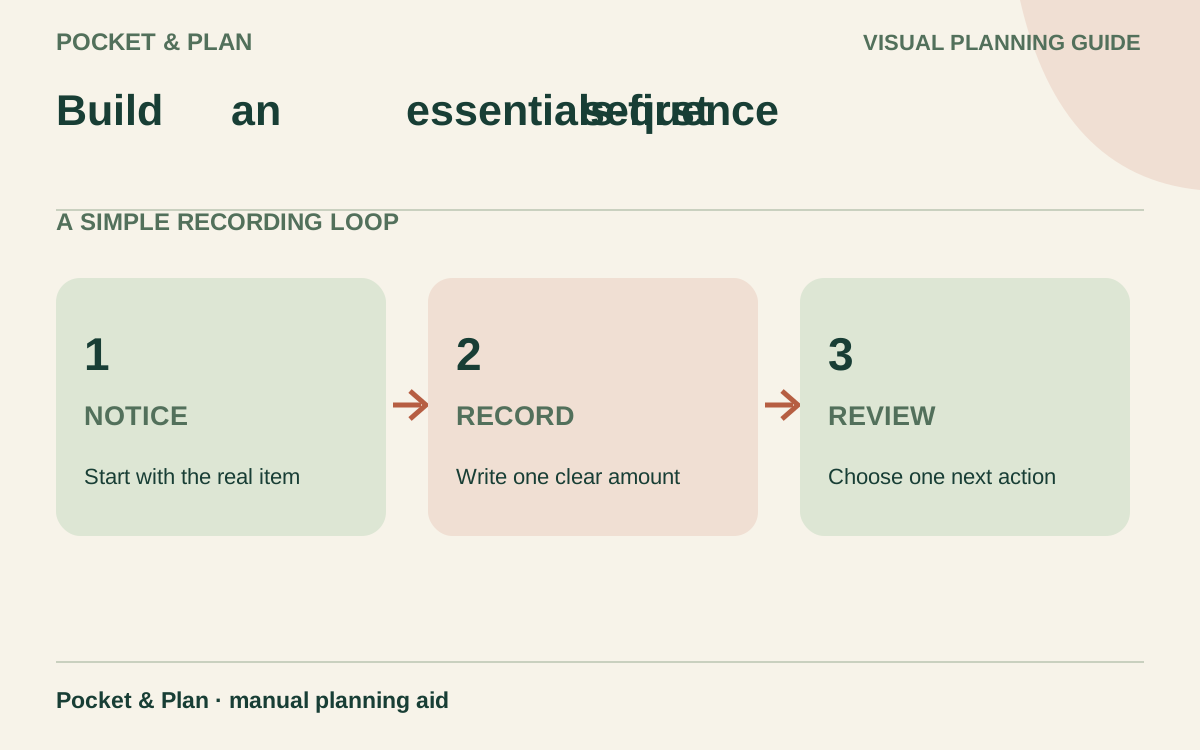
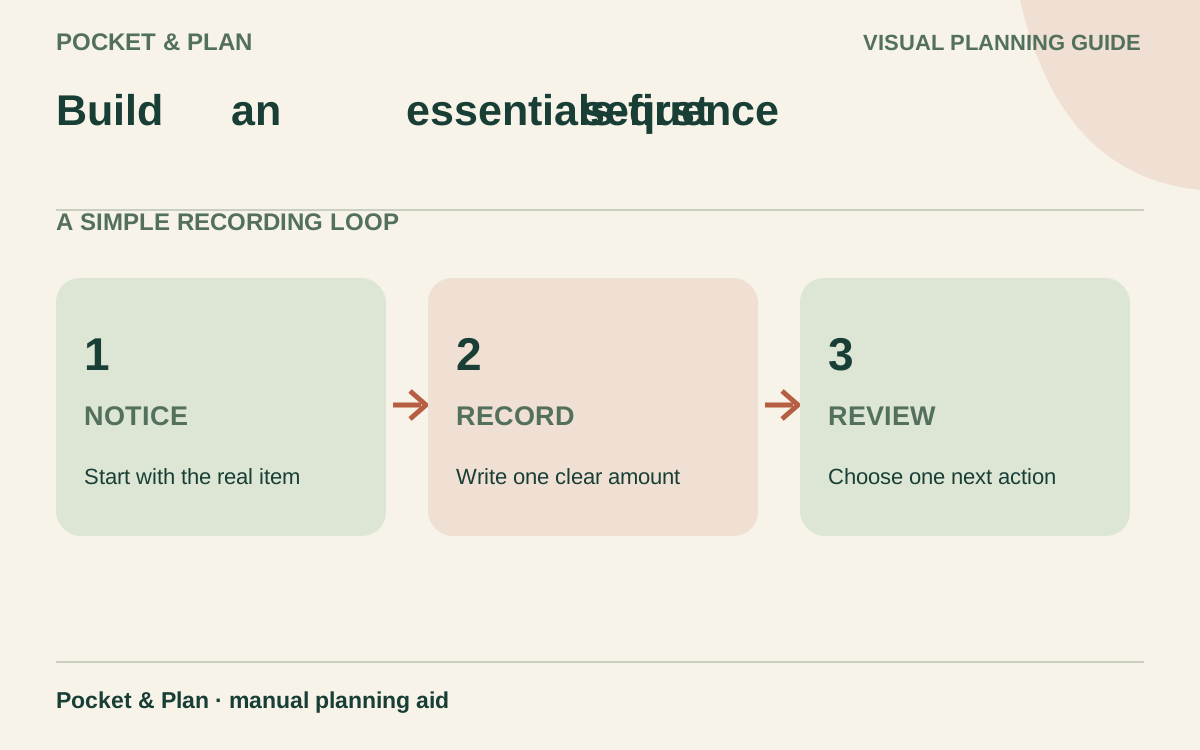
List commitments by due date rather than by how important a category sounds. Housing, required utilities, food, transportation to work or care, insurance, and minimum required payments may need early rows; the exact list depends on the household. Add the amount still due and the account or person responsible.
Next, list flexible categories with a realistic floor. A flexible category can still contain a necessary item, so write the decision rule beside it: “transport to work,” “school lunch,” or “optional dining.” A label such as “miscellaneous” is less useful when money is tight because it hides which decision should change.
If the first pass is negative, write the shortfall as a number and date. Moving a bill to another category does not remove it. Contact the relevant provider or local support service before a due date if you need to discuss a specific arrangement; keep any confirmed agreement in writing.
Test a hypothetical month
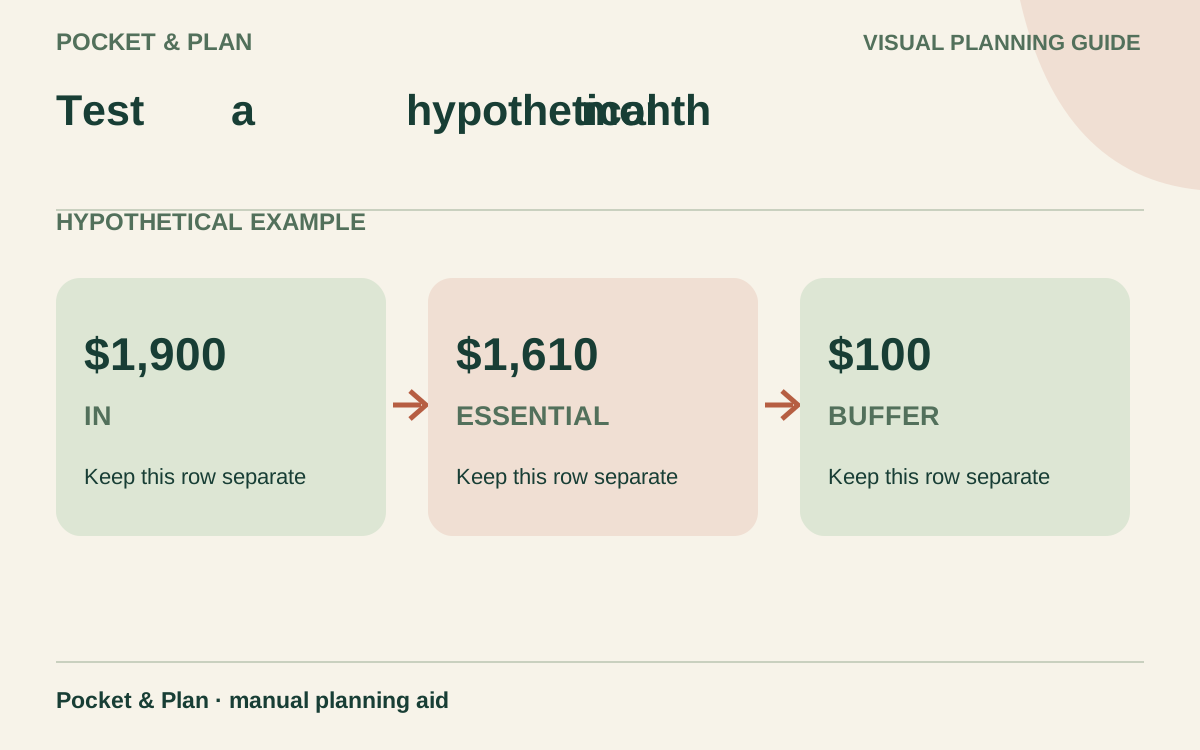
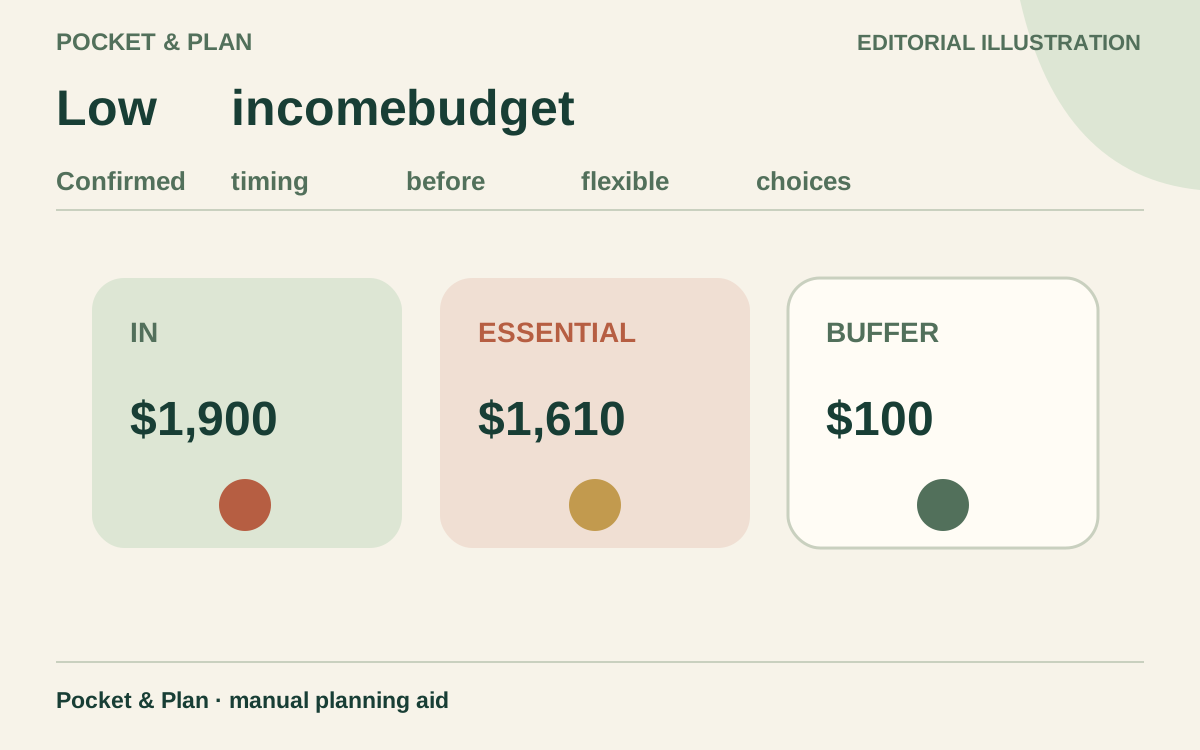
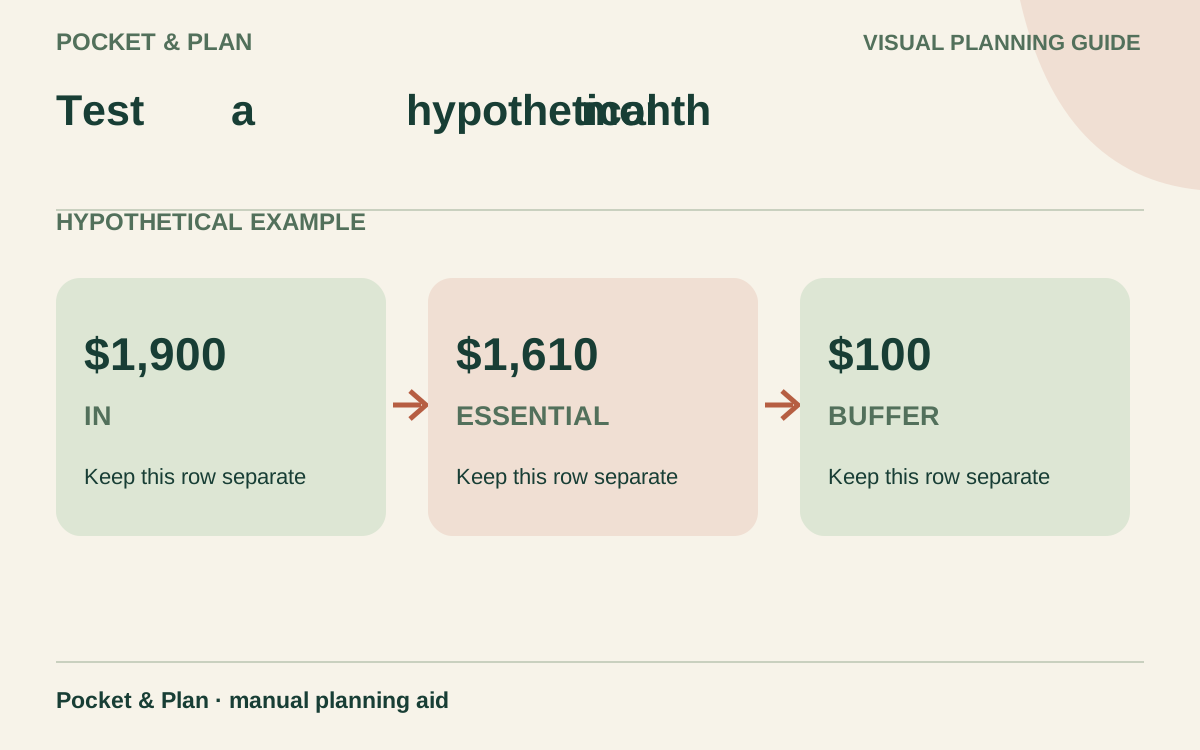
Imagine a fictional household with $1,900 of confirmed take-home income. Its dated essential plan totals $1,610: housing $900, utilities $170, groceries $300, transportation $140, and required payments $100.
| Planning line | Amount |
|---|---|
| Confirmed income | $1,900 |
| Essentials in this plan | -$1,610 |
| Flexible categories and buffer available | $290 |
One possible next step is to assign $190 to flexible needs and $100 to a buffer for an irregular bill. That is a bookkeeping example, not a recommended split. If an essential estimate rises to $1,760, only $140 remains and the plan should show which flexible row changes or which shortfall needs attention.
Review every time income or a date changes
Use a short check after each deposit and before the next major due date. Replace estimates with actual amounts, move expected income that did not arrive, and carry the unspent or overspent amount forward. Keep a small buffer visible even when it cannot cover every possible surprise; its purpose is to show what is already reserved.
The cash flow budget is useful when two dates are close together. The monthly budget categories guide helps you name recurring rows without turning the worksheet into a list of vague labels.
Avoid judging the plan by whether every category matches a target percentage. A useful low income budget makes the next required decision clear, shows the available amount honestly, and can be updated when the real deposit or bill arrives.
Sources & verification
These primary reference sources support the guide. Worked examples are our own illustrations, not national averages or reported personal results.
- Consumer.gov — Making a budget ↗Checked September 11, 2026
- CFPB — Creating a cash flow budget ↗Checked September 11, 2026
Published · Last substantive update .
Found a factual error or a calculation that needs checking? Suggest a correction by email with this guide's link. The link opens a draft in your email app; you send it yourself. Contact details · Corrections policy