The short answer
Put shared costs, individual responsibilities, and your next household goal on one page before deciding how to divide contributions.
General educational guide. Sources checked September 10, 2026. Examples are illustrative; amounts should be adjusted to your household. Read our disclosure.
A couples budget puts shared costs, contribution decisions, and upcoming actions in one place. Begin by agreeing what you are planning together. Then list the actual amounts and choose a way to fund them that both people understand.
You can use a shared worksheet while keeping separate accounts. This guide describes a planning conversation and uses hypothetical arithmetic; it does not decide account ownership, legal responsibility, or what is fair in your relationship.
Use the printable couples budget PDF for your shared-cost list, contribution agreement, and next actions. Record only the personal information both people have agreed to include. This is a manual worksheet for handwriting, with no automatic calculations. Print on US Letter paper in the orientation shown on the file.
Agree on the scope first
List the expenses you both consider shared: perhaps housing, utilities, groceries, and a household goal. Separately identify costs each person will handle individually. If an expense sits between the two lists, discuss it before filling in the numbers.
Be precise about categories. Does “groceries” include lunches at work? Does “household spending” include personal clothing? There is no universal answer, but an unstated answer makes the same worksheet mean different things to each person.
The CFPB’s Your Money, Your Goals toolkit includes tools for money conversations, goals, income, and bills. You can use those resources alongside the shared-cost worksheet below.
If you want software for the shared plan, compare the documented sharing rules of budgeting apps for couples. Decide what each person should see before choosing an app or connecting accounts.
Build a one-page shared-cost plan
Use these columns: category, planned amount, actual amount, due date, and person responsible for the next action. Responsibility means checking or completing a task, not automatically paying the entire expense.
Add a row for money reserved toward a shared future cost. Give it a purpose and target date so both people can see why it is part of the plan. Keep personal expenses visible at the level each person has agreed to share; the worksheet does not require exchanging passwords.
Compare contribution methods with real arithmetic
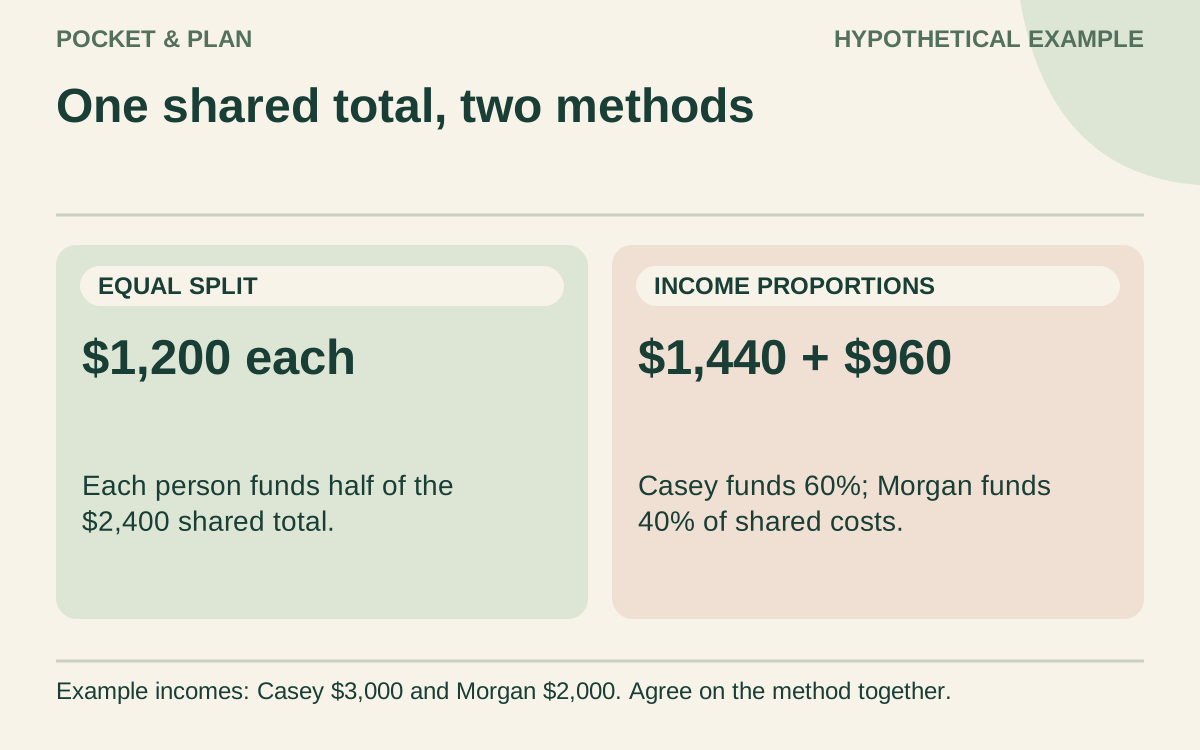
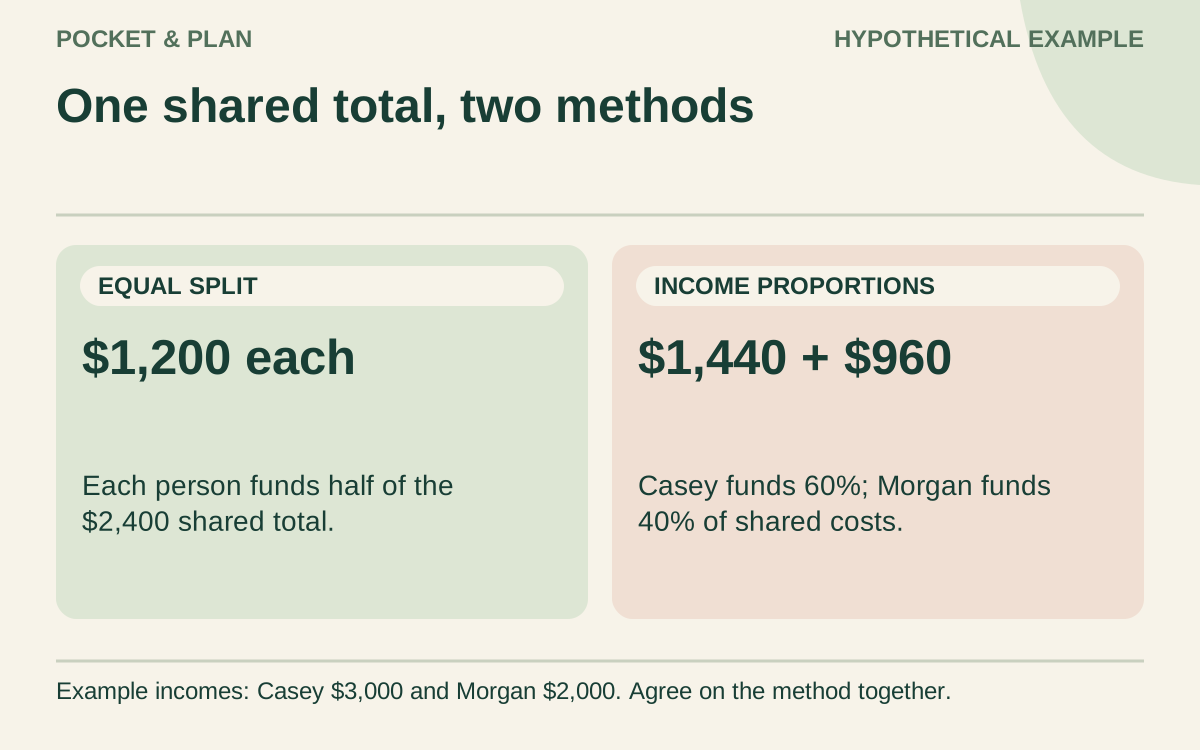
Consider this entirely hypothetical household. Casey takes home $3,000 per month and Morgan takes home $2,000. Their combined take-home income is $5,000, and they have agreed on $2,400 of shared monthly costs.
An equal split would assign $1,200 to each person. A split proportional to those incomes would assign 60% to Casey and 40% to Morgan:
| Person | Take-home income | Income share | Shared contribution |
|---|---|---|---|
| Casey | $3,000 | 60% | $1,440 |
| Morgan | $2,000 | 40% | $960 |
| Total | $5,000 | 100% | $2,400 |
Casey’s calculation is $3,000 ÷ $5,000 × $2,400 = $1,440. Morgan’s is $2,000 ÷ $5,000 × $2,400 = $960.
Neither method is automatically right. Income alone does not describe caregiving, individual obligations, variable work, or other circumstances. You might agree on a different arrangement. The point of the calculation is to make the chosen method clear enough to check and revisit.
Add timing to the monthly agreement
Next, write when each contribution will be available and when the shared bills are due. A total that works over a month can still leave a gap early in the month.
If Casey and Morgan’s rent is due before one contribution arrives, they need to decide in advance how that timing will be covered. They could discuss reserving part of an earlier paycheck if funds allow. An agreement on monthly percentages does not by itself solve the calendar.
Use the bill payment tracker for dates and confirmations, or the biweekly worksheet when paydays move through the month.
Keep the meeting short and specific
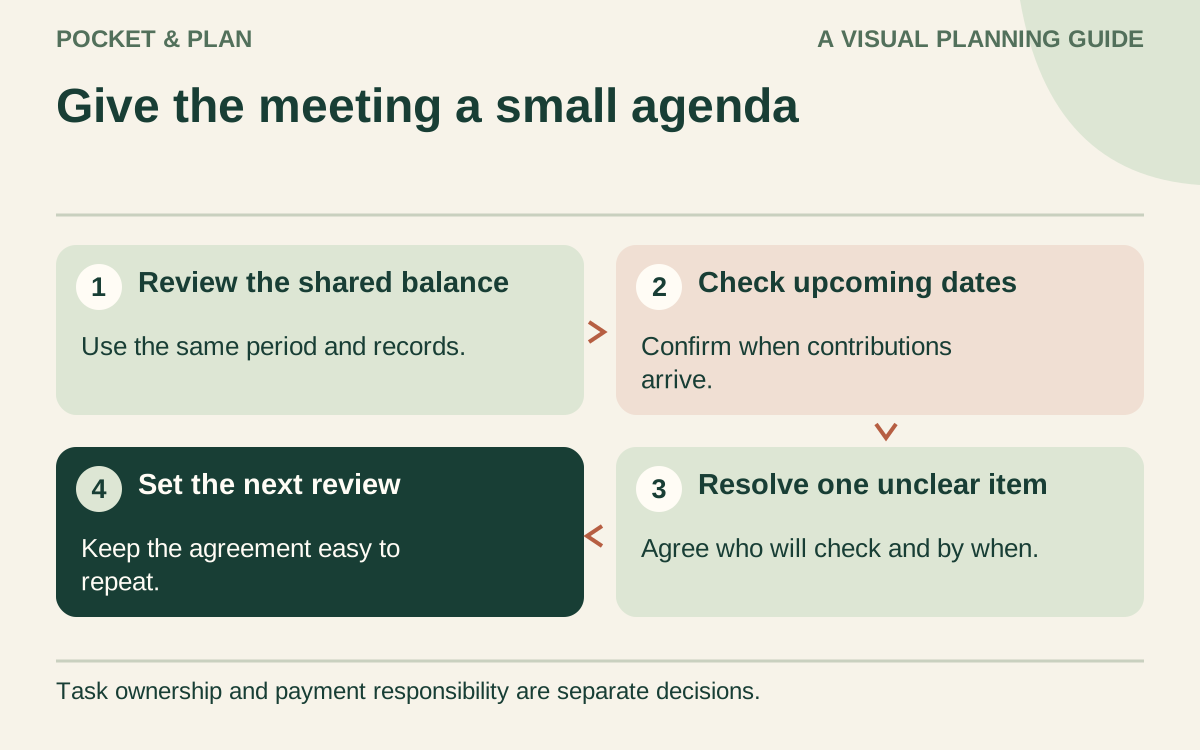
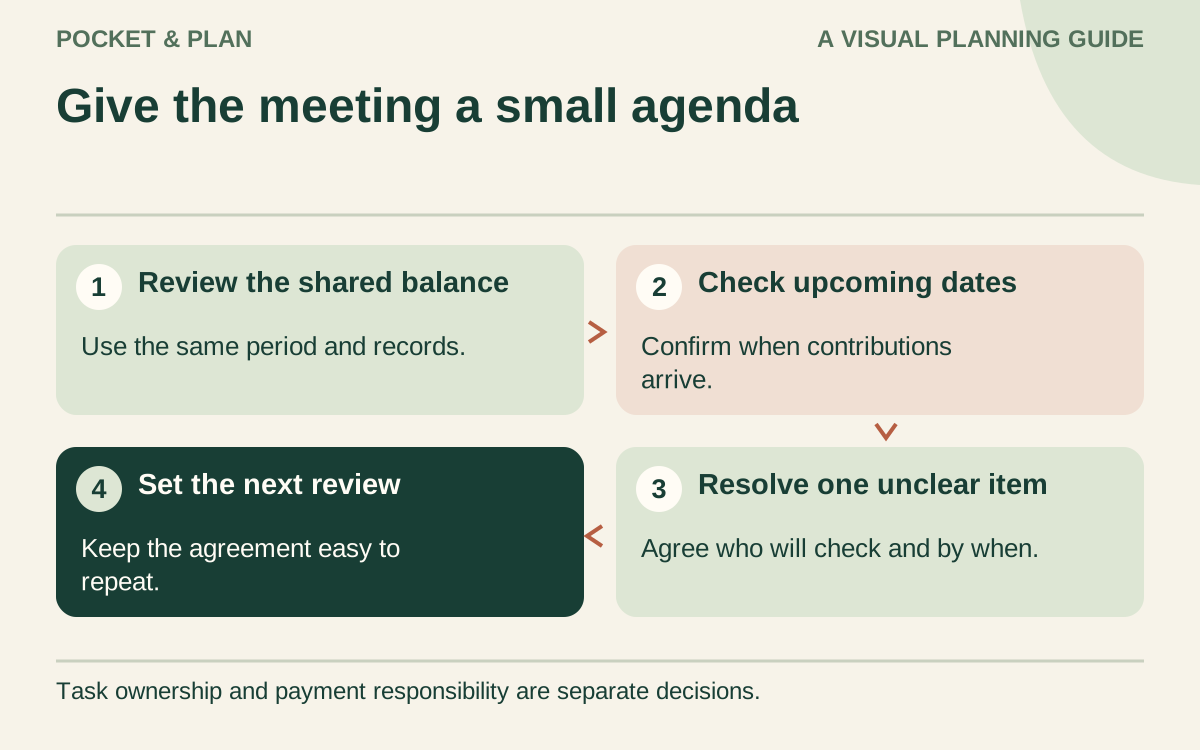
Choose a regular check-in with three questions: what changed, what needs attention before the next meeting, and what decision do we need to make together? Review one unexpected expense without turning it into a judgment about either person.
Finish with a small action list. Each action should have one owner and a date, such as checking a statement or updating the grocery estimate. Write down any revised contribution agreement so neither person has to rely on memory.
At month-end, use the monthly money reset checklist together to reconcile balances and carry accurate amounts into your next shared plan.
Review the shared goal as well as the bills
A budget meeting can include something you are looking forward to: a planned purchase, a more comfortable buffer, or another agreed priority. The CFPB’s savings-goal guidance connects a goal with a plan and an actual-results review.
Update the shared plan when income, responsibilities, or needs change. Use the budget planner to check the totals, then choose the next conversation you need. A worksheet stays useful when both people can understand it and help revise it.
Sources & verification
These primary reference sources support the guide. Worked examples are our own illustrations, not national averages or reported personal results.
- CFPB — Your Money, Your Goals toolkit ↗Checked September 10, 2026
- CFPB — Set a goal, make a plan, and save automatically ↗Checked September 10, 2026
Published · Last substantive update .
Found a factual error or a calculation that needs checking? Suggest a correction by email with this guide's link. The link opens a draft in your email app; you send it yourself. Contact details · Corrections policy