The short answer
Build a shared grocery plan from what you actually buy and eat, then separate food costs from the other items on a store receipt.
General educational guide. Sources checked September 10, 2026. Examples are illustrative; amounts should be adjusted to your household. Read our disclosure.
A useful grocery budget for two starts with your receipts and your week. Decide which purchases count as groceries, look at how often you eat at home, and choose a first spending plan you can review. There is no single dollar figure in this guide that claims to fit every pair of people.
Location, dietary needs, work schedules, and what is already in the kitchen all change the amount you may need. The example below demonstrates a planning method; it is not a food-cost benchmark or a nutrition plan.
Agree on what belongs in the grocery total
A supermarket receipt can include food, cleaning products, pet supplies, and toiletries. Decide whether your grocery category covers food alone or a broader household shop. Either label can work if both people use it consistently.
For a clearer first review, put food in one column and nonfood items in another. Keep restaurant and takeout spending separate too. Otherwise, spending less at the grocery store while ordering more meals may look like progress that your overall budget does not show.
Build a baseline before choosing a target
Gather several recent weeks of receipts or transactions. Mark unusually large pantry restocks and weeks when someone traveled. The CFPB’s spending assessment emphasizes understanding actual spending before replacing it with what you think it should be.
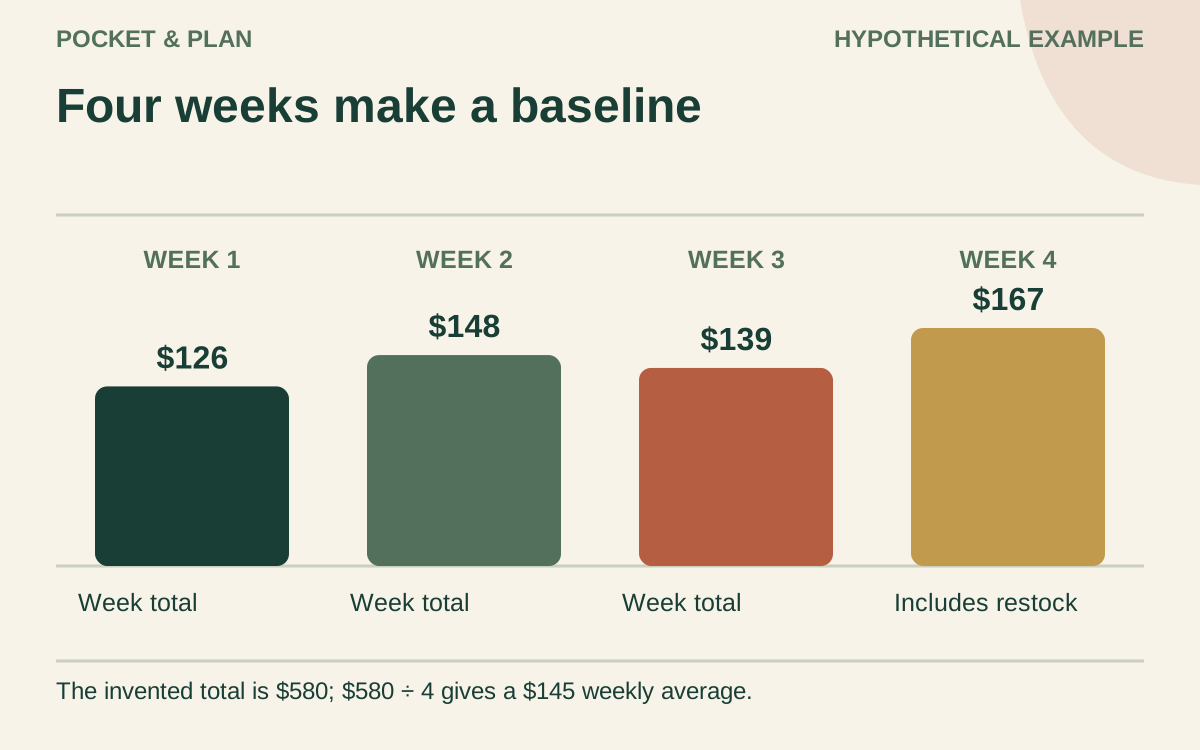
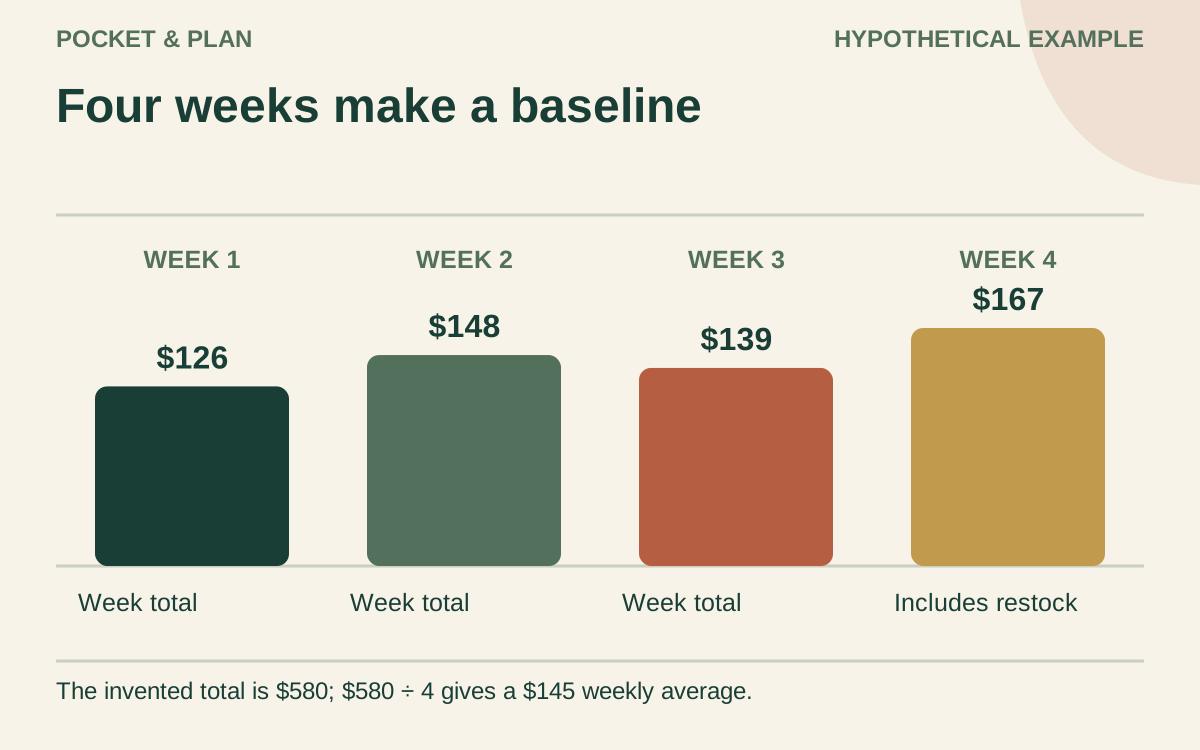
In this hypothetical case, two adults spent $126, $148, $139, and $167 on groceries across four weeks. The total is $580, and the weekly average is $145. They notice the final week included a pantry restock, so they keep that explanation beside the number.
If they choose a trial target of $135 per week, they are testing a $10 reduction from that observed average. They are not treating the target as proof that their food needs can be met at that amount.
Turn the weekly number into a usable plan
For this pair, a $135 trial week could look like this:
| Assignment | Hypothetical amount |
|---|---|
| Main planned shop | $105 |
| Midweek fresh-food top-up | $20 |
| Unassigned margin | $10 |
| Total | $135 |
These are allocation limits, not claims about current product prices. Before shopping, they write the meals they expect to eat at home and compare the ingredients with what they already have. They leave room for an easy meal on their busiest evening so the plan reflects their available time.
Use a grocery price book to compare repeat purchases by unit price, and a short pantry challenge to plan meals around usable ingredients already at home.
If the planned basket costs more than $105, they can adjust the basket or revise the week’s allocation before checking out. The relevant comparison is the whole plan, including the top-up and margin.
For a concrete purchase-quantity example, use the three-dinner budget meal plan for two. It separates the full package cost at checkout from the ingredients those dinners consume.
Keep the calendar conversion honest
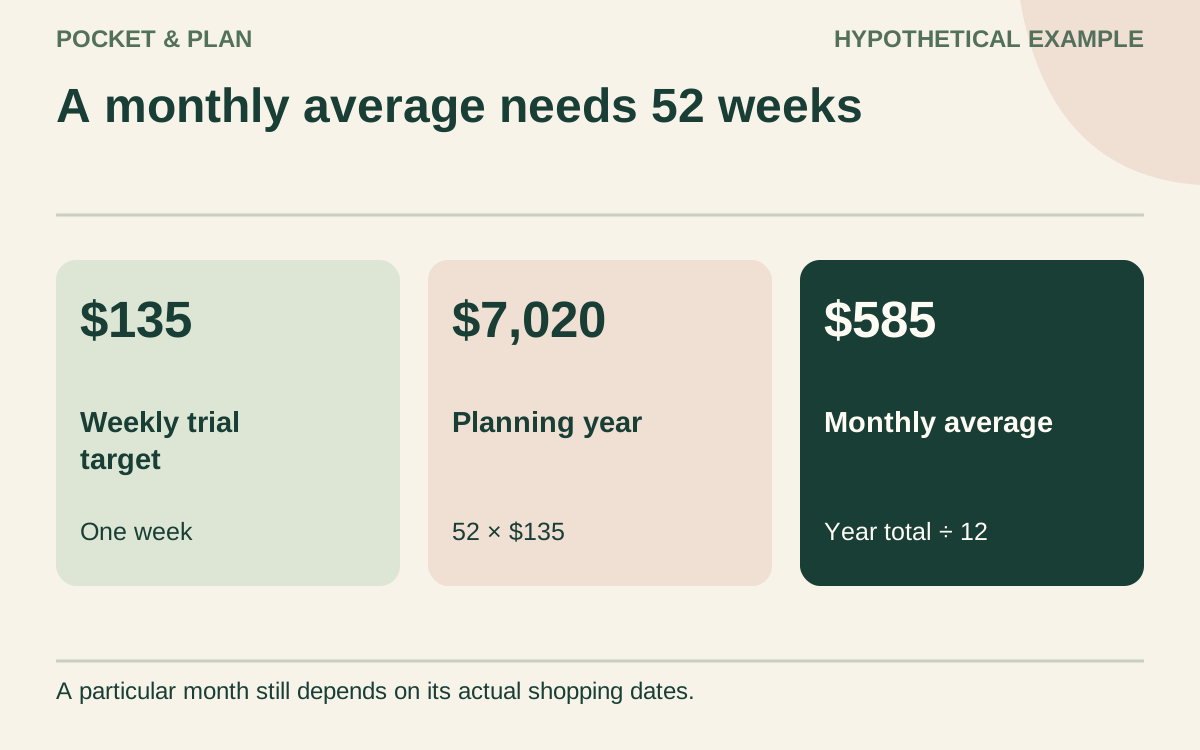
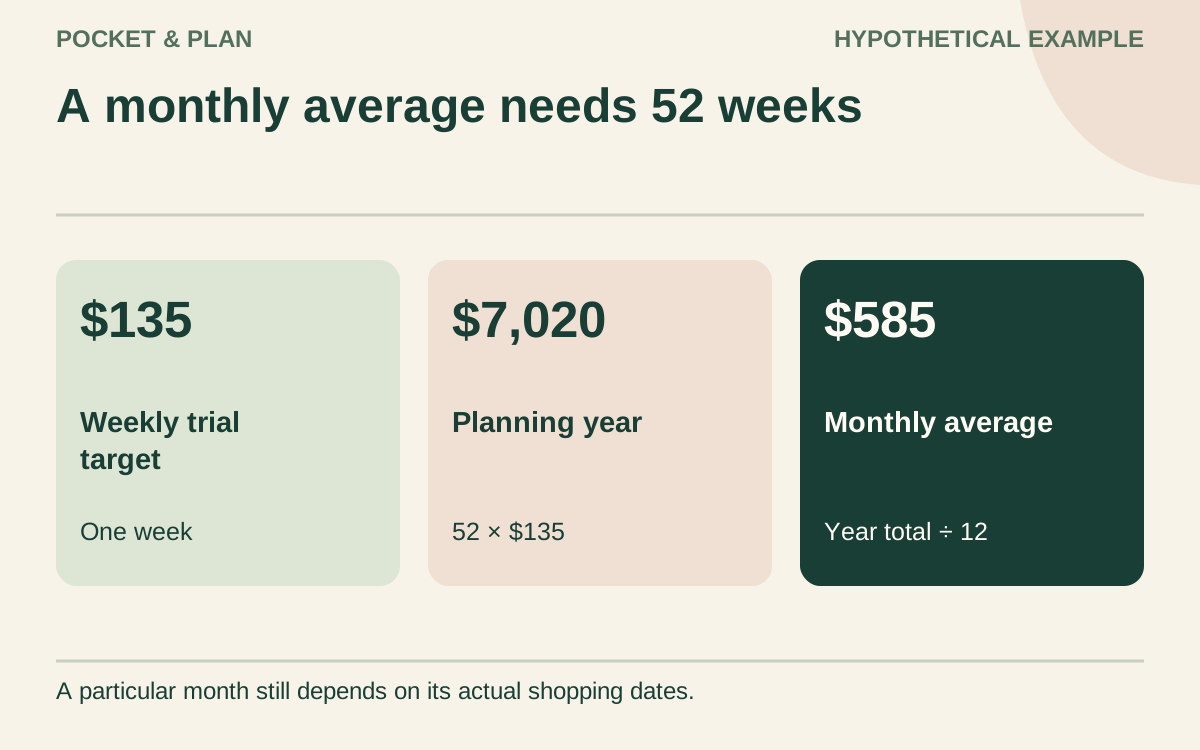
Four weeks and a calendar month are different lengths. To express a $135 weekly target as a monthly average across a 52-week planning year, calculate $135 × 52 ÷ 12 = $585.
That $585 is an average planning amount. A particular month’s shopping pattern may still differ, especially if it includes an extra regular shopping day. If your income plan is based on individual paychecks, assign grocery money to the actual days each check must cover instead.
Use the budget planner to see whether your grocery estimate fits alongside housing, transportation, and other commitments.
Give each person a small, clear job
One person can update the shared list while the other checks the current category balance; swap roles if that suits you better. Agree before the shop how to handle an unlisted purchase. A short conversation about the remaining amount is more useful than discovering two separate top-up trips afterward.
The couples budget guide offers a broader structure for shared household decisions without assuming you combine every account.
Review the result without grading yourselves
After two or three shopping cycles, compare the plan with actual food spending and the meals you used. Record what went uneaten, which estimates were too low, and whether the schedule was realistic. Adjusting an insufficient budget is useful information.
Consumer.gov frames budgeting as a plan you use and revisit. Keep the next grocery decision concrete: one revised amount, one clearer category, or one change to the week’s meal schedule.
Sources & verification
These primary reference sources support the guide. Worked examples are our own illustrations, not national averages or reported personal results.
- Consumer.gov — Making a Budget ↗Checked September 10, 2026
- CFPB — Assess your spending ↗Checked September 10, 2026
Published · Last substantive update .
Found a factual error or a calculation that needs checking? Suggest a correction by email with this guide's link. The link opens a draft in your email app; you send it yourself. Contact details · Corrections policy