The short answer
A clear debt tracker separates account facts from a chosen payoff order and keeps every payment and agreement traceable.
General educational guide. Sources checked September 11, 2026. Examples are illustrative; amounts should be adjusted to your household. Read our disclosure.
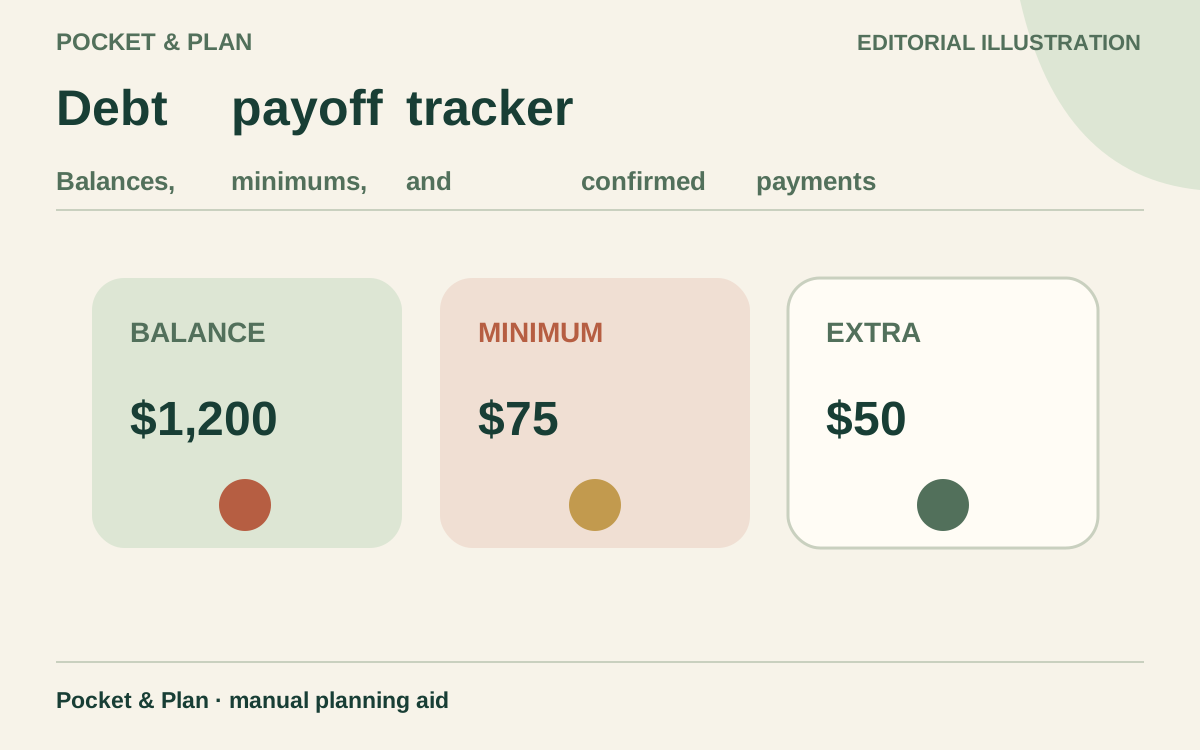
A debt payoff tracker is a record, not a promise that a particular method will eliminate debt by a certain date. It keeps the account nickname, statement date, balance, interest information, minimum payment, payment date, and remaining amount together so the next decision is based on current evidence.
The CFPB debt action plan asks people to list debts and consider a repayment approach. The CFPB debt guidance also describes comparing debts and making a plan. Read your statements and the terms for your own accounts; this worksheet does not provide legal, tax, or individualized credit advice.
Download the debt payoff tracker for a manual account table and payment log. It has no automatic interest calculation or connection to a lender.
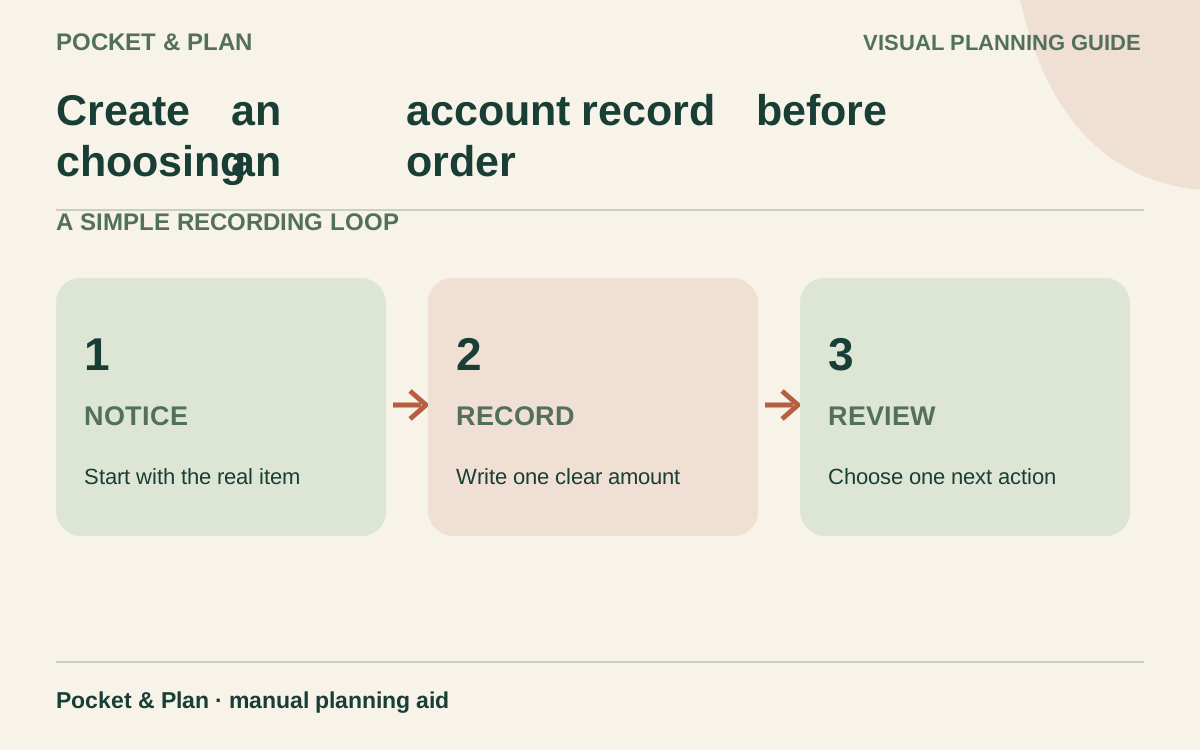
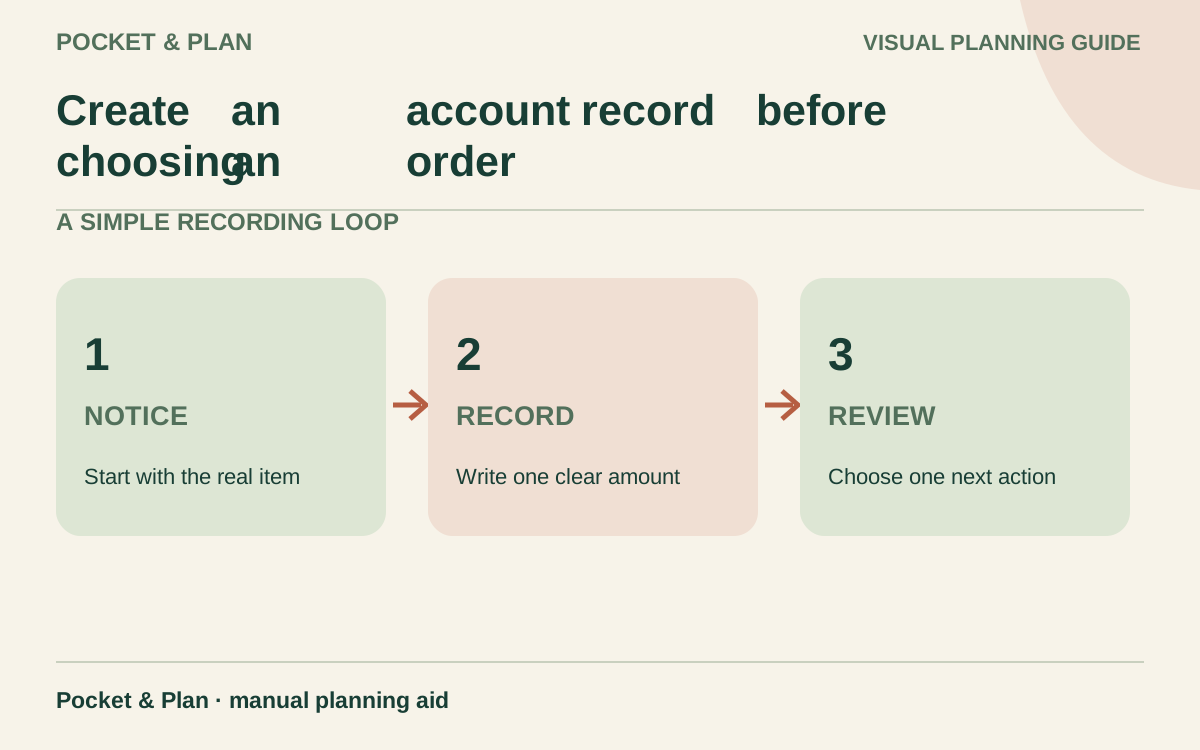
Create an account record before choosing an order
Give each row a nickname rather than writing a full account number. Record the current balance, statement date, interest rate or fee basis exactly as shown, minimum payment, due date, and whether the amount is an estimate or confirmed. A balance from different statement dates is not a clean comparison, so write the as-of date beside each one.
Keep required minimums in the bill plan even if you choose to direct extra money to one account. A tracker can show “extra target” separately from “minimum due.” The bill payment tracker is useful for confirming a payment’s date and status; the debt worksheet preserves the account-level balance history.
If a collector or lender offers an arrangement, keep the written terms and the date you accepted them with the account record. The CFPB consumer debt-collection guidance explains that rights and processes matter; a tracker should not substitute for checking those details or asking a qualified professional.
Log a hypothetical payment
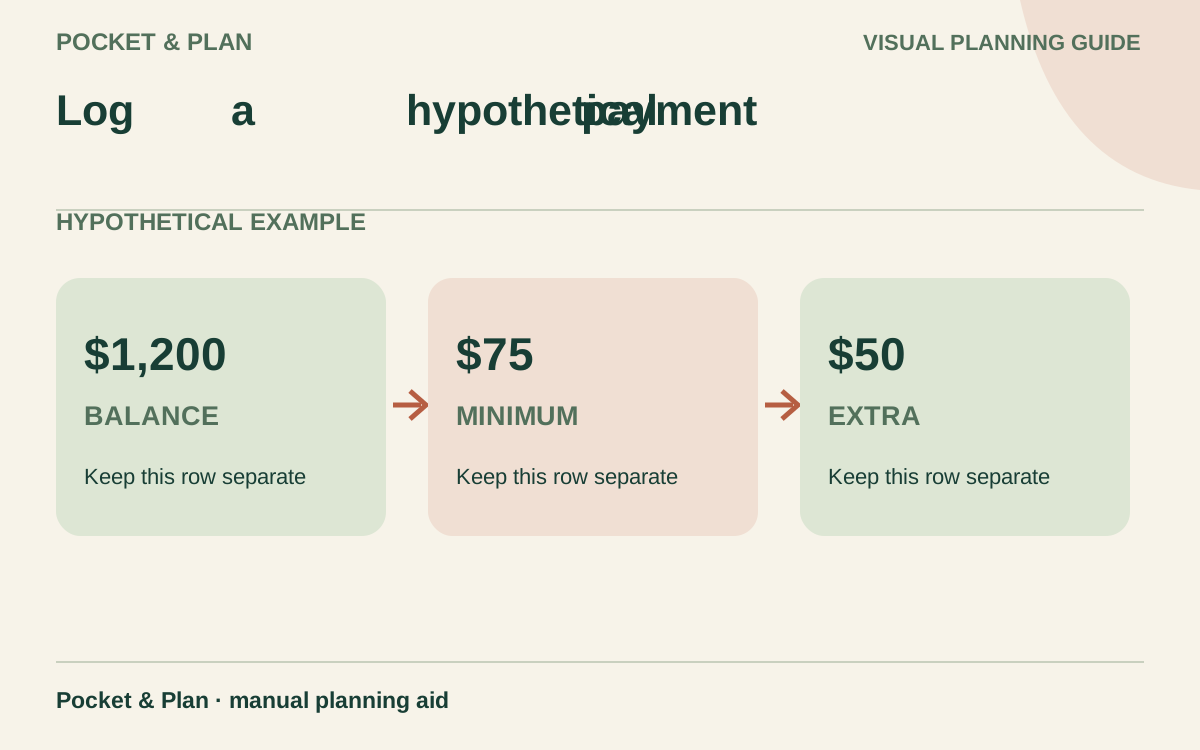
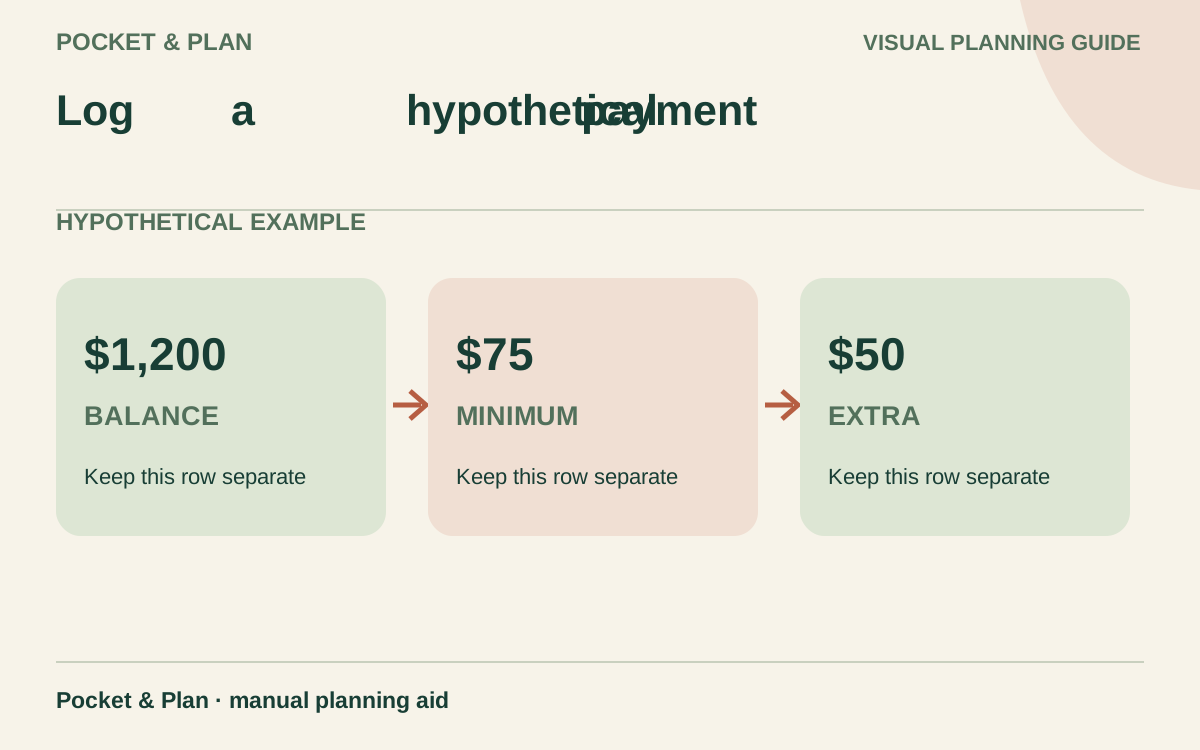
Imagine an invented account with a $1,200 opening balance, a $75 minimum due, and a $125 confirmed payment. Before interest or fees are posted, the simple ledger shows:
| Ledger line | Amount |
|---|---|
| Opening statement balance | $1,200 |
| Confirmed payment | -$125 |
| Recorded remainder before new charges or interest | $1,075 |
The $125 payment includes the $75 minimum and a $50 extra amount in this example. The statement balance may differ after interest, fees, new charges, or payment timing. Replace the provisional remainder with the next confirmed statement balance instead of treating the subtraction as an official payoff calculation.
These numbers are fictional and show how to write a payment record. They are not a suggested payment or payoff projection.
Choose a payoff order you can explain
Some people focus extra money on the smallest balance, while others focus on the highest interest rate. Either choice needs a clear rule and an amount that remains affordable after essentials and minimum payments. Write the chosen order and the reason in the notes column; do not quietly change order when a balance is updated.
If an account has promotional terms, deferred interest, variable rates, or a disputed amount, flag it for closer review. A simple “APR” column is not enough to model every contract. The tracker should surface a question, not invent an answer.
Reconcile after each statement or payment
After a payment clears, record the date, amount, source, and confirmation reference. After the next statement, copy the confirmed balance and explain the difference from your running estimate. Keep refunds, reversals, and new charges as separate entries.
Review the zero-based and 50/30/20 comparison if you need to decide how a planned extra payment fits the rest of the month. A debt tracker is most useful when it preserves the history and leaves room for a new fact to replace an estimate.
Sources & verification
These primary reference sources support the guide. Worked examples are our own illustrations, not national averages or reported personal results.
- CFPB — Debt action plan ↗Checked September 11, 2026
- CFPB — How to reduce your debt ↗Checked September 11, 2026
- CFPB — Know your rights when a debt collector calls ↗Checked September 11, 2026
Published · Last substantive update .
Found a factual error or a calculation that needs checking? Suggest a correction by email with this guide's link. The link opens a draft in your email app; you send it yourself. Contact details · Corrections policy