The short answer
Turn irregular but predictable expenses into named savings goals with a target, a deadline, and an affordable contribution.
General educational guide. Sources checked September 10, 2026. Examples are illustrative; amounts should be adjusted to your household. Read our disclosure.
A sinking fund is money you gradually set aside for an expense you expect to pay later. You give the expense a name, estimate the amount, and divide the remaining target across the paydays before it is due. The method can make a once-a-year bill easier to see in an ordinary month.
You do not need a long category list to begin. Start with the next few expenses most likely to disrupt your household plan.
Use the printable sinking funds planner to connect each target with its existing balance, due date, and remaining contributions. Check payment timing separately; later contributions cannot fund an earlier bill. This is a manual worksheet for handwriting, with no automatic calculations. Print on US Letter paper in the orientation shown on the file.
Separate expected costs from emergencies
A known annual membership renewal and an unexpected loss of income need different labels. The CFPB emergency-fund guide describes emergency savings as money for unplanned expenses or financial emergencies. Keep that distinction visible when naming your planned funds.
Some categories contain uncertainty. You may expect to spend something on car maintenance without knowing which month it will happen. Give that category an estimate and a review date rather than pretending the future cost is exact.
Pick categories from your own calendar
Scan last year’s bills and the next several months of commitments. The CFPB’s spending assessment recommends looking back far enough to notice less frequent expenses. Its page is written for homebuyers, but this record-review step is useful for building a household expense list too.
Choose only categories that describe your life. Possible starting points include:
- Annual insurance or membership payments you already expect.
- Vehicle maintenance based on your own service records and upcoming work, or a known replacement purchase.
- Gifts and celebrations with a chosen spending limit, divided by recipient in a holiday gift budget.
- School supplies, activities, or seasonal clothing.
- A planned trip, household project, or appliance replacement.
Avoid creating separate funds for every tiny purchase. If three categories share the same deadline and purpose, one clear label may be easier to maintain. Conversely, do not combine a must-pay bill with an optional trip if that would make their priorities hard to see.
Calculate the contribution from the remaining gap
Use this formula:
Contribution per payday = (target cost − amount already reserved) ÷ paydays remaining.
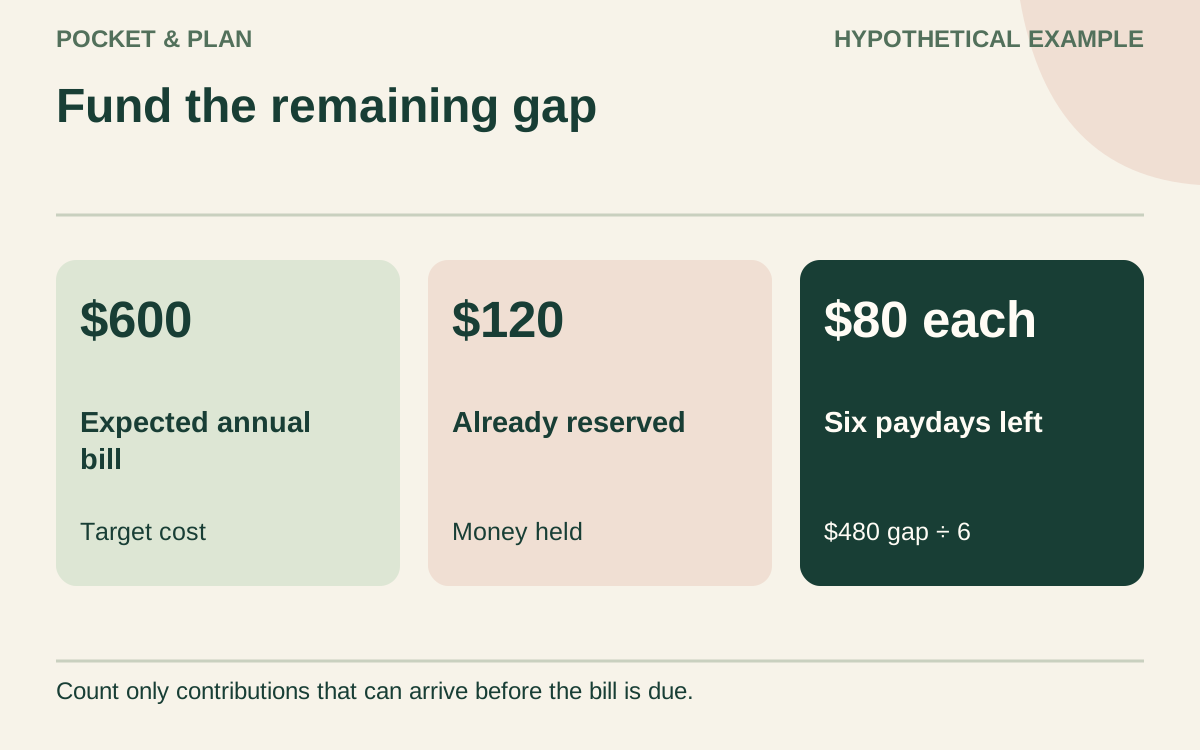
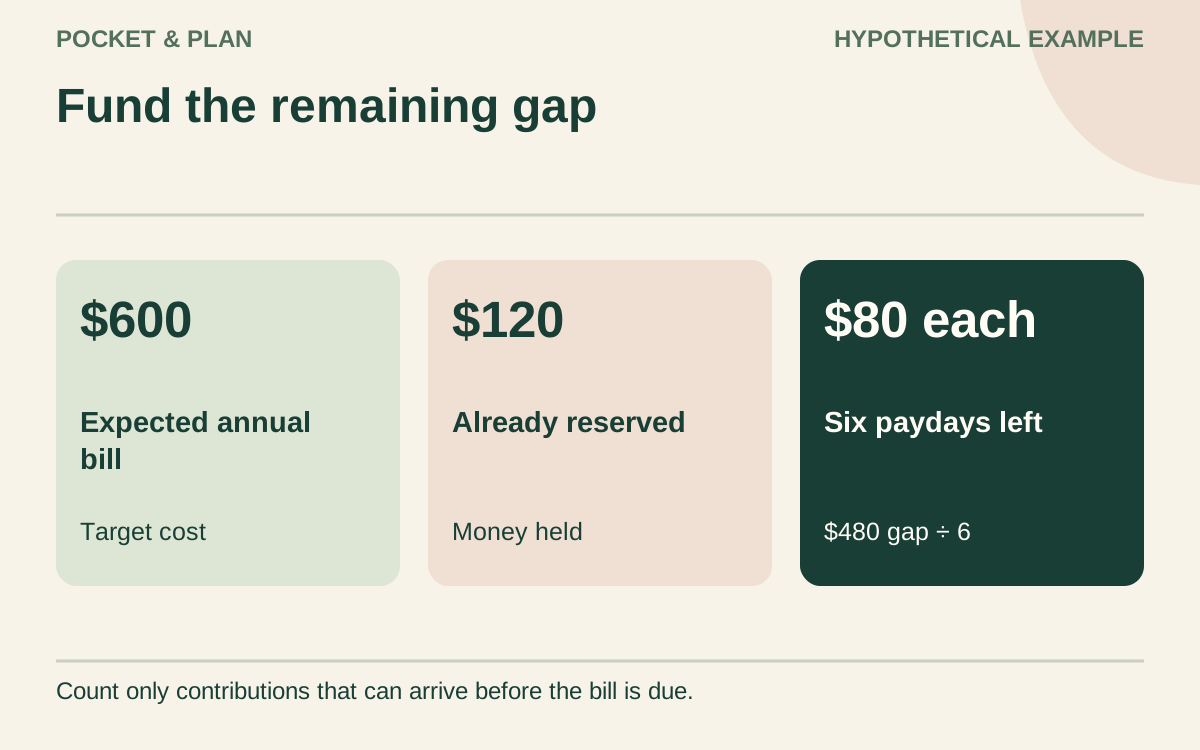
Here is an entirely hypothetical example. Avery expects a $600 annual bill in six paydays and already has $120 reserved. The remaining gap is $480. Dividing $480 by six gives an $80 contribution per payday.
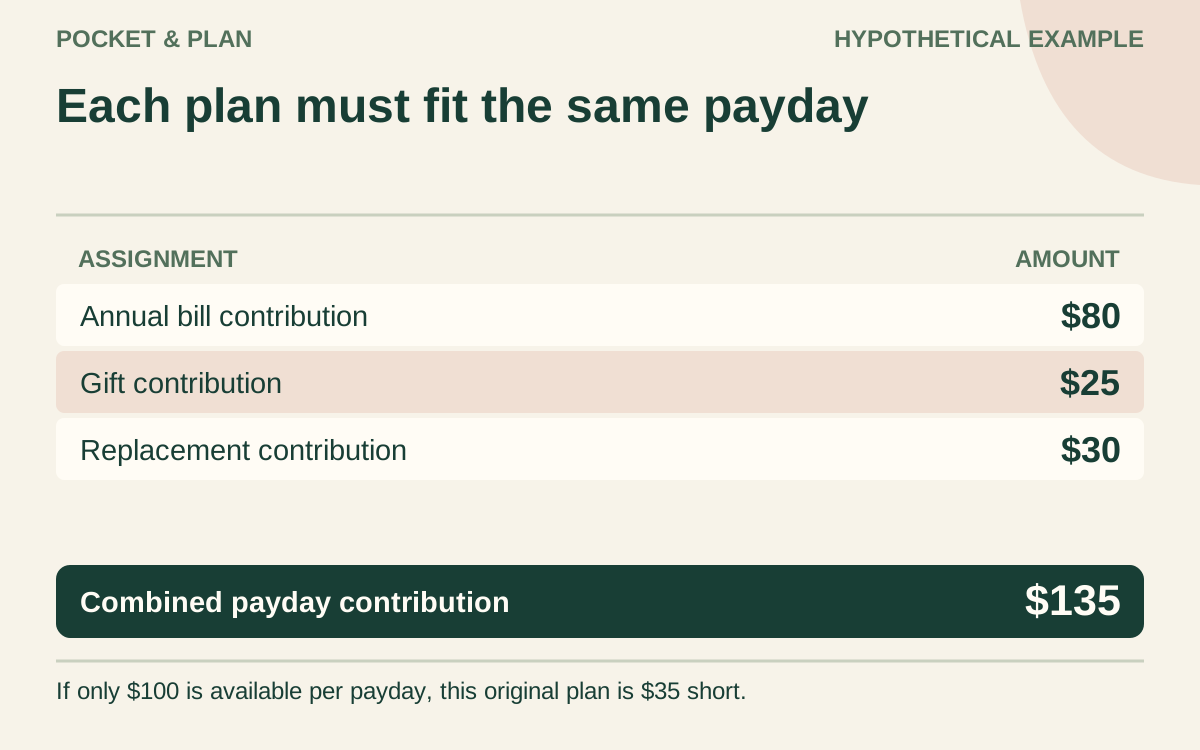
| Fund | Target | Already reserved | Paydays left | Per payday |
|---|---|---|---|---|
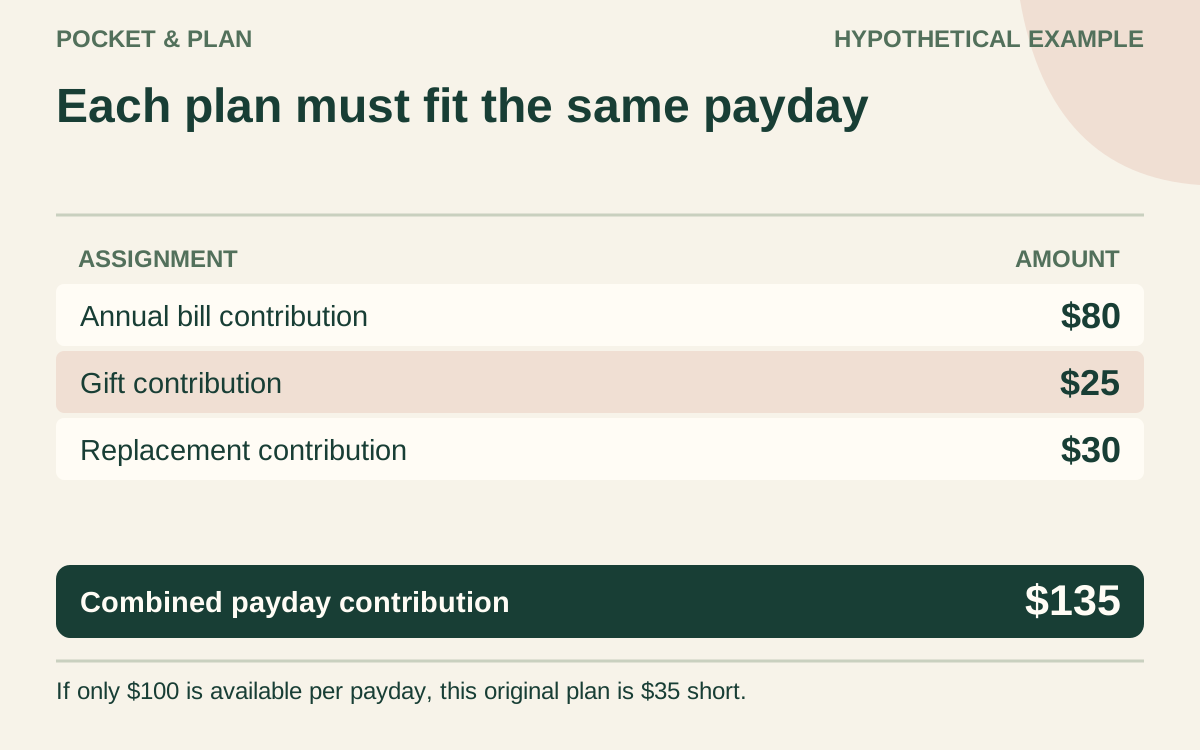
| Annual bill | $600 | $120 | 6 | $80 |
| Gifts | $240 | $40 | 8 | $25 |
| Planned replacement | $350 | $50 | 10 | $30 |
| Total new contribution | $135 |
This arithmetic assumes no interest, fees, or withdrawals. It is a planning example, not a recommendation for those spending amounts.
Check whether the total fits
A mathematically correct plan can still ask for more money than is available. If Avery can assign only $100 per payday, the three targets cannot all keep the same contribution schedule.
Review the least flexible deadline first. Then consider reducing an optional target, moving its date, or temporarily pausing it. Record the change explicitly. A fund is a way to organize available money; it does not create extra income or override bills that need attention now.
The biweekly budget worksheet helps place those contributions beside everyday spending and upcoming payments.
Track balances without double counting
Use one row per fund with a starting balance, contributions, withdrawals, and ending balance. If several funds share an account, their combined balances should not exceed the money actually available for those purposes.
Use the printable savings tracker to keep a dated record of those movements and check each fund’s ending balance against its purpose.
For example, moving $80 from checking into the annual-bill reserve is one assignment. Paying the bill later uses that reserve. Do not describe both movements as new money saved. Keep transfers separate from expenses in any totals where counting both would distort the picture.
Refresh the estimate when the facts change
When a renewal notice arrives, replace the estimate with the stated amount. After a purchase, record what was spent and decide whether the fund should continue. An ongoing maintenance fund may keep its balance; a completed one-time goal may close.
Review the next deadline during your monthly budget planner check-in. A small set of accurate categories is more useful than an elaborate list that no longer reflects your plans.
For unplanned essential costs, the starter emergency-fund guide explains how to choose an initial target separately from the known bills in your sinking funds.
Sources & verification
These primary reference sources support the guide. Worked examples are our own illustrations, not national averages or reported personal results.
- CFPB — An essential guide to building an emergency fund ↗Checked September 10, 2026
- CFPB — Assess your spending ↗Checked September 10, 2026
Published · Last substantive update .
Found a factual error or a calculation that needs checking? Suggest a correction by email with this guide's link. The link opens a draft in your email app; you send it yourself. Contact details · Corrections policy