The short answer
A roommate ledger keeps the shared scope, payer, due date, and reimbursement status visible while private purchases stay private.
General educational guide. Sources checked September 11, 2026. Examples are illustrative; amounts should be adjusted to your household. Read our disclosure.
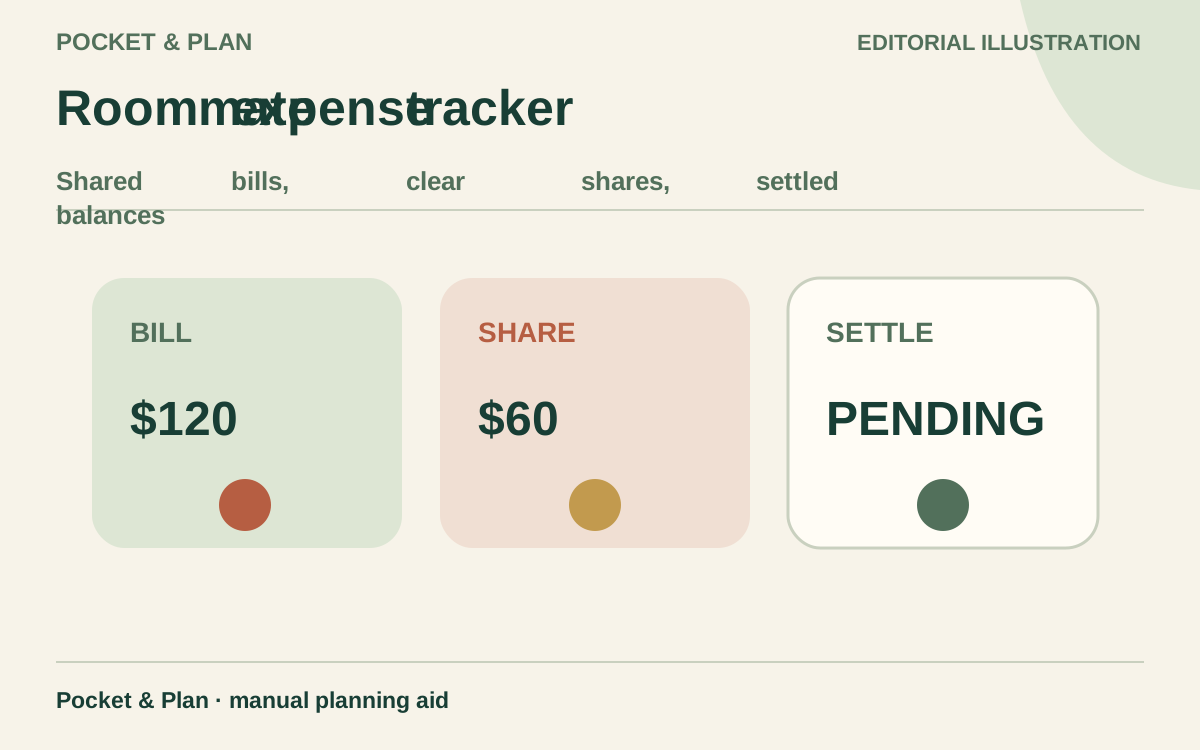
A roommate expense tracker is a shared ledger for the costs everyone has agreed to include. It can show the bill, due date, payer, each person’s share, amount paid, and reimbursement status while leaving private purchases outside the record.
The CFPB household budget activity uses roommates as a budgeting question because living together changes which costs are shared. The CFPB’s mobile payment guidance also notes that people may use person-to-person payments to split rent or repay a friend. The tracker records an agreement; it does not decide who is legally responsible for a lease or utility account.
Download the roommate expense tracker for a manual shared-cost table and reimbursement log. Keep full account numbers and sensitive payment details out of the worksheet.
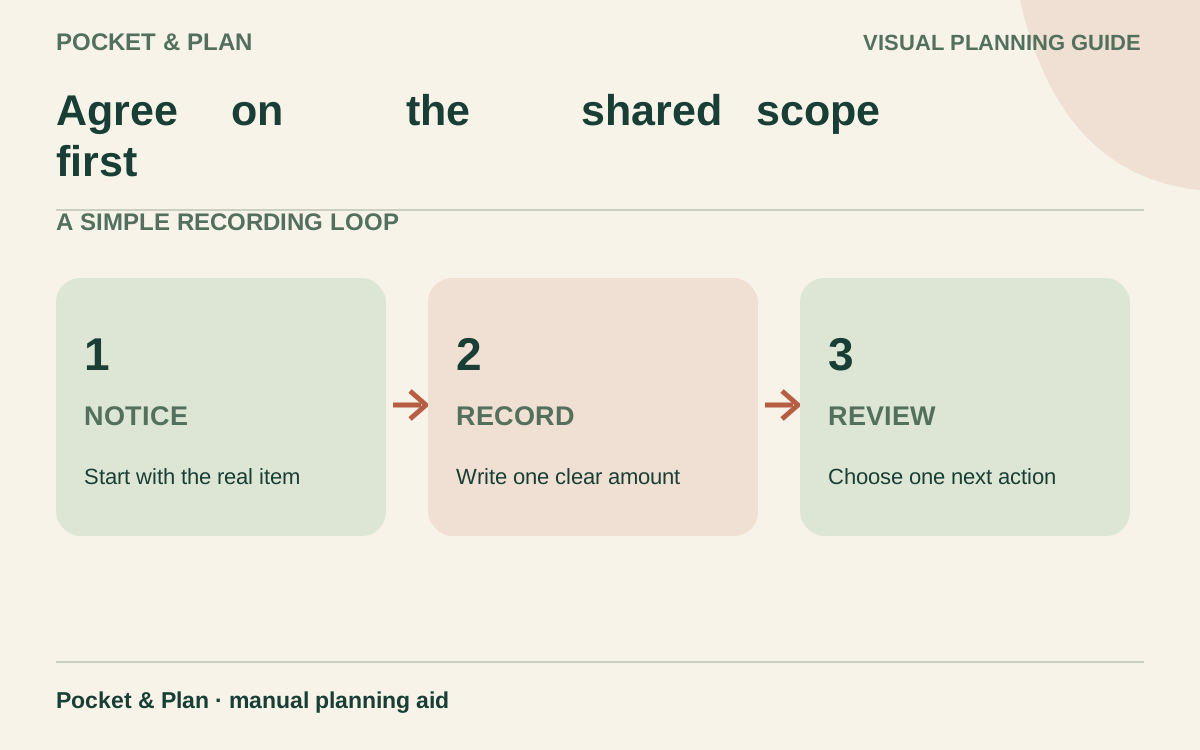
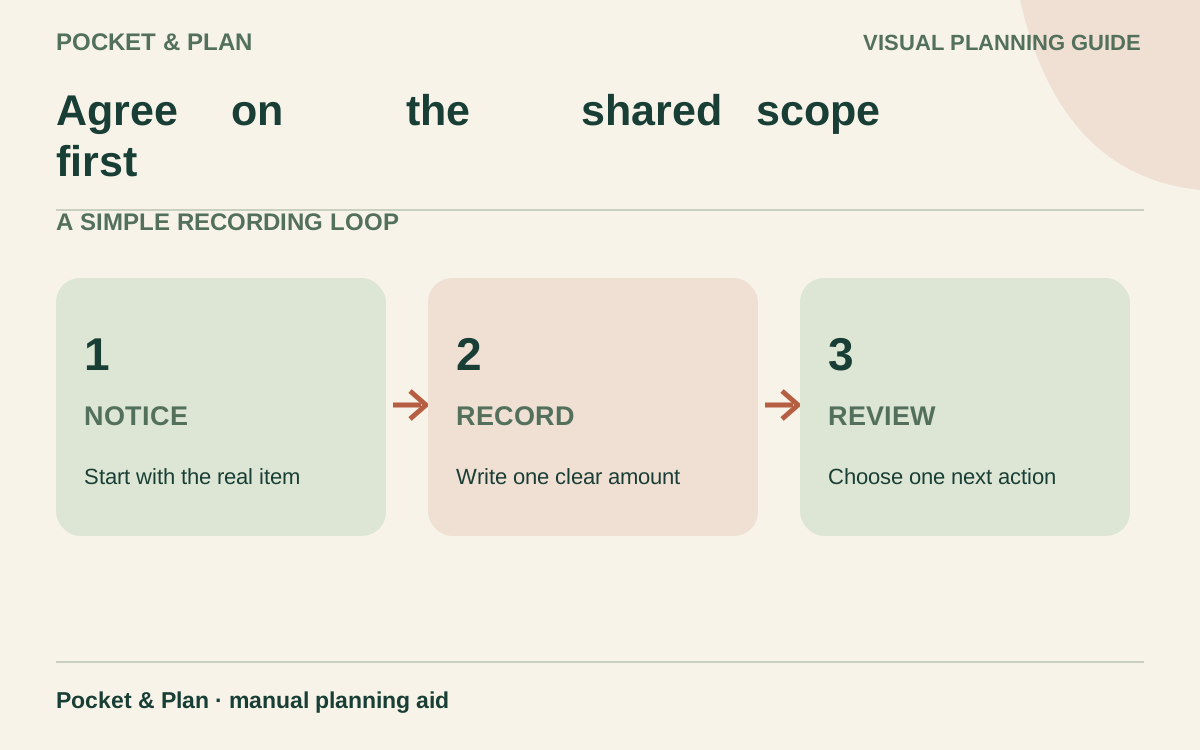
Agree on the shared scope first
Write a short definition of “shared” before entering amounts. Rent, internet, electricity, cleaning supplies, or a shared grocery purchase might belong in the scope. Personal meals, clothing, subscriptions, and guests might remain private. There is no universal split; the useful part is that everyone can read the same rule.
Record the period, the people included, and the decision date. If one roommate moves in or out during the month, use the actual occupancy or another agreed method and write it down. Do not retrofit a new rule to an old charge without a note.
Keep the shared ledger separate from private bank balances. A roommate may pay a bill from a personal account, but the tracker only needs the agreed shared amount, the payer, and the reimbursement status. The couples budget template covers a different conversation about household contributions and personal privacy.
Record the payer, share, and due date
For each bill, write the provider or plain purpose, due date, total, payer, split rule, each share, and status. A 50/50 split is simple only when two people share the same scope and period. A proportional or usage-based rule may be chosen, but calculate it from an agreed input and keep the input visible.
Use a separate row for a deposit, late fee, refund, or credit. A reimbursement received is money in for the payer’s personal account, not new household income. A transfer between roommates does not reduce the bill total; it settles who funded the shared obligation.
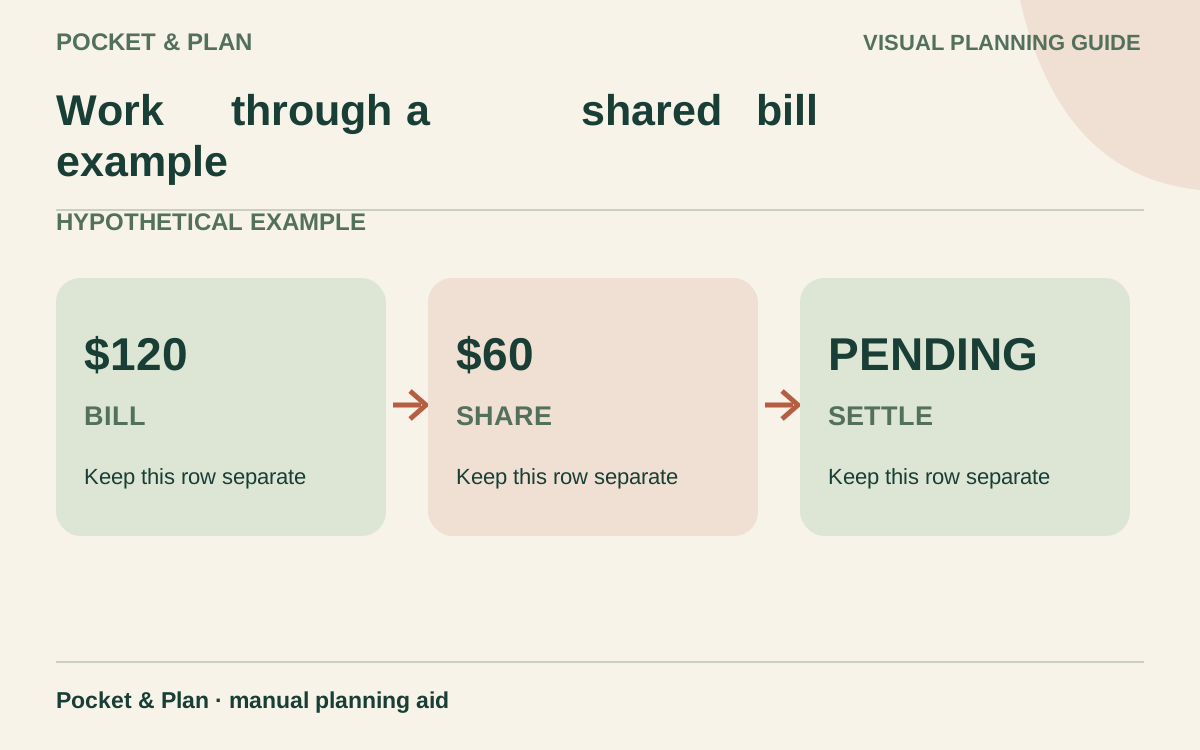
Work through a shared bill example
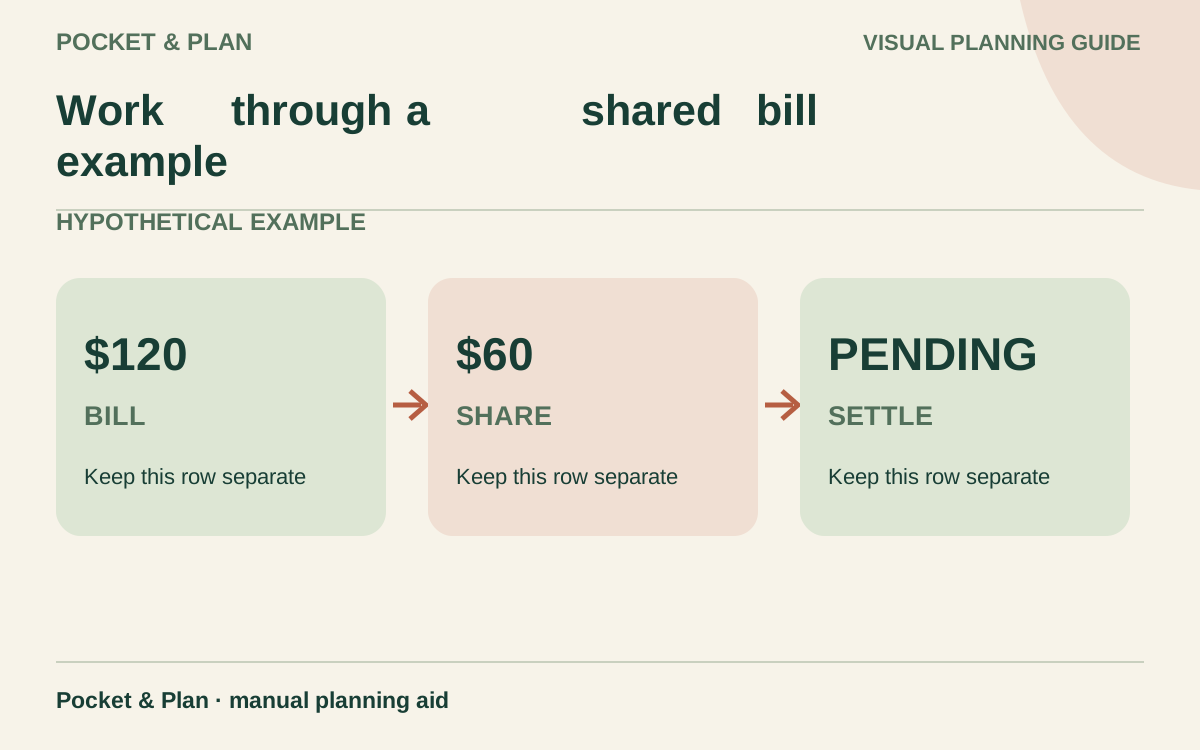
Imagine an invented $120 utility bill for two roommates with an agreed 50/50 split. Alex pays the provider. Alex’s share is $60 and Jordan’s share is $60. Until Jordan sends $60, the shared bill is paid but the reimbursement is pending.
| Ledger line | Alex | Jordan | Household total |
|---|---|---|---|
| Agreed share | $60 | $60 | $120 |
| Paid to provider | $120 | $0 | $120 |
| Reimbursement received | $0 | $0 | pending $60 from Jordan |
When Jordan pays, record the date and method in the reimbursement log. The total utility cost remains $120; only the personal funding balance changes. These amounts are fictional and demonstrate the record, not a required split.
Reconcile before the next bill
At the review date, match the tracker to the provider statement or receipt. Mark the bill paid, replace an estimate with the confirmed amount, and leave a pending reimbursement visible. If a refund or credit arrives, connect it to the original row instead of treating it as an unrelated windfall.
Use the bill payment tracker for payment status and the cash flow budget when the due date matters to a particular account balance. Agree on how long a reimbursement can remain pending and how disputes are documented. A clear ledger helps a household conversation; it is not a substitute for the lease, utility terms, or local law.
Sources & verification
These primary reference sources support the guide. Worked examples are our own illustrations, not national averages or reported personal results.
- CFPB — Brainstorming household budgets ↗Checked September 11, 2026
- CFPB — Tips for using mobile payment services ↗Checked September 11, 2026
Published · Last substantive update .
Found a factual error or a calculation that needs checking? Suggest a correction by email with this guide's link. The link opens a draft in your email app; you send it yourself. Contact details · Corrections policy