The short answer
A one-person grocery plan measures usable portions and leftovers instead of assuming a family pack is automatically cheaper.
General educational guide. Sources checked September 11, 2026. Examples are illustrative; amounts should be adjusted to your household. Read our disclosure.
A grocery budget for one person needs a different question from a family grocery total: how many usable portions will this purchase provide before quality, storage, or interest in the leftovers changes? A large pack can have a lower unit price and still be a poor fit if most of it is unused.
The USDA Food and Nutrition Service cost reports publish reference food-plan costs and explain household-size adjustments. They are reference data, not a personal spending target. Your location, dietary needs, prices, schedule, and available storage determine your own plan.
Use the grocery budget for one worksheet to connect meals, portions, stock, planned purchases, and actual checkout totals. It is a manual planning sheet, so write your own prices and units.
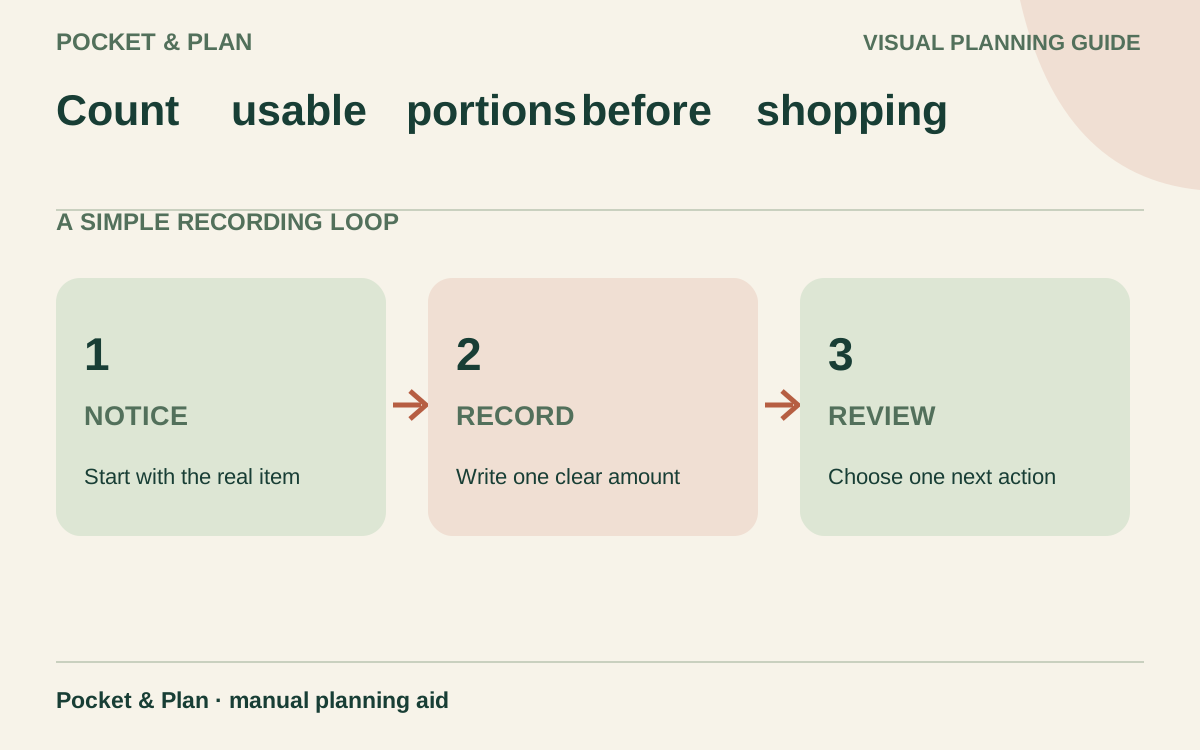
Count usable portions before shopping
Begin with the meals you expect to eat at home during the period. Write the number of portions for each meal and any meals supplied elsewhere. One person’s plan might include three breakfasts, four lunches, five dinners, and snacks; another person’s schedule may be completely different.
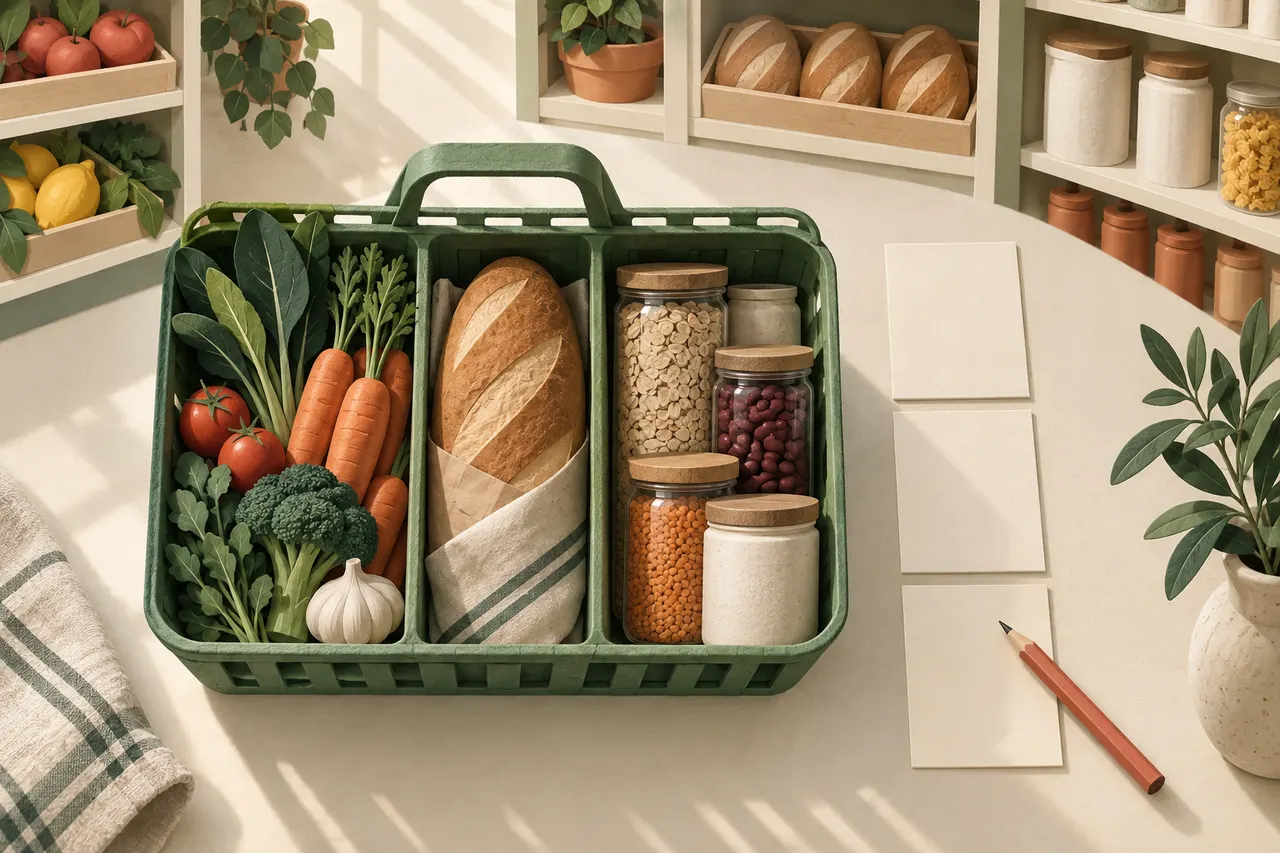
Check stock that is actually usable for those meals. A half-open package may contain two portions, while a sealed family pack may need a storage or freezing plan. Mark food reserved for another meal so it is not counted twice. The grocery list template can hold the aisle and substitution details after the portion gap is known.
Compare a hypothetical pack and portion plan
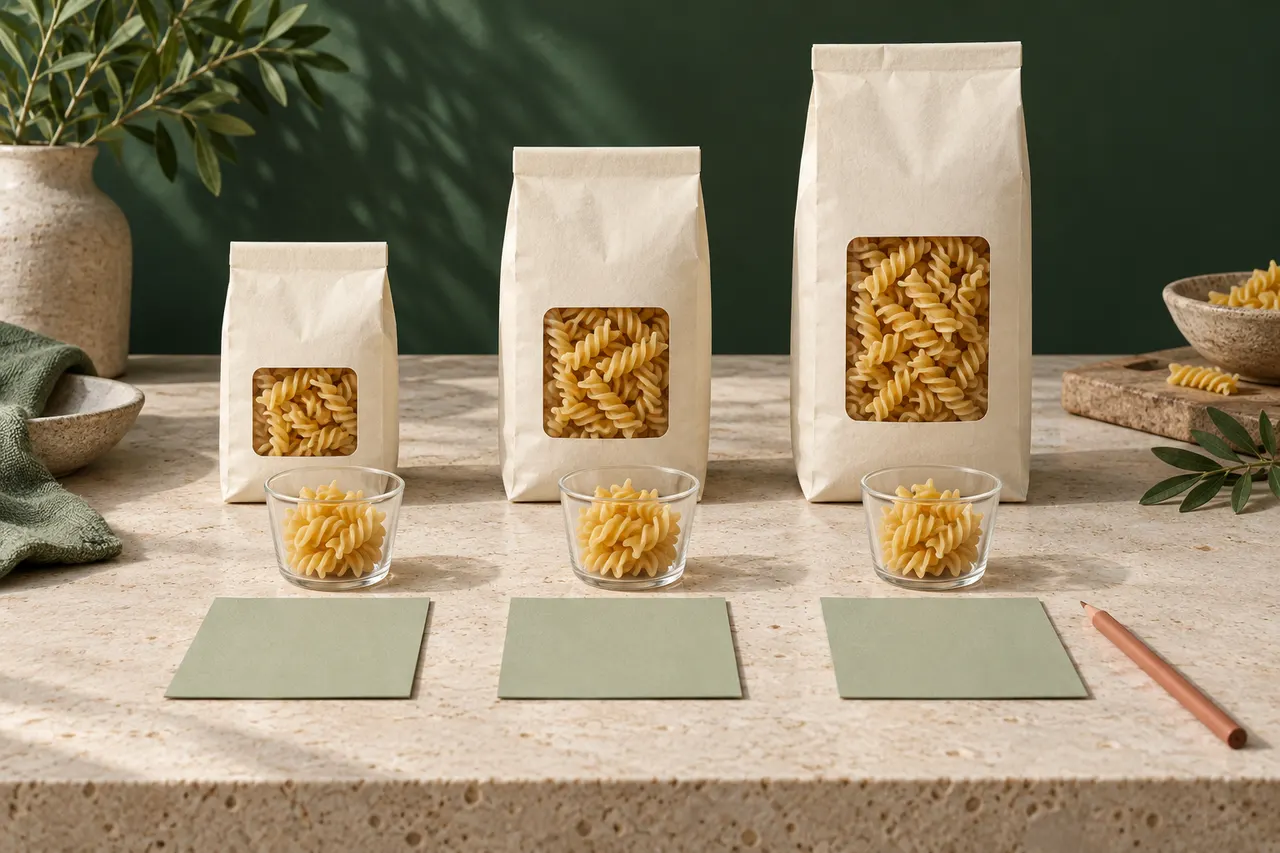
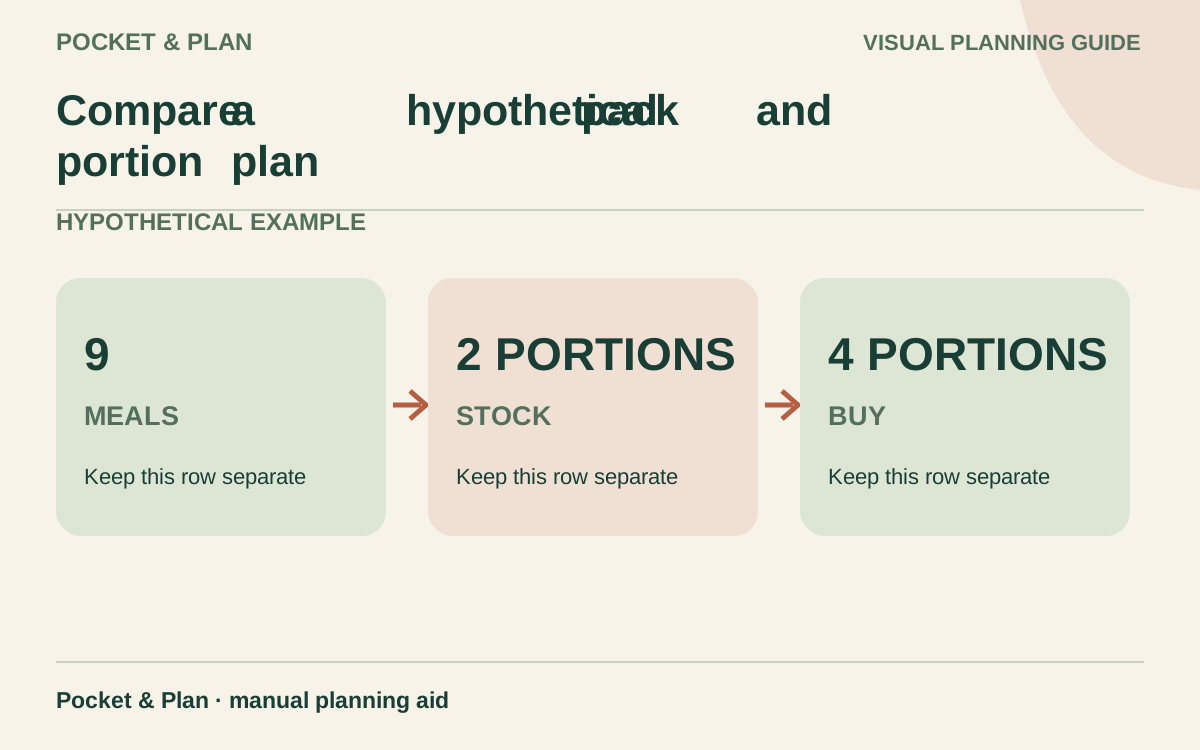
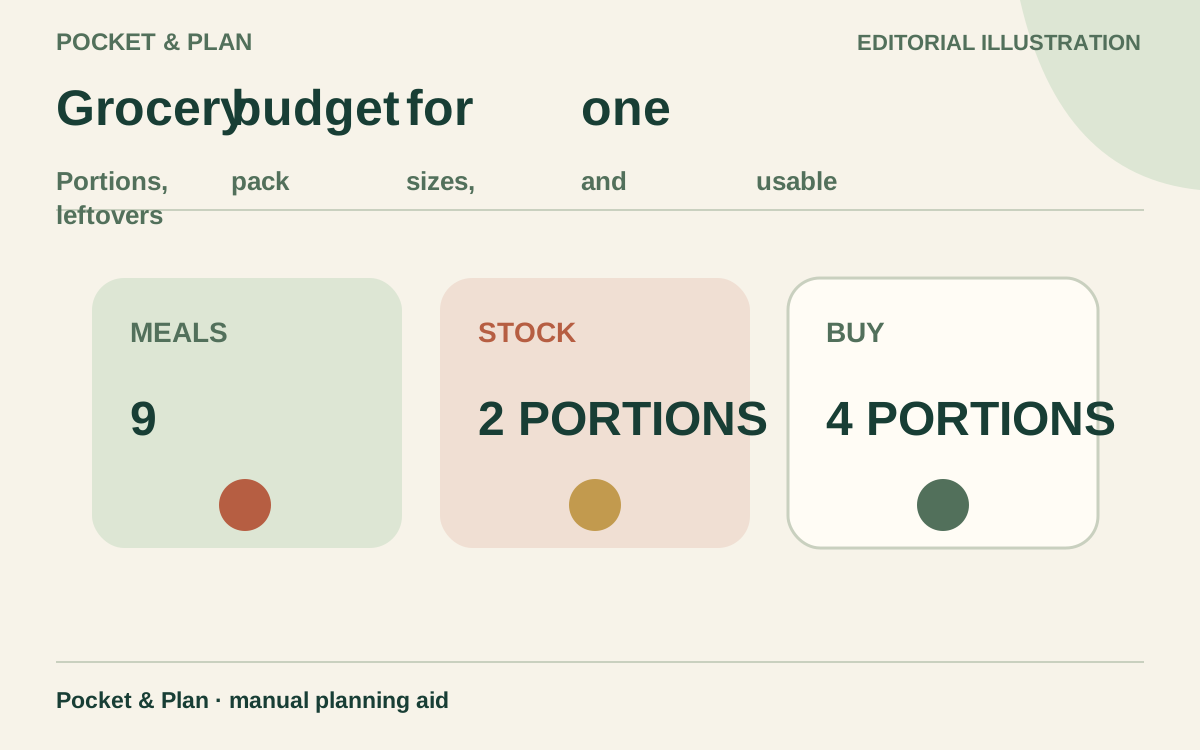
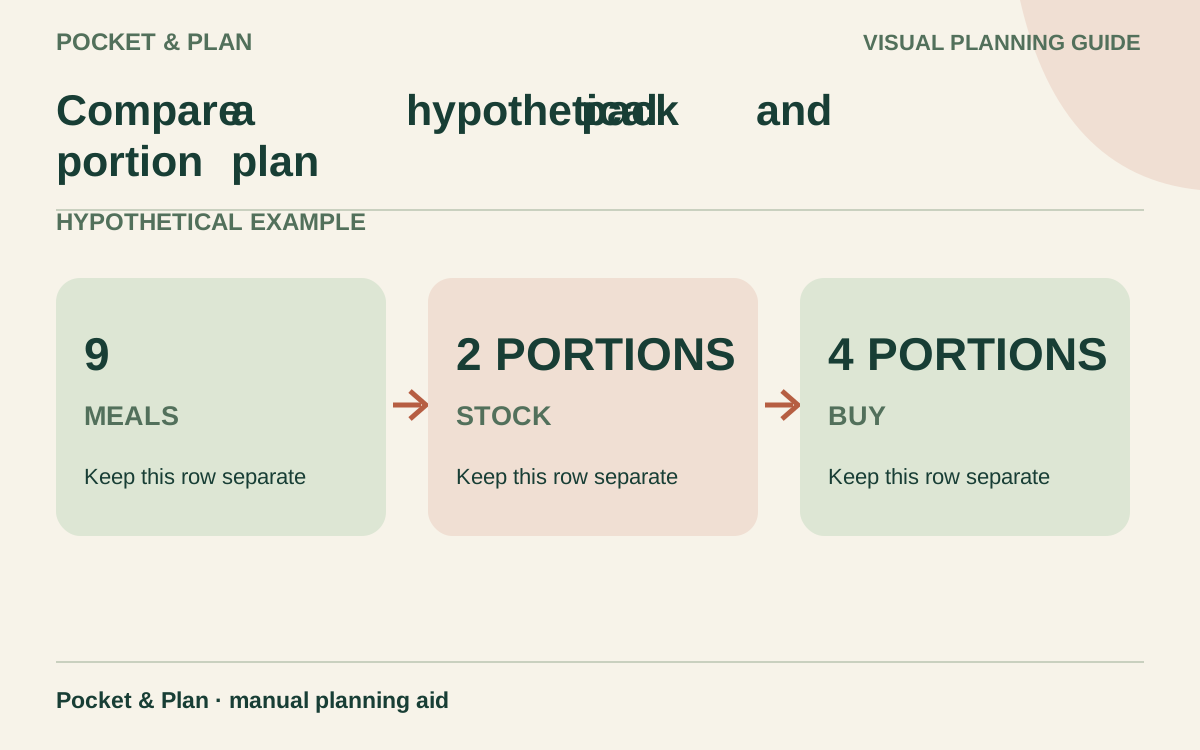
Imagine a fictional four-portion pack costing $6. One person plans two portions this week and freezes two for next week. The cost per planned portion is $1.50, but only if the remaining portions are safely stored and actually used. If the plan changes and the two extras are discarded, the usable cost for the two eaten portions becomes $3 each.
| Portion check | Amount |
|---|---|
| Checkout price | $6 |
| Portions in pack | 4 |
| Planned portions used this period | 2 |
| Planned portions reserved for next period | 2 |
| Simple price per portion | $1.50 |
The numbers are invented to demonstrate why “per unit” and “per usable portion” can differ. They are not a recommendation or a current grocery price.
Plan the pack size and the use window
Write the unit consistently: ounces, grams, pieces, servings, or another measure that makes sense for the item. Note whether the package is single-use, divisible, or likely to leave a remainder. Include freezer space, prep time, and the next planned use in the notes.
The grocery price book is helpful when comparing equivalent sizes from your own observations. Record the date and store conditions beside a price; a sale price without its condition is hard to reuse. Keep taxes, delivery, and fees in the actual checkout total if they apply to your plan.
Turn the plan into a short list
Subtract usable stock from the portions needed. Add only the missing amount, then choose a pack size that can be used within the planned window. If the smallest package exceeds the gap, write the remainder and its destination. That makes a deliberate leftover different from an accidental one.
Keep a flexible category for substitutions. Prices or availability may change, and a substitute can be reasonable when it covers the same meal purpose and portion need. Do not change a budget row simply because a larger pack looks cheaper; check whether its use fits the one-person plan.
Record the checkout and review the leftovers
After shopping, enter the actual quantity and cost. At the next review, mark what was eaten, stored, shared, or discarded. A difference from the estimate is information about the plan; it is not automatically savings or waste. Use it to change a quantity, meal, pack size, or review interval.
For a two-person household, compare the grocery budget for two. The one-person worksheet keeps the same accounting discipline while making portions and leftover timing explicit.
Sources & verification
These primary reference sources support the guide. Worked examples are our own illustrations, not national averages or reported personal results.
- USDA Food and Nutrition Service — Cost of food reports ↗Checked September 11, 2026
- Consumer.gov — Making a budget ↗Checked September 11, 2026
Published · Last substantive update .
Found a factual error or a calculation that needs checking? Suggest a correction by email with this guide's link. The link opens a draft in your email app; you send it yourself. Contact details · Corrections policy