The short answer
Record what food was discarded, how much, and why; estimate its purchase value only when the basis is known, then use the pattern to change a future quantity or meal assignment.
General educational guide. Sources checked September 11, 2026. Examples are illustrative; amounts should be adjusted to your household. Read our disclosure.
A food waste tracker records food you discard so you can change what you buy, cook, or schedule next time. Note the item, amount, reason, and a practical next action. Add an estimated purchase value only when you have enough information to calculate it; an unknown cost is not zero, and a discarded-food total is not money saved.
Download the printable food waste tracker. It has manual rows for observations, a known-cost subtotal, and a next-purchase review. Print on landscape US Letter paper and use extra copies as needed. The worksheet has no automatic calculations and does not decide whether food is safe to eat.
Choose a clear observation period and scope
Start with seven consecutive days and include all household members who can help record. Write the dates, number of people, and any unusual travel or guests. A week gives you a manageable first observation period; it does not establish your long-term average.
For this worksheet, focus on food originally intended to be eaten that your household later discards, including plate leftovers. Keep unavoidable preparation scraps, such as bones, in a separate note if you want to monitor them. Using consistent definitions makes the next period easier to compare.
Record discarded food whether it goes into trash or compost. Changing its disposal route does not mean the food was eaten. The EPA’s home guidance distinguishes preventing wasted food from managing the food scraps that remain. This tracker focuses on the purchase or preparation decision that came before disposal.
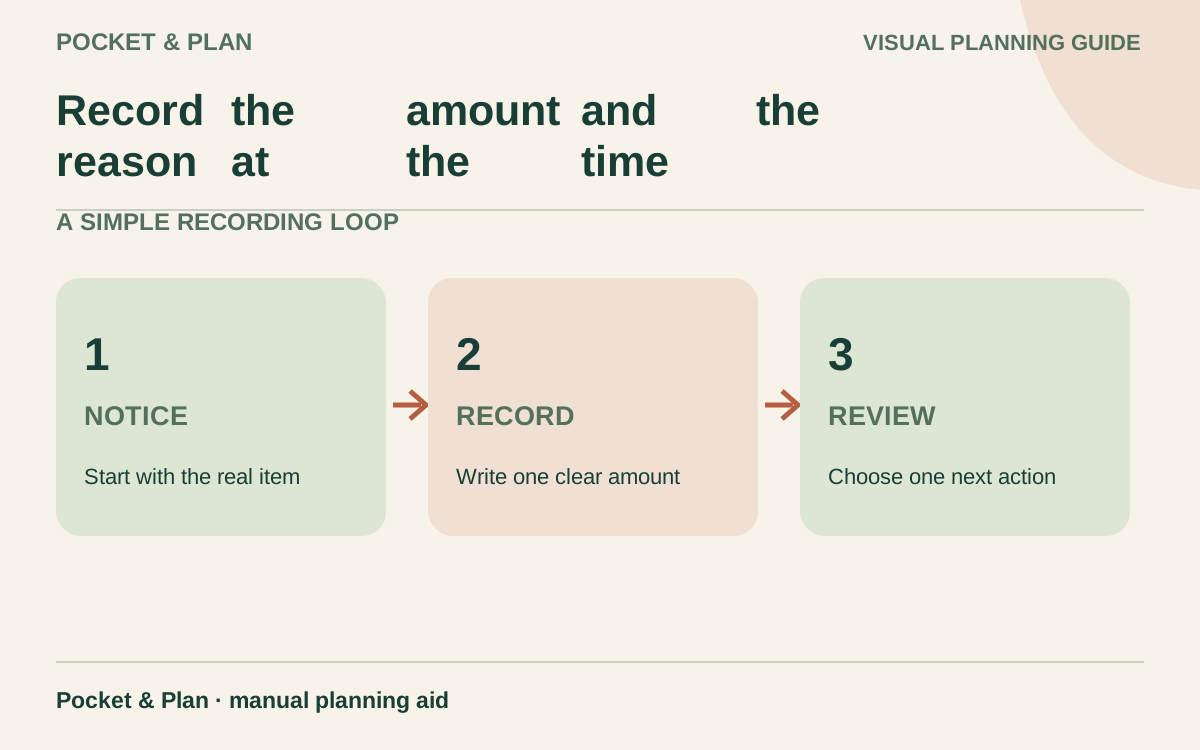
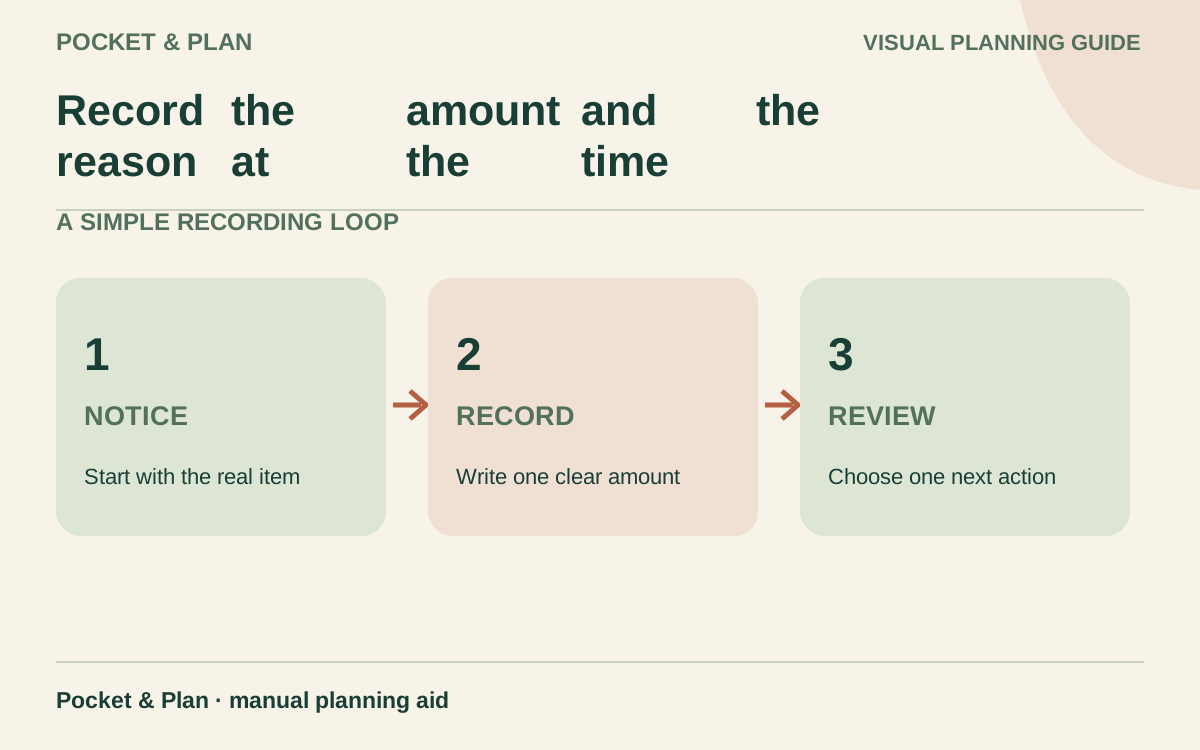
Record the amount and the reason at the time
Write a short entry when the food is discarded, while the circumstances are clear. A kitchen scale can help with safe, straightforward measurements, but an estimate is acceptable when marked as such. Do not retrieve or handle discarded, spoiled, or potentially hazardous food just to improve a measurement.
Use grams, ounces, count, or a described portion consistently for that item. “Half of a 600 g yogurt container” is a more reproducible estimate than “some yogurt.” Do not add two cups, one apple, and 80 grams into a single quantity total.
| Field | What to record |
|---|---|
| Date and food | When it was discarded; enough description to identify it |
| Amount and unit | Weight, count, or described portion |
| Measurement basis | Measured or estimated |
| Reason | Bought too much, prepared too much, plans changed, overlooked, disliked, storage problem, or unknown |
| Estimated purchase value | Amount calculated, receipt or batch basis, or unknown |
| Next purchase change | A specific quantity, package, or meal-planning adjustment |
Use a neutral reason rather than a judgment about the person who left food. “Bought a large tub for one planned breakfast” gives you something to change; “bad at budgeting” does not.
Estimate the discarded portion rather than the whole package
For a food bought in a known quantity, use:
Estimated discarded value = purchase price × discarded quantity ÷ purchased quantity.
Use matching units and your actual price when available. An item-specific discount can be reflected in that price; state how you treat tax. Keep a basket-wide fee separate if you cannot allocate it reliably. The grocery price book explains consistent quantities and price records.
Here is a hypothetical log with invented prices and quantities. The costs exclude any additional tax or fees:
| Food discarded | Amount | Cost basis | Estimated value | Observation |
|---|---|---|---|---|
| Spinach | 75 g | 300 g package cost $3.00 | $0.75 | More purchased than the planned meals used |
| Plain yogurt | 150 g | 600 g container cost $3.60 | $0.90 | Planned breakfasts changed |
| Cooked plain rice | 120 g | 600 g cooked batch had $0.60 of rice ingredients | $0.12 | More cooked than needed |
| Homemade soup | About one cup | Batch cost and original yield not recorded | Unknown | Container was overlooked |
The known-cost subtotal is $0.75 + $0.90 + $0.12 = $1.77. There is also one unpriced entry. Do not report $1.77 as the complete value of everything discarded, and do not quietly assign the soup a zero-dollar value.
These records describe disposal after the fact. They do not suggest that any of these foods should have been eaten once unsafe or spoiled.
Use the cooked batch’s yield for prepared food
Dry rice and cooked rice have different weights. In this example, 200 g of dry rice came from a 1,000 g package costing $3.00. The rice used in the batch therefore cost $3.00 × 200 ÷ 1,000 = $0.60. After cooking with water, the batch weighed 600 g.
Discarding 120 g of that cooked batch represents one fifth: 120 ÷ 600 = 0.20. Its estimated ingredient value is $0.60 × 0.20 = $0.12. Dividing the cooked discarded weight by the dry package weight would mix unlike quantities and produce the wrong estimate.
For a mixed dish, include the costs of all ingredients actually used and the final batch yield. Do not charge the dish for an entire oil bottle when it used a spoonful. Keep an unknown estimate if you cannot reconstruct the recipe; rough guesses with several decimal places are still guesses. These food-value calculations exclude cooking energy, labor, and equipment.
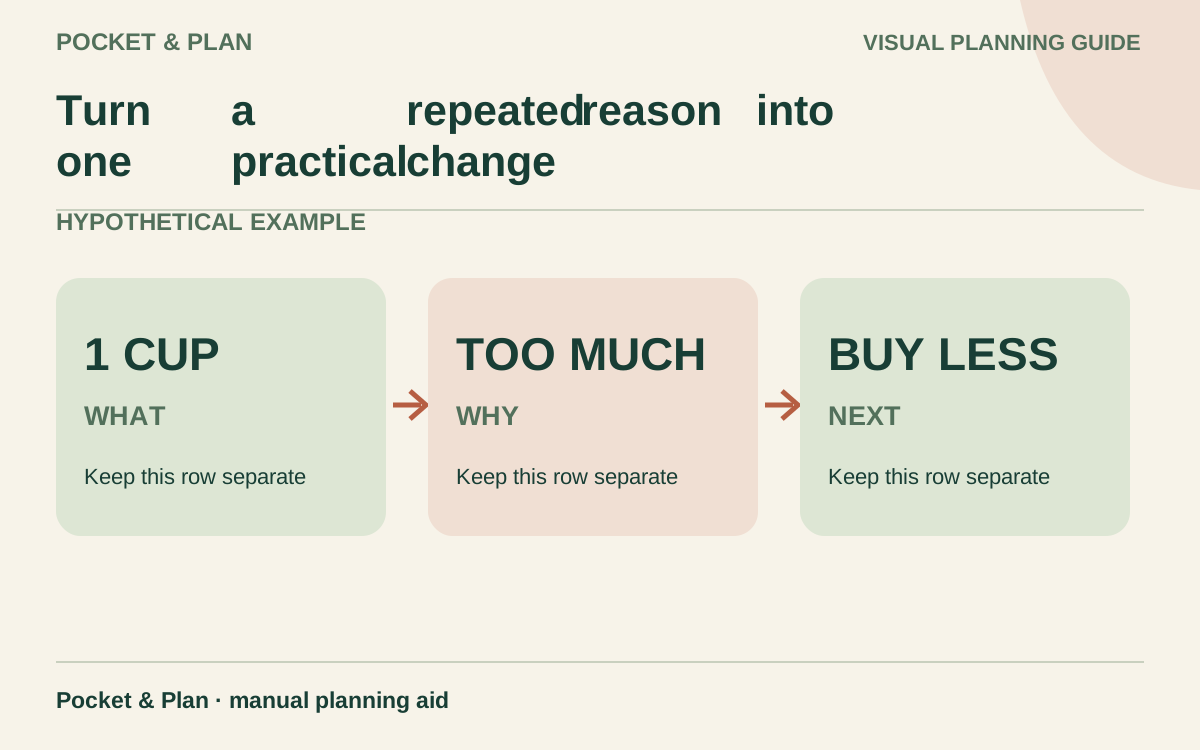
Turn a repeated reason into one practical change
At the end of the period, look for a repeated combination of item and reason. A smaller spinach package may suit two planned meals better. Yogurt may need fewer servings on the list. Rice may need a smaller recipe batch. Choose one change and state when you will try it.
The FDA recommends noticing what you discard and matching purchases to expected use. Keep the action specific: “buy one smaller container for the two breakfasts currently planned” is more useful than “waste less.” Check that the revised amount still provides enough food.
Use a pantry review to assign suitable food already at home, then update the next list. A food-waste observation should inform that next purchase, not become a reason to force an unwanted or unsafe meal.
Review safety and money separately
Never eat spoiled food to keep the tracker empty. Follow product instructions and item-specific guidance in the FoodSafety.gov storage chart. Its refrigerator limits assume 40°F or below; a written date cannot correct an unknown or unsafe storage history. Reheating or freezing is not a way to make previously mishandled food safe.
After the trial change, compare another similar period and note differences in people or meals supplied. A lower discarded-value estimate may indicate a useful change, but it is not proof of reduced spending. Compare actual purchases, restocking, and other food spending in your grocery budget before calling any difference savings.
Keep the next action small enough to repeat. The useful result is a clearer quantity or meal assignment supported by observations, with unknowns still visible.
Sources & verification
These primary reference sources support the guide. Worked examples are our own illustrations, not national averages or reported personal results.
- EPA — Preventing Wasted Food At Home ↗Checked September 11, 2026
- FDA — How to Cut Food Waste and Maintain Food Safety ↗Checked September 11, 2026
- FoodSafety.gov — Cold Food Storage Chart ↗Checked September 11, 2026
Published · Last substantive update .
Found a factual error or a calculation that needs checking? Suggest a correction by email with this guide's link. The link opens a draft in your email app; you send it yourself. Contact details · Corrections policy