The short answer
Separate a dog's ongoing supplies, starting costs, known future care, and unexpected needs so one monthly estimate does not hide an early payment gap.
General educational guide. Sources checked September 11, 2026. Examples are illustrative; amounts should be adjusted to your household. Read our disclosure.
To budget for a dog, list the care and supplies that particular dog needs, obtain relevant local prices, and separate recurring purchases from initial costs and later payments. Keep unexpected needs in a distinct reserve plan. The first month may require more cash than an annual total divided by twelve suggests.
Use the dog budget printable for recurring costs, initial purchases, dated quotes, amounts already reserved, and upcoming contributions. It includes space for an emergency-reserve note and the next action on an unknown cost. Print on US Letter paper in landscape orientation. The worksheet is manual and does not calculate, recommend treatments, or compare insurance policies.
Start with the dog’s actual situation
Write whether you are planning for a dog already in your care or preparing for a new arrival. Note the household’s normal work schedule, time away, available equipment, and care arrangements. Do not count a friend’s help as a settled arrangement until they have agreed to it.
For an existing dog, gather receipts, provider invoices, and the care schedule you have discussed with the veterinarian. For a prospective dog, ask the shelter or current caregiver what is included in the transfer and what still needs arranging. A lower initial fee does not establish a lower ongoing cost.
Keep medical choices with the veterinary team. AVMA’s public description of its cost-of-care education emphasizes conversations about costs and care options while relying on the veterinarian’s expertise. This guide uses that principle for planning; it does not evaluate which procedure, medicine, diet, or care interval is suitable for your dog.
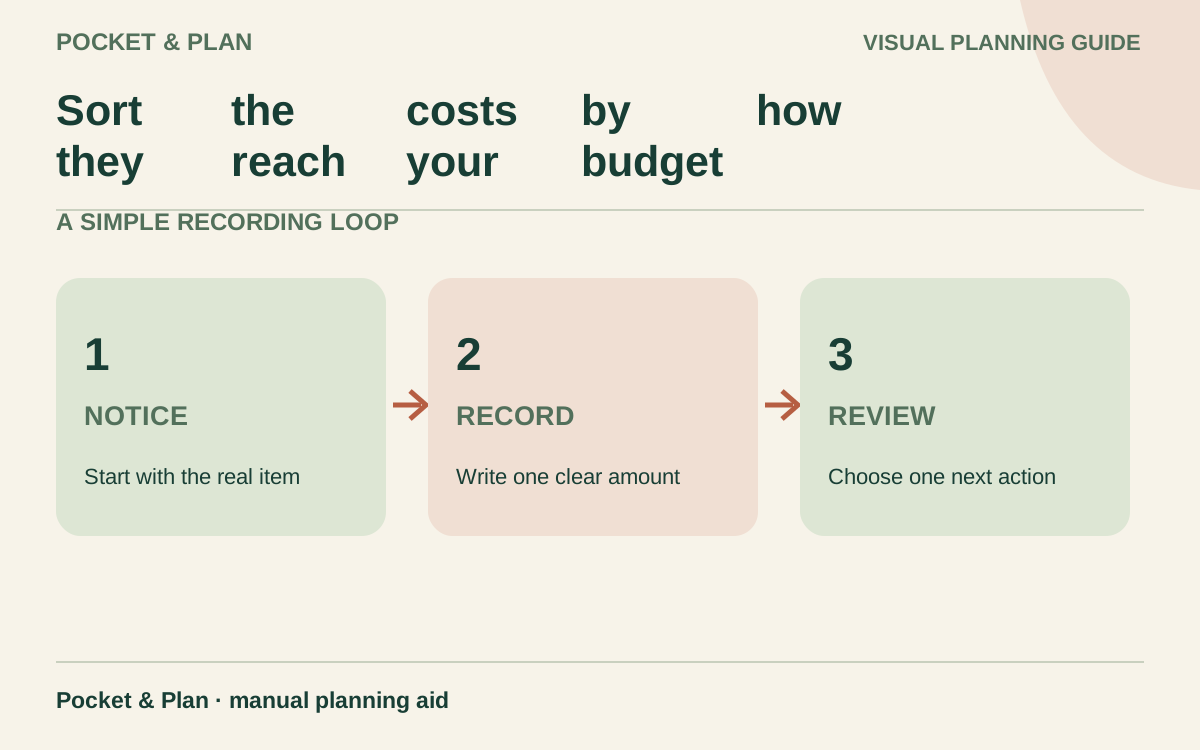
Sort the costs by how they reach your budget
Use four separate groups rather than one “pet expenses” estimate:
| Group | What to investigate | Timing detail |
|---|---|---|
| Recurring care and supplies | Food, agreed care services, supplies, and prescribed items that repeat | Actual buying or billing cycle |
| Initial purchases and arrangements | Transfer fees, suitable equipment, training arrangements, and initial care not already covered | Required payment date before or after arrival |
| Known later costs | Quoted care, planned boarding, replacement equipment, and applicable local fees | Next due date and what is already reserved |
| Unexpected needs | An unplanned urgent-care bill or another genuine surprise | Separate reserve and access plan |
The ASPCA’s pet-cost checklist distinguishes initial purchases from ongoing care. Its displayed figures are labeled as a 2021 update; use the categories as prompts, not those figures as current local quotes or a suitable total for your dog.
Check anything already included in another charge. For example, an adoption arrangement might include a particular item or service, while a boarding quote might exclude food or transport. Confirm the actual terms. For local registration or housing requirements, use your municipality’s and housing provider’s current information rather than assuming a national fee.
Turn quantities and quotes into a working estimate
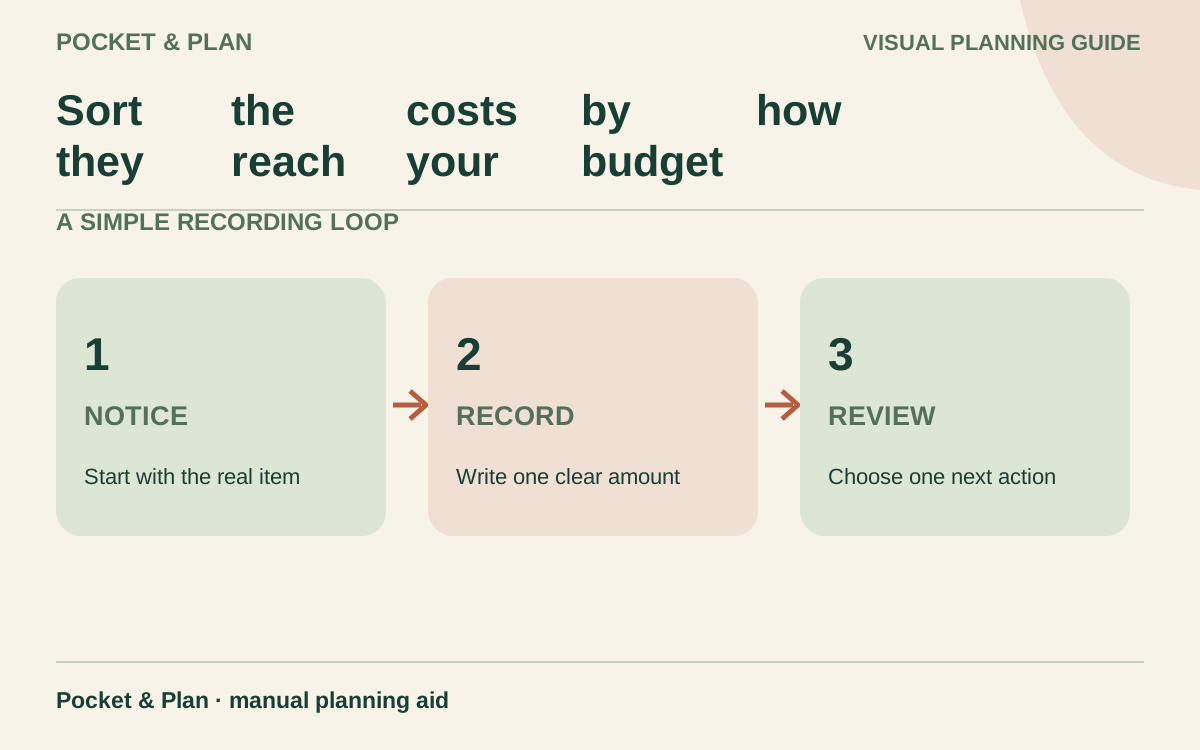
Record the provider or price source, date checked, what is included, and when you will need to pay. Add tax, delivery, or other unavoidable extras where they apply. A missing quote is incomplete information, not a zero-dollar cost.
For supplies, track how long the purchased quantity actually lasts under the dog’s appropriate care plan. A package bought every six weeks does not need replacing twelve times a year, but its full checkout price still matters on purchase day. Do not change food quantities or prescribed care to make a spreadsheet fit an invented target.
Ask about the scope of a veterinary estimate and the next check if the expected amount changes. Record a range as a range until you have a firmer figure. If cost is an obstacle to needed care, discuss it with the veterinary team and ask what support or options may be available; the worksheet cannot determine eligibility or make an arrangement.
Compare an ongoing month with a starting month
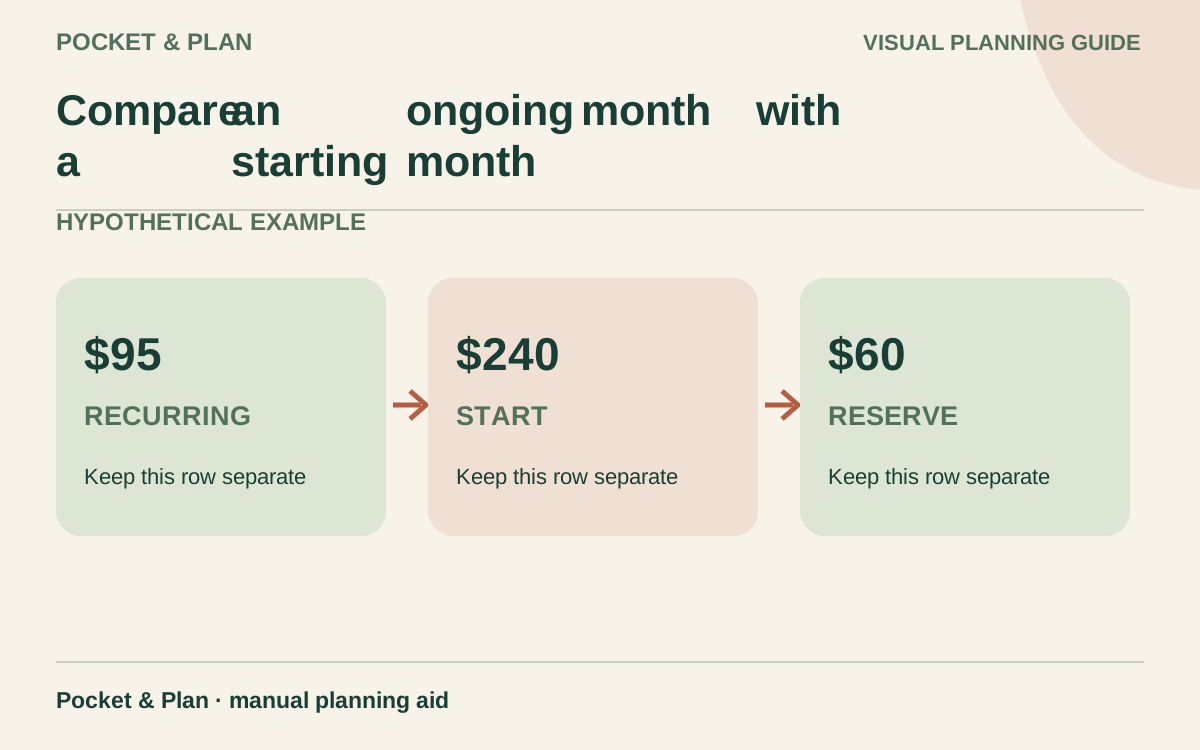
Consider this deliberately limited, hypothetical plan for one dog. The amounts are invented examples, not observed prices or a complete care recommendation. Assume the recurring quantities fit this dog’s established needs and the listed initial items are the only starting purchases still missing in this scenario.
| Monthly assignment | Invented amount |
|---|---|
| Food purchases planned for this month | $55 |
| Routine supplies | $12 |
| Agreed walking or care help | $48 |
| Contribution toward quoted later care | $40 |
| Contribution to a separate emergency reserve | $25 |
| Total monthly assignment | $180 |
The first three rows total $115 of planned recurring spending. The last two are $65 of reserve contributions, so the monthly assignment is $180. Money reserved has not yet been paid to a provider.
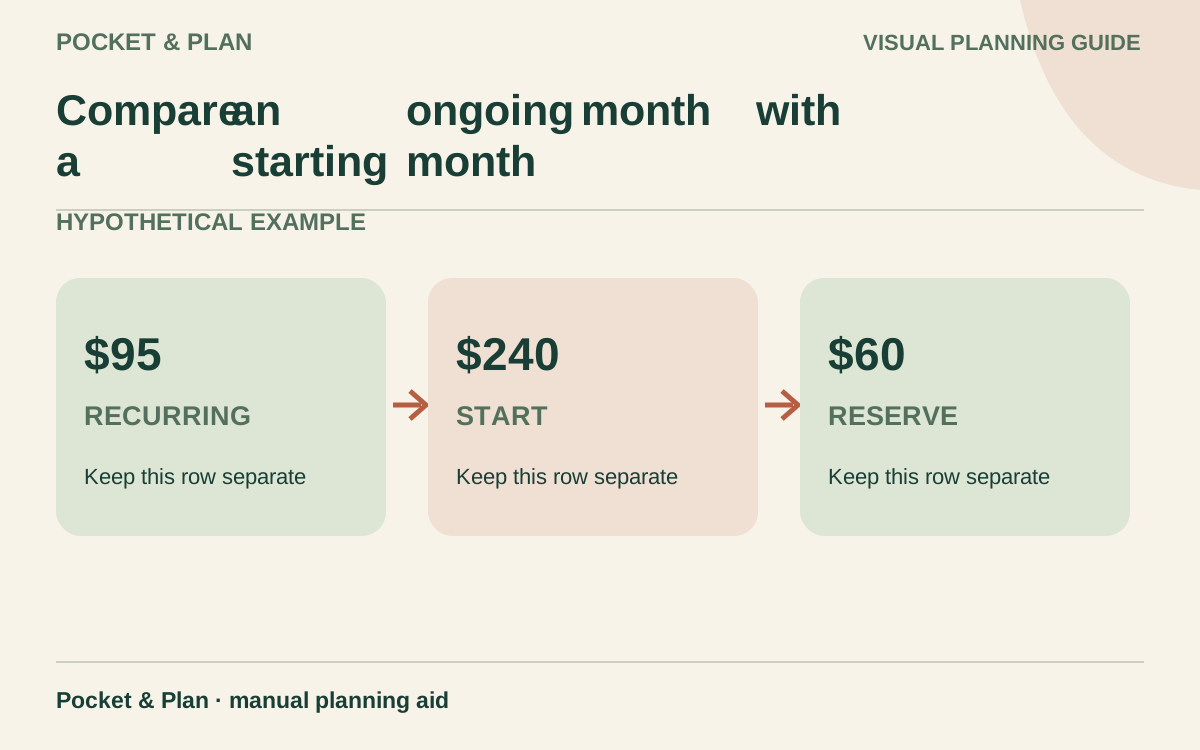
Now add initial equipment still needed: a suitable leash and harness $45, bowls and bedding $50, and a transport setup $60. Those purchases total $155. If they all need payment this month, the combined first-month assignment is $335, or $180 plus $155.
The $155 is not added again every month. Any missing transfer fee, medical need, housing charge, or other cost would need its own row; leaving it out because it is absent from this small example would understate the real plan.
Check the first quoted care payment
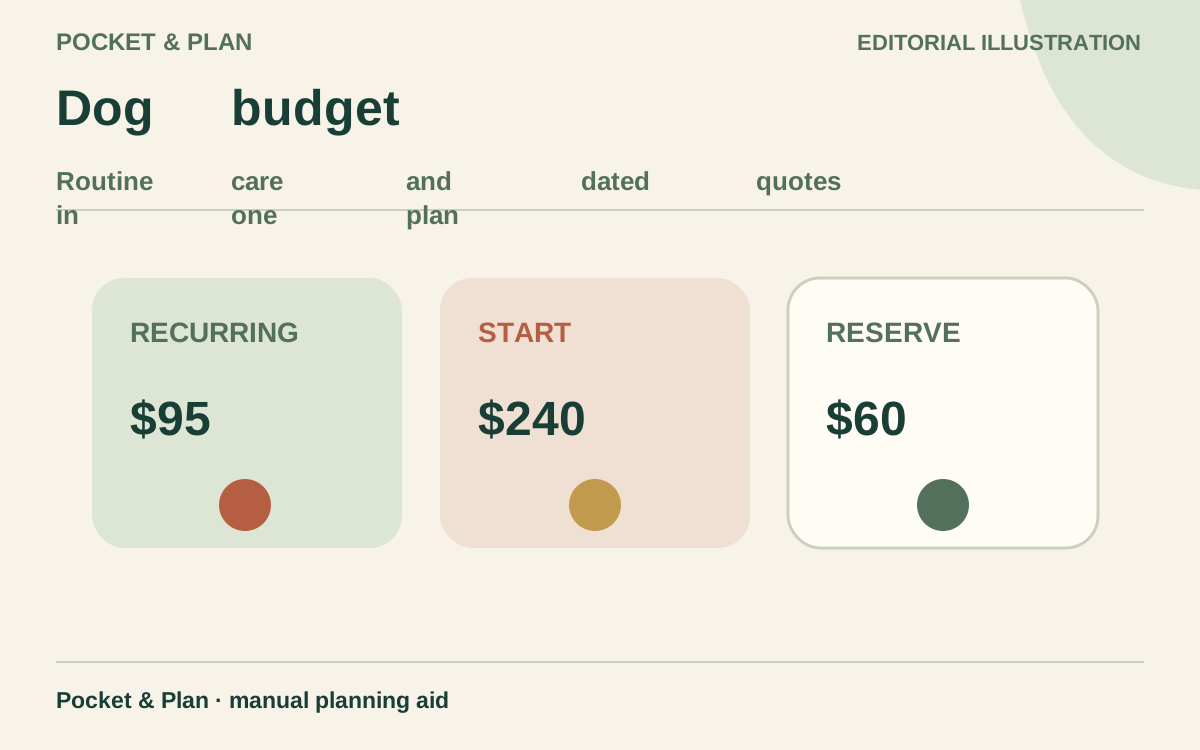
Suppose the later-care line refers to a hypothetical written estimate of $240 due before the fourth contribution date, with $120 already reserved for that purpose. Three contributions of $40 close the $120 gap:
| Point in the schedule | Known-care reserve |
|---|---|
| Opening amount already reserved | $120 |
| After first $40 contribution | $160 |
| After second $40 contribution | $200 |
| After third $40 contribution | $240 |
| After the $240 payment | $0 |
If the appointment instead requires payment after only two contributions, $200 is available and the shortfall is $40. Recalculate before the payment date; spreading $240 across a year would conceal the immediate need.
The separate $25 monthly emergency contribution is not part of this $240 reserve. Use the sinking-fund guide to record known costs and the emergency-fund guide for unexpected needs. Do not promise the same reserved dollars to both purposes.
Keep emergency access separate from routine funding
An unexpected bill can exceed the balance you have built. The CFPB’s emergency-fund guidance explains that a useful target depends on your situation and that timing and access matter. Use your own circumstances and informed cost discussions to set and revisit the target; no single amount guarantees complete coverage.
Record where reserved funds can actually be accessed and who will handle care if you are unavailable. If your household already has an insurance policy or another arrangement, check its documents separately before assuming a bill is covered or that money will arrive before payment is due. This worksheet does not count an expected reimbursement as current cash.
Review the plan after the first real cycle
Replace estimates with actual charges, note supplies still available, and confirm the next known dates. Adjust for a changed care arrangement or provider estimate while retaining the earlier record. A skipped required purchase is not evidence that the dog’s needs cost less.
Fit the revised assignments into your monthly household categories. Keep the starting purchases, ongoing spending, and remaining reserves distinct. That gives you a plan you can update from real records without treating every month as either the first month or an average that never occurs.
Sources & verification
These primary reference sources support the guide. Worked examples are our own illustrations, not national averages or reported personal results.
- ASPCA — Cutting Pet Care Costs ↗Checked September 11, 2026
- AVMA — Talking with clients: Discussing the cost of care ↗Checked September 11, 2026
- CFPB — An essential guide to building an emergency fund ↗Checked September 11, 2026
Published · Last substantive update .
Found a factual error or a calculation that needs checking? Suggest a correction by email with this guide's link. The link opens a draft in your email app; you send it yourself. Contact details · Corrections policy