The short answer
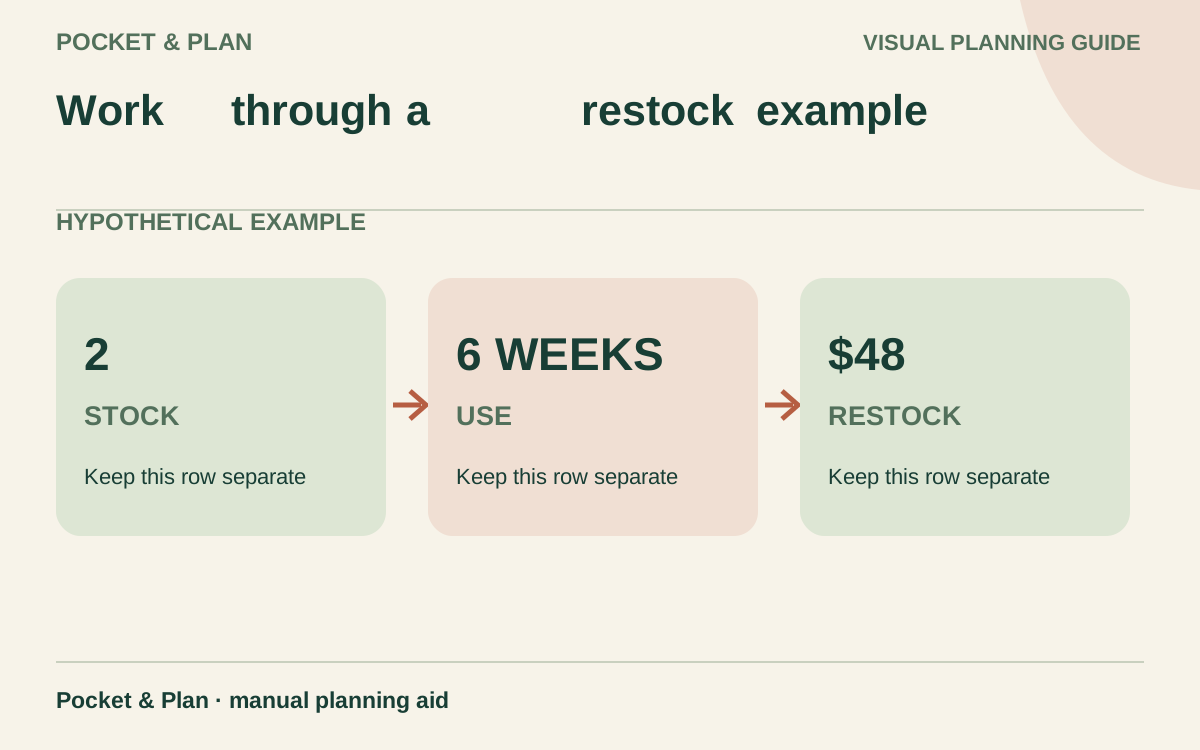
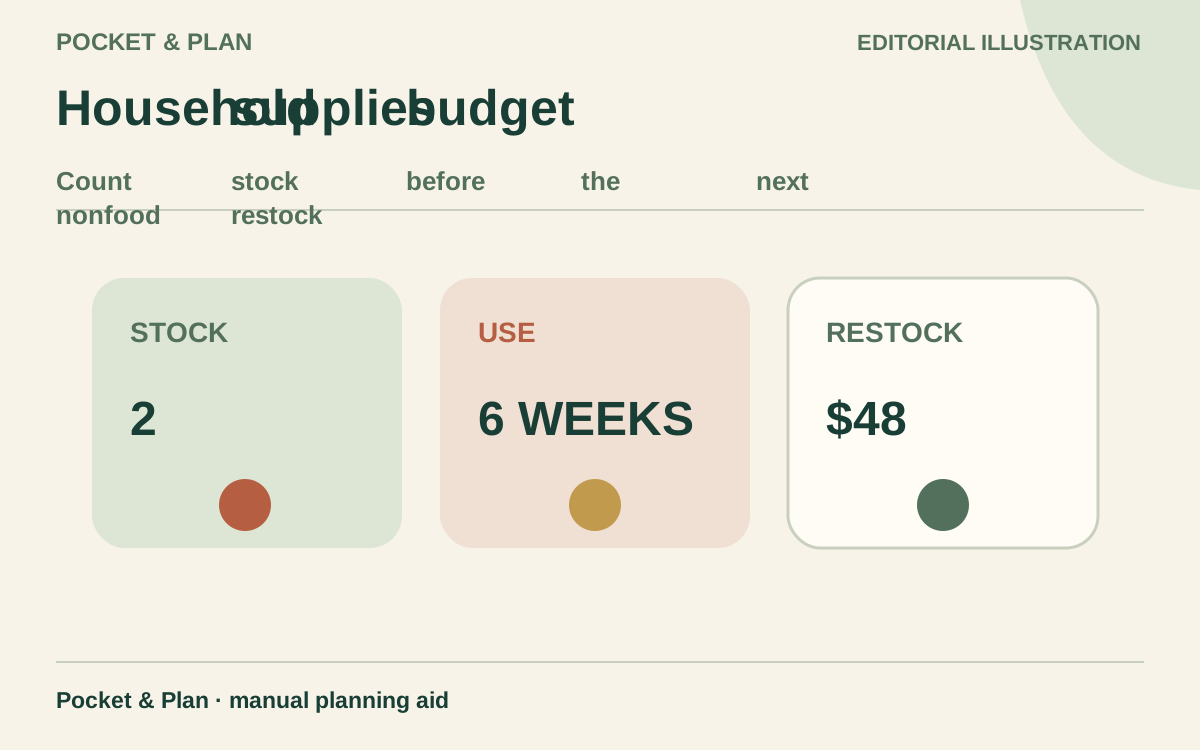
A separate household supplies budget shows which nonfood items use the grocery trip, how long stock lasts, and what needs replacing next.
General educational guide. Sources checked September 11, 2026. Examples are illustrative; amounts should be adjusted to your household. Read our disclosure.
A household supplies budget gives nonfood essentials their own place: cleaning products, paper goods, laundry items, toiletries, and other supplies your household actually uses. These items may be bought on the same trip as groceries, but separating them can make the food total and the restock cycle easier to understand.
Consumer.gov’s budget worksheet provides a simple income-and-expense structure that can include irregular monthly items. USDA’s SNAP facts also distinguishes food benefits from nonfood items such as soap, paper products, and household supplies. That distinction is useful for organizing a household record; it is not a statement about your eligibility or shopping choices.
Download the household supplies budget worksheet to list stock, expected use, pack size, and actual restock costs. It is a manual worksheet with no product or price recommendation.
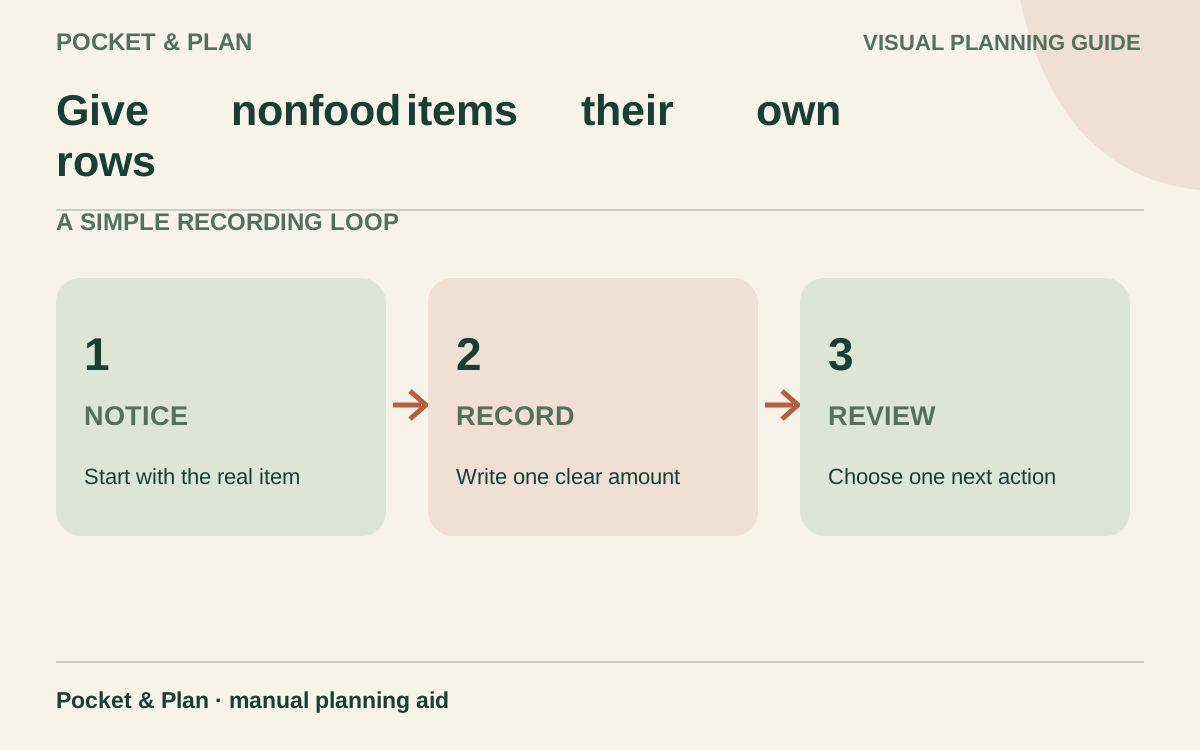
Give nonfood items their own rows
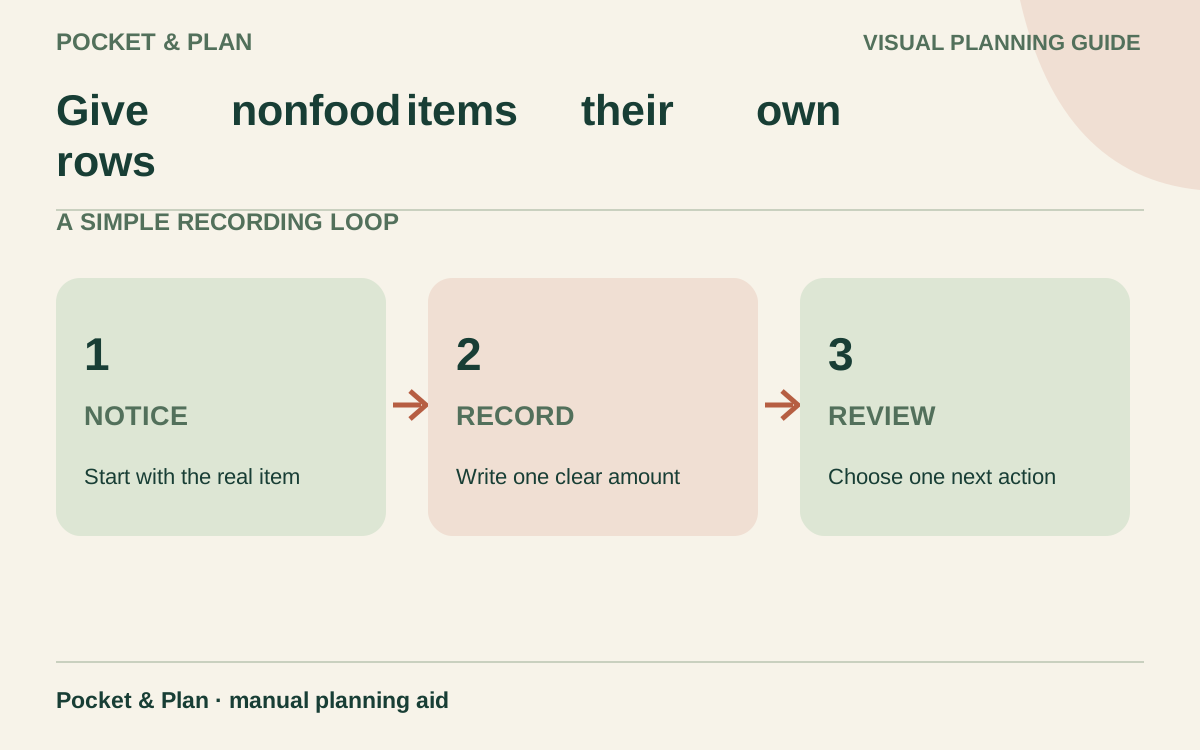
Choose categories that answer a real question. Cleaning may include dish soap and surface cleaner; paper may include toilet paper and towels; personal care may include toothpaste and shampoo. Write a short boundary beside any item that could be classified two ways. Consistency matters more than a universal category list.
Start with stock you can use. Count unopened packages and usable partial packages separately. A nearly empty bottle may need replacement soon even if the household technically has one on hand. Record the unit and a next restock date rather than treating all supplies as a monthly expense.
Link the worksheet to the grocery list template after you decide what is missing. The list can include an aisle or store, while this budget keeps the nonfood amount visible beside the planned restock.
Work through a restock example
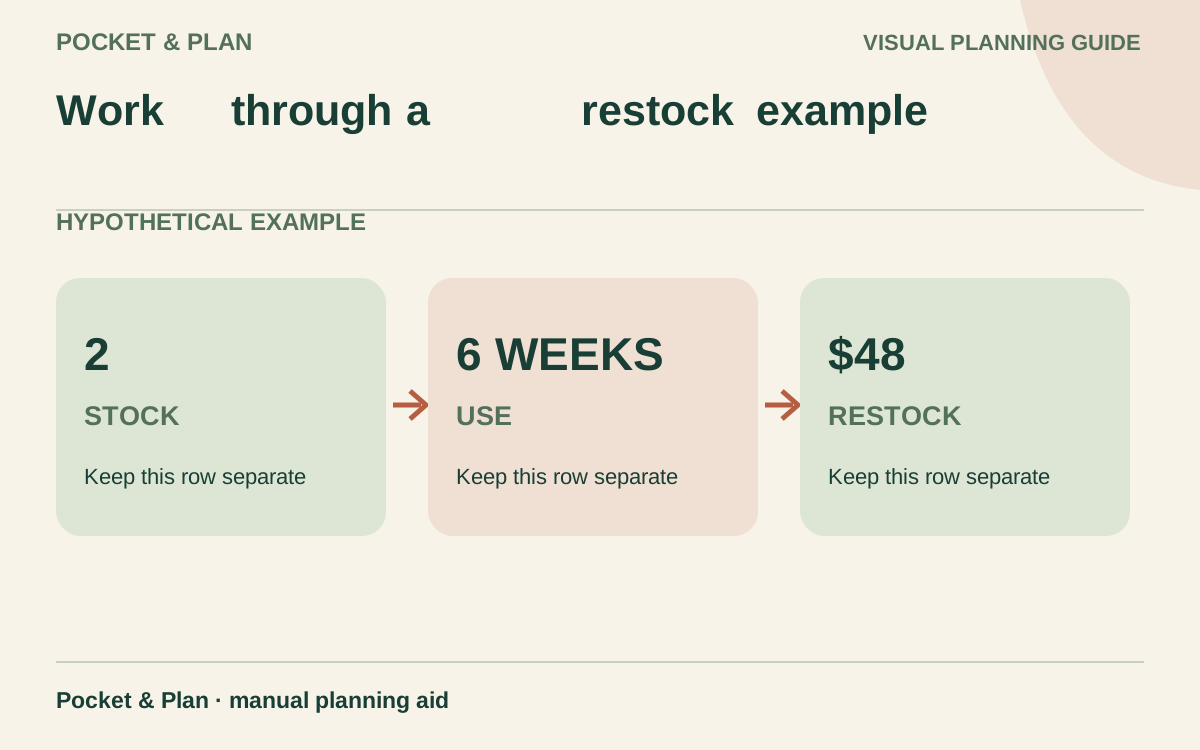
Imagine an invented restock basket with $18 for cleaning, $16 for paper products, and $14 for personal care. The total is $48. One item may be a larger pack intended to last two months, so recording the full checkout cost and the intended use window prevents the next month from looking artificially cheap.
| Category | Planned | Actual | Next review |
|---|---|---|---|
| Cleaning | $18 | $17 | Four weeks |
| Paper products | $16 | $19 | Six weeks |
| Personal care | $14 | $12 | Eight weeks |
| Total | $48 | $48 | Review each date |
The amounts are fictional. The point is to keep the checkout total, actual amount, and review date together even when each category lasts a different length of time.
Match pack size to use and storage
Write the package quantity and a rough use rate based on your own household. A bulk pack may cost more today and require storage; a small pack may run out earlier. Do not call a lower unit price savings unless the household uses the quantity before it becomes unusable and the full checkout cash fits the plan.
Keep substitutions visible. If a preferred product is unavailable, record the replacement and its pack size rather than changing the category definition. The grocery budget for two can help when food and household supplies are purchased together but need separate totals.
Review the supplies budget at the right interval
Review a fast-moving item after the next purchase and a long-lasting item at its planned restock date. Replace an estimate with the actual receipt amount and note a change in household size, routine, or product use. A difference from the plan is information, not automatically savings or waste.
Use the monthly budget categories guide if you need a broader place for recurring home costs. Keep the supplies worksheet detailed enough to answer “what should we buy next, and when?” without turning every small purchase into a separate system.
Sources & verification
These primary reference sources support the guide. Worked examples are our own illustrations, not national averages or reported personal results.
- Consumer.gov — Budget worksheet ↗Checked September 11, 2026
- USDA FNS — SNAP facts ↗Checked September 11, 2026
Published · Last substantive update .
Found a factual error or a calculation that needs checking? Suggest a correction by email with this guide's link. The link opens a draft in your email app; you send it yourself. Contact details · Corrections policy