The short answer
Assign a limit to each gift recipient, include the costs around the purchase, and track charges and completed refunds without spending the same available money twice.
General educational guide. Sources checked September 11, 2026. Examples are illustrative; amounts should be adjusted to your household. Read our disclosure.
A holiday gift budget gives each recipient a spending limit, includes the cost of getting gifts to them, and records what has actually been charged. Keep expected refunds and shared-gift repayments separate from money already received. A list of gift ideas becomes a usable budget when its total fits a chosen limit and every purchase has a place in the record.
Copy the tables below into a notebook or your own spreadsheet. They are an on-page template for manual use. The examples use invented US dollar amounts to demonstrate the calculations, not current product prices or suggested spending levels.
Prefer a ready-to-print version? Download the holiday gift budget PDF for allocation and transaction pages. Keep charges, retailer refunds, and received contributions from outside your budgeted household in separate fields. This is a manual worksheet for handwriting, with no automatic calculations. Print on US Letter paper in the orientation shown on the file.
Set the gift limit within the whole season
Choose the amount available for gifts after allowing for ordinary bills and other seasonal plans. Travel, hosting, donations, and decorations may have their own budgets; name those exclusions so they do not quietly enter the gift total later. The CFPB’s holiday spending plan connects gift spending with regular expenses and recommends checking purchases against the plan as shopping progresses.
Write down a total limit, money already reserved, and the dates on which you expect to shop. A saving target for December does not fund an order due in October. If the money will accumulate gradually, use the savings tracker to record contributions separately from this purchase list.
Treat a gift cap as permission to spend up to an amount, not an instruction to use every dollar. Agree on any shared household limit before assigning recipients.
Copy a recipient list with clear cost rules
Use one recipient or joint gift per row. Put a couple’s shared present on one row if it is one purchase. Add separate rows for common packaging or delivery costs that you cannot fairly assign to a particular recipient.
| Recipient or shared expense | Limit, including assigned tax | Gift idea / scope | Needed by | Buyer | Next action |
|---|---|---|---|---|---|
| Recipient 1 | |||||
| Recipient 2 | |||||
| Joint gift | |||||
| Shared delivery / wrapping | |||||
| Unspent buffer | Keep available | ||||
| Total assigned |
Choose one treatment for tax and delivery. For example, include estimated tax in each recipient’s cap and put combined shipping on the shared-expense row. If a checkout total already includes shipping, do not enter that shipping again elsewhere.
The FTC’s online-shopping guidance advises checking the full purchase cost, including delivery and other charges. Save the checkout breakdown with your estimate so you can replace a guess with the actual amount without losing its components.
Add a decision date before the gift is needed. Record any wrapping task, delivery uncertainty, or recipient preference beside the idea. Those details help you notice that an apparently completed purchase still needs action.
Work through a complete allocation
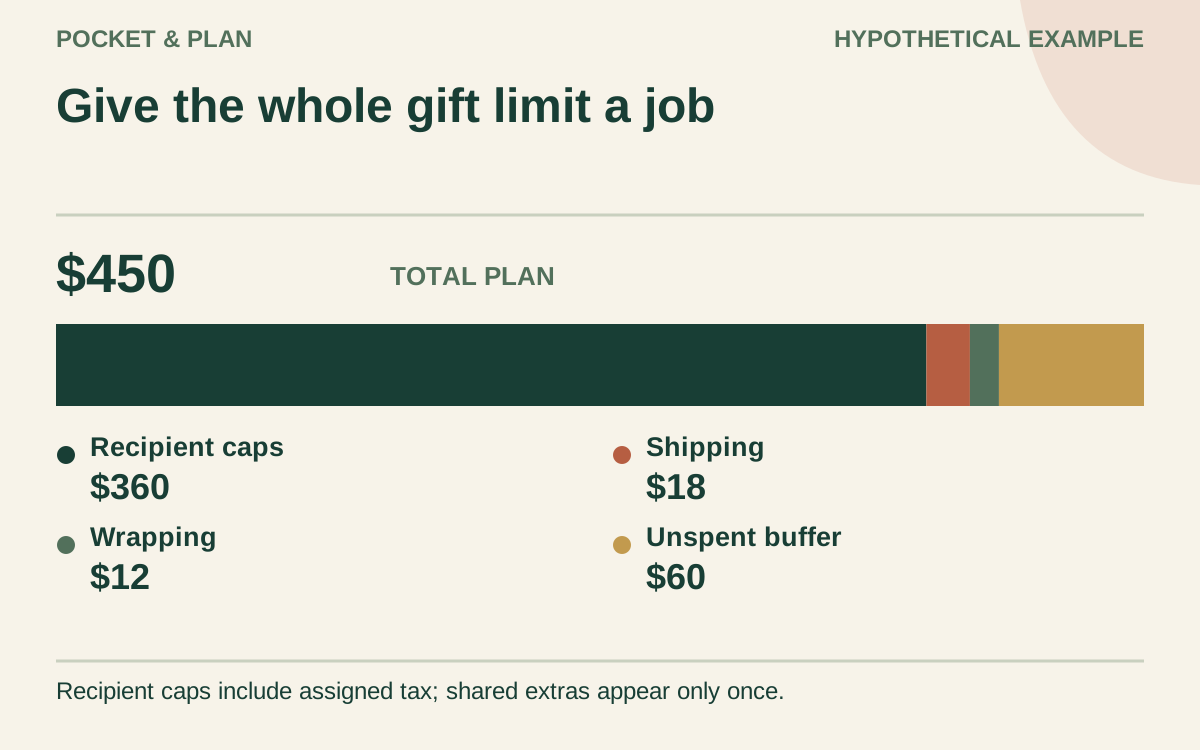
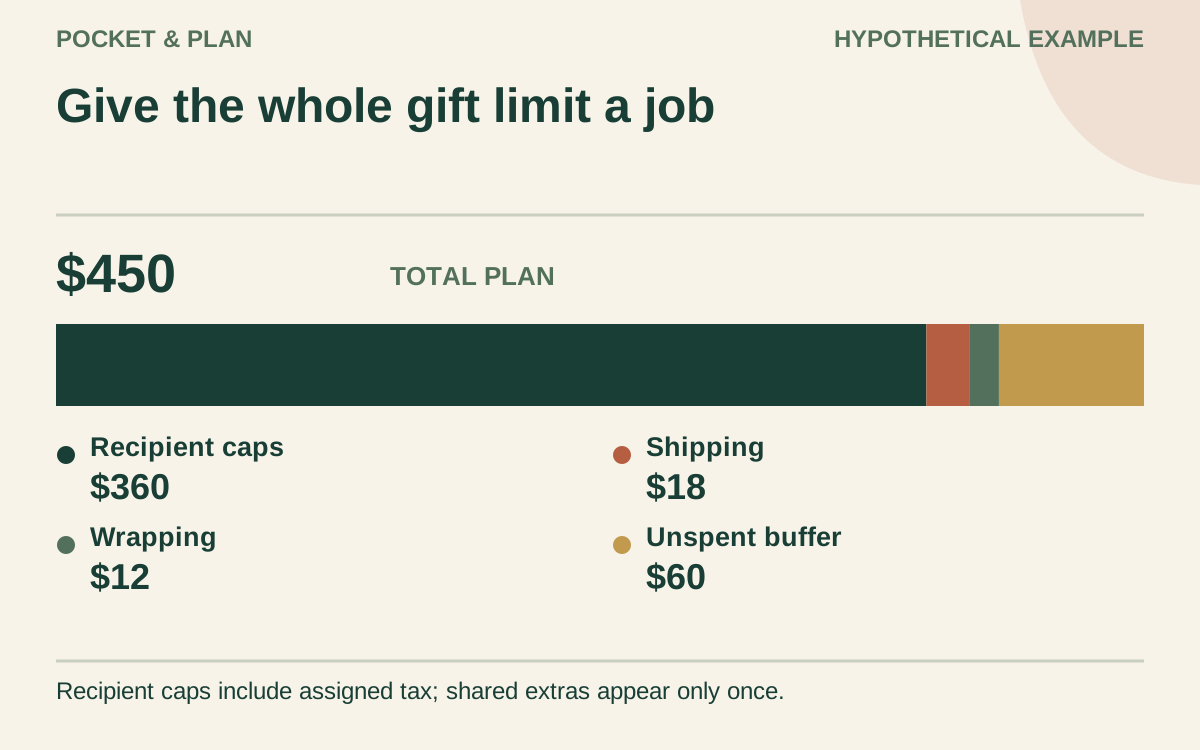
Suppose a household chooses a $450 gift limit. Its original allocation is:
| Assignment | Maximum amount |
|---|---|
| Recipient A | $80 |
| Recipient B | $70 |
| Recipient C | $50 |
| Recipient D | $60 |
| Recipient E | $100 |
| Combined shipping | $18 |
| Wrapping supplies | $12 |
| Unspent buffer | $60 |
| Total assigned | $450 |
The recipient caps total $360. Shipping and wrapping add $30, and the $60 buffer completes the $450 allocation. Recipient caps in this example include tax; the shipping allowance is separate. The buffer is assigned money that remains unspent.
If Recipient A’s item costs $65 plus $5 of tax, its $70 checkout amount is $10 below the $80 cap. That difference becomes available for reassignment only after checking that nothing else remains on A’s row. Record a deliberate change to another cap instead of treating both recipients as entitled to the same $10.
If only $300 is reserved before shopping, the full allocation still needs $150. Three contributions of $50 would fill that gap, assuming no spending or withdrawals in the meantime. Check that they arrive before their purchases are due.
Record shared gifts without hiding the cash required
Decide who buys, what each participant agrees to contribute, and when the money must arrive. Keep the full checkout amount visible even if your eventual share is smaller.
For an invented $120 joint gift split equally with someone outside your budgeted household, your household’s agreed share is $60. If you place the order before the other person’s $60 arrives, you must still cover the entire $120 at checkout. An expected repayment is not available cash.
If you are the lead buyer, record the $120 charge and a separate $60 contribution when received. Your resulting share is $60. Keep that contribution identified as reimbursement for the joint gift, so it does not look like a retailer refund or a second gift budget. If someone else buys, record your own confirmed contribution once.
Use the recipient notes to prevent duplicate purchases by different household members. A shared shopping list can show who is responsible without exposing surprise gift details to everyone.
Track purchases and returns as separate events
Keep this transaction table alongside the allocation:
| Date | Recipient / expense | Charge | Refund received | Order or receipt reference | Status / next date |
|---|---|---|---|---|---|
Net purchase spending = recorded charges minus refunds actually received. Keep shared-gift contributions in their separately labeled record. To compare with household and recipient limits, subtract only received contributions from people outside the budgeted household. Transfers between members already included in that household do not reduce its cost. The checkout amount still determines the money needed when buying. Do not reduce spending because a return was requested, a parcel was mailed back, or a refund was promised.
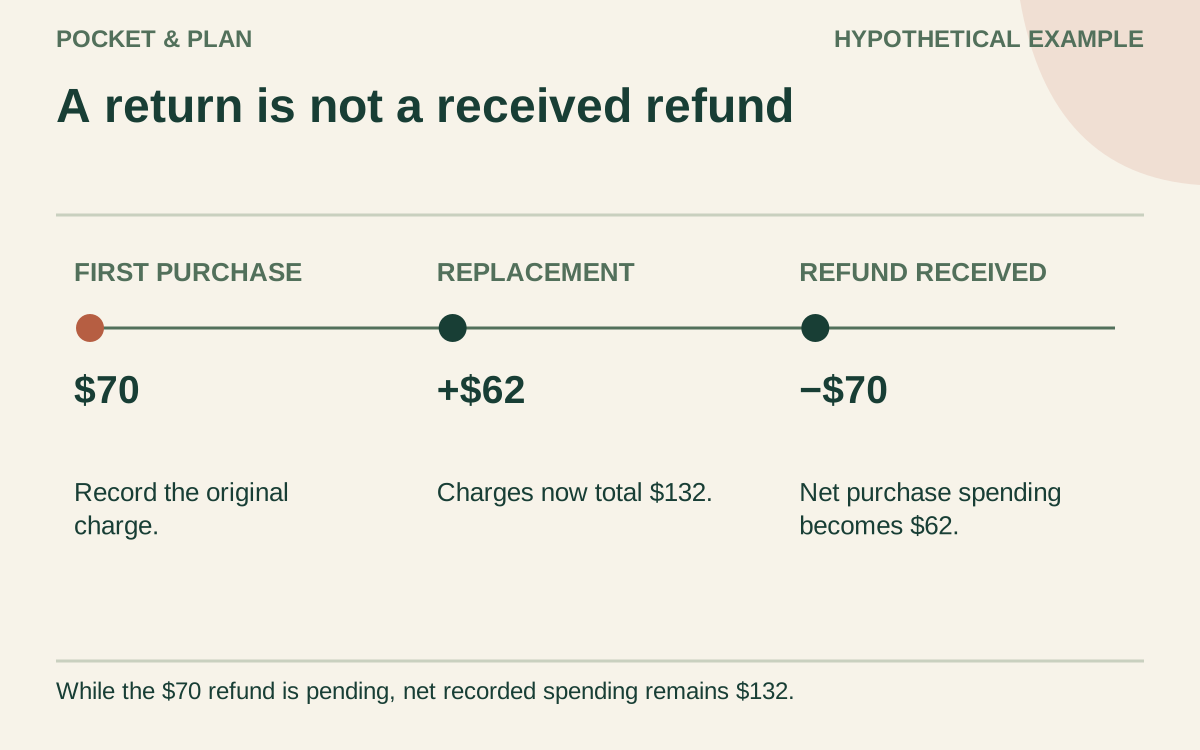
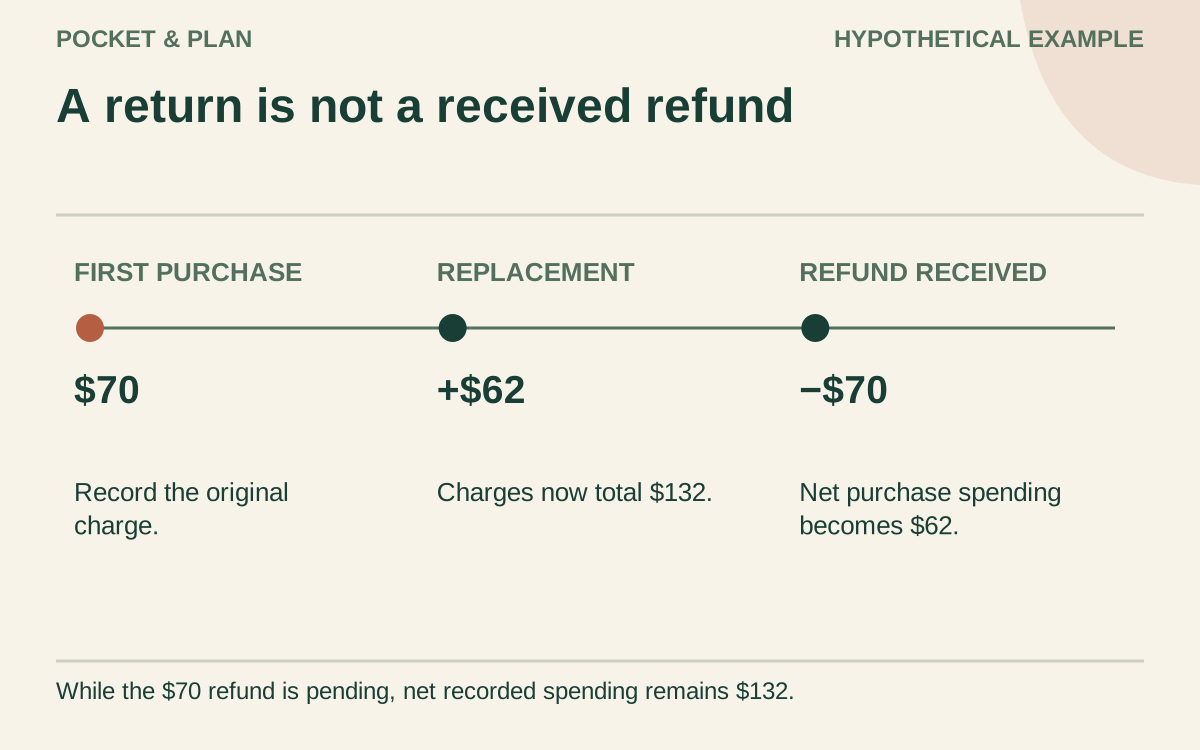
Suppose a $70 purchase is returned and a $62 replacement is bought before the refund arrives. Charges total $132. Net spending remains $132 while the refund is pending; it becomes $62 after a confirmed $70 refund. Any nonrefunded return postage is an additional cost.
Check the seller’s return conditions, deadlines, and possible costs before buying, and keep receipts and relevant messages. These are specific recordkeeping steps covered in the FTC shopping guide, rather than a promise that every gift can be returned.
Close the list before starting another occasion
Check that each recipient’s purchases are complete, refunds have settled, and shared contributions reconcile. Assign unused buffer deliberately. A gift already paid for on a card remains a purchase in this list; paying the card bill should not count as a second gift expense.
Keep the final total and a short note about what changed for the next occasion. A recurring gift sinking fund can use that history, while a temporary no-spend plan can define how planned gifts fit its exceptions.
Sources & verification
These primary reference sources support the guide. Worked examples are our own illustrations, not national averages or reported personal results.
- CFPB — A five-step spending plan to avoid holiday debt ↗Checked September 11, 2026
- FTC — Online Shopping ↗Checked September 11, 2026
Published · Last substantive update .
Found a factual error or a calculation that needs checking? Suggest a correction by email with this guide's link. The link opens a draft in your email app; you send it yourself. Contact details · Corrections policy