The short answer
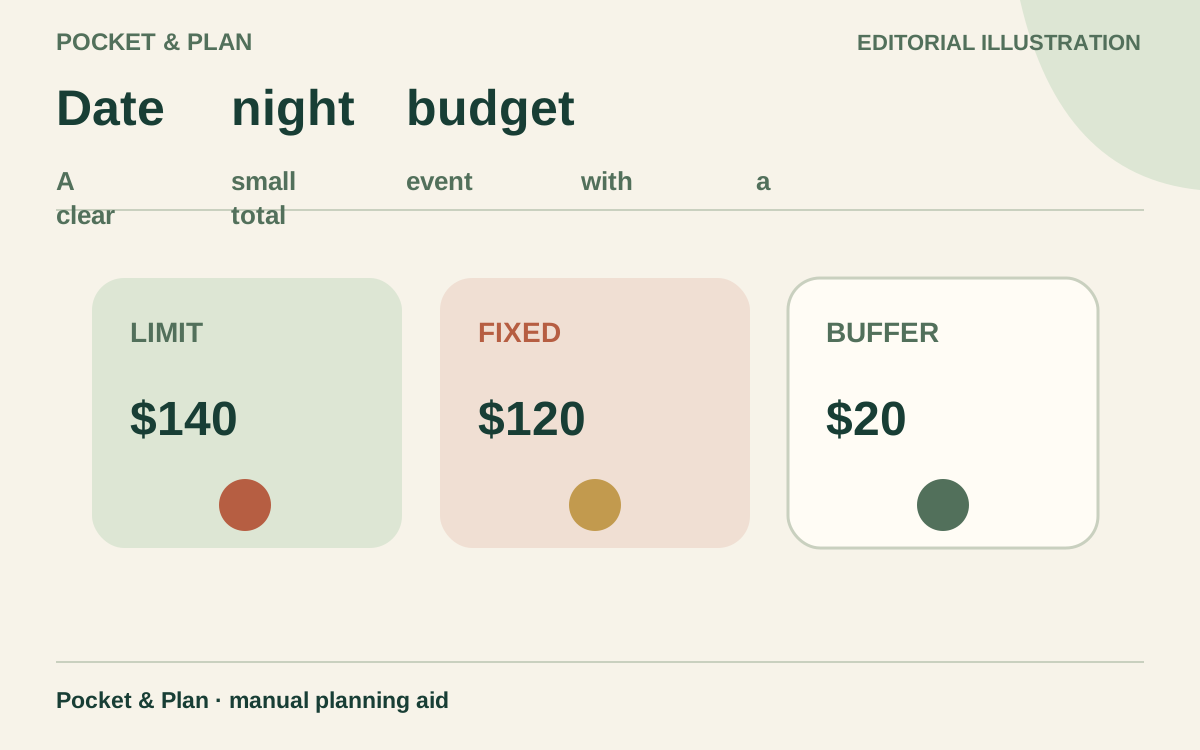
A date night budget keeps the occasion enjoyable by making the limit, transport, food, and optional extras visible before booking.
General educational guide. Sources checked September 11, 2026. Examples are illustrative; amounts should be adjusted to your household. Read our disclosure.
A date night budget is a small event plan. It gives the outing a total limit, places fixed costs first, and leaves optional choices visible rather than allowing them to disappear into a vague “fun” category. The plan can cover a restaurant meal, a movie, a walk with transport, or an activity at home.
Consumer.gov’s budget worksheet treats planned spending as part of the full income-and-expense picture. The CFPB budgeting guide explains that a budget helps compare required costs, saving, and optional spending. This worksheet applies that practice to one outing; it does not judge the kind of date you choose.
Download the date night budget worksheet to set a limit, list costs, and reconcile the actual total. It is a manual planning aid with no current venue or price recommendations.
Set the limit before choosing extras
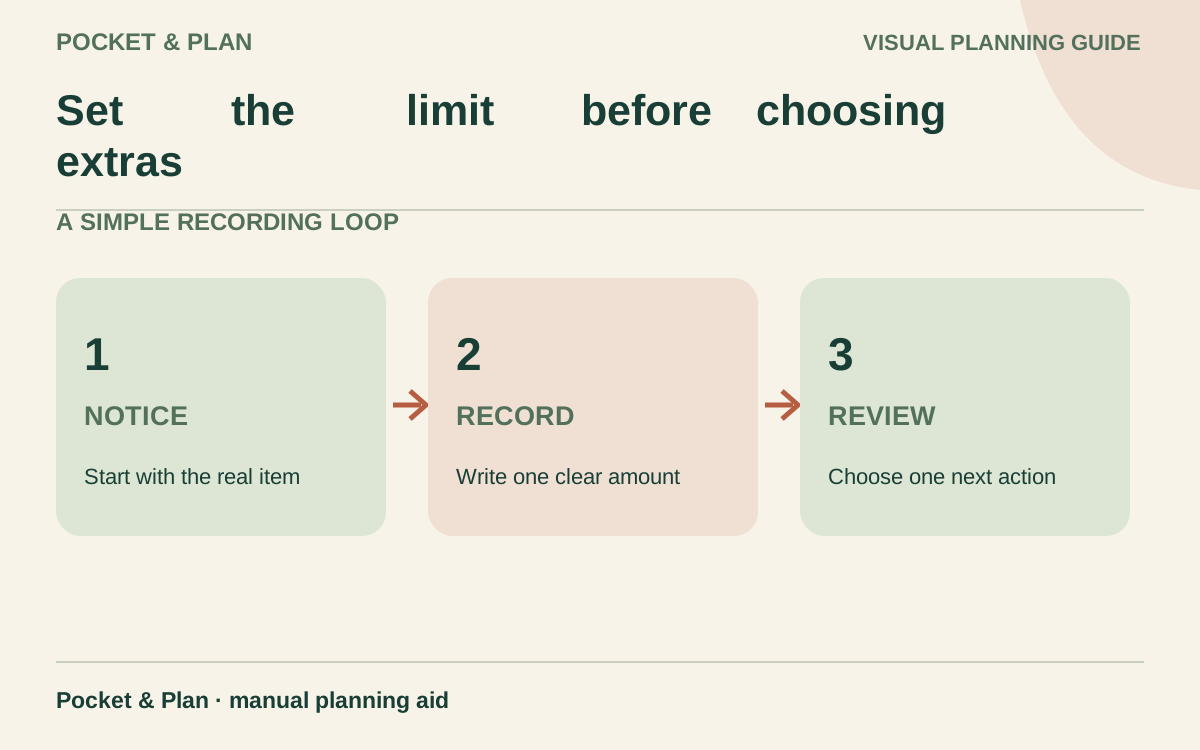
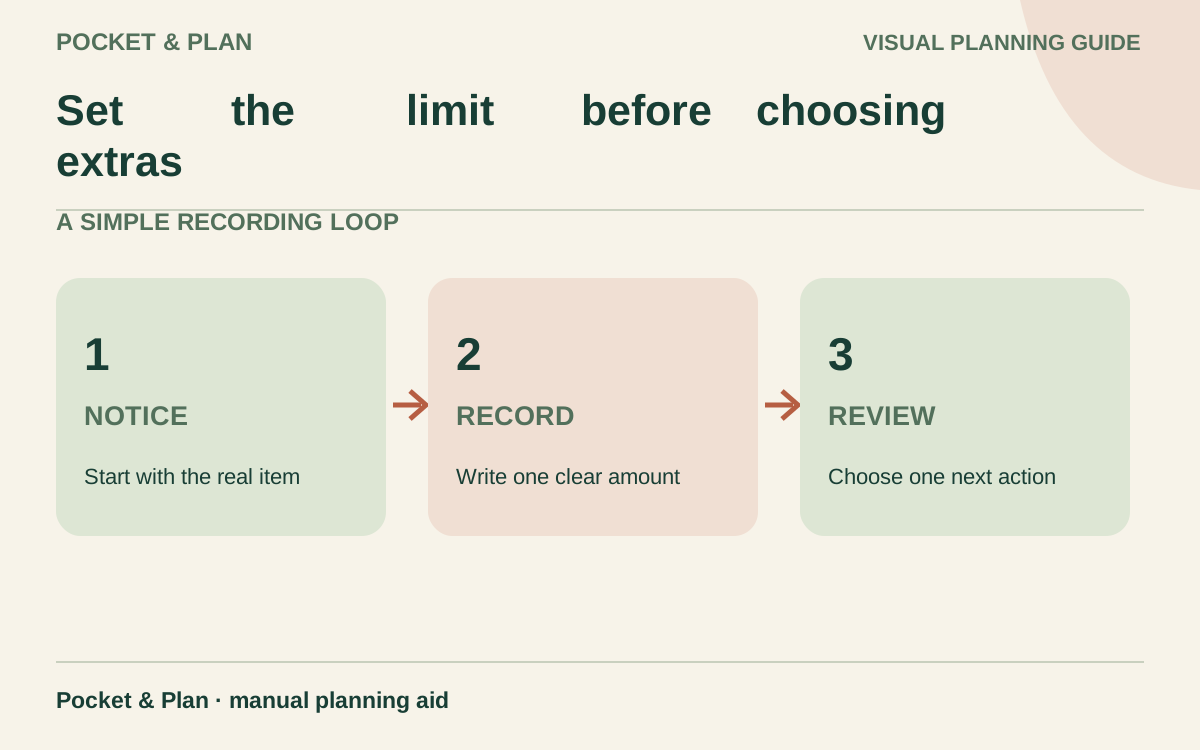
Write the date, people included, available amount, and the source of the money. If the outing is funded from a monthly optional category, reserve that amount before booking. If each person contributes, record the agreed scope without exposing private account information.
Separate costs that must happen from choices you can change. Transport, a ticket, a reservation deposit, or a required fee may be fixed for the plan. Dessert, a second activity, delivery, or an upgrade can be optional. A buffer is not permission to spend; it is a visible amount you can keep or assign deliberately.
The birthday party budget uses a similar fixed-versus-guest-dependent split for a larger occasion. A date night can remain a one-page plan with fewer rows.
Work through one hypothetical outing
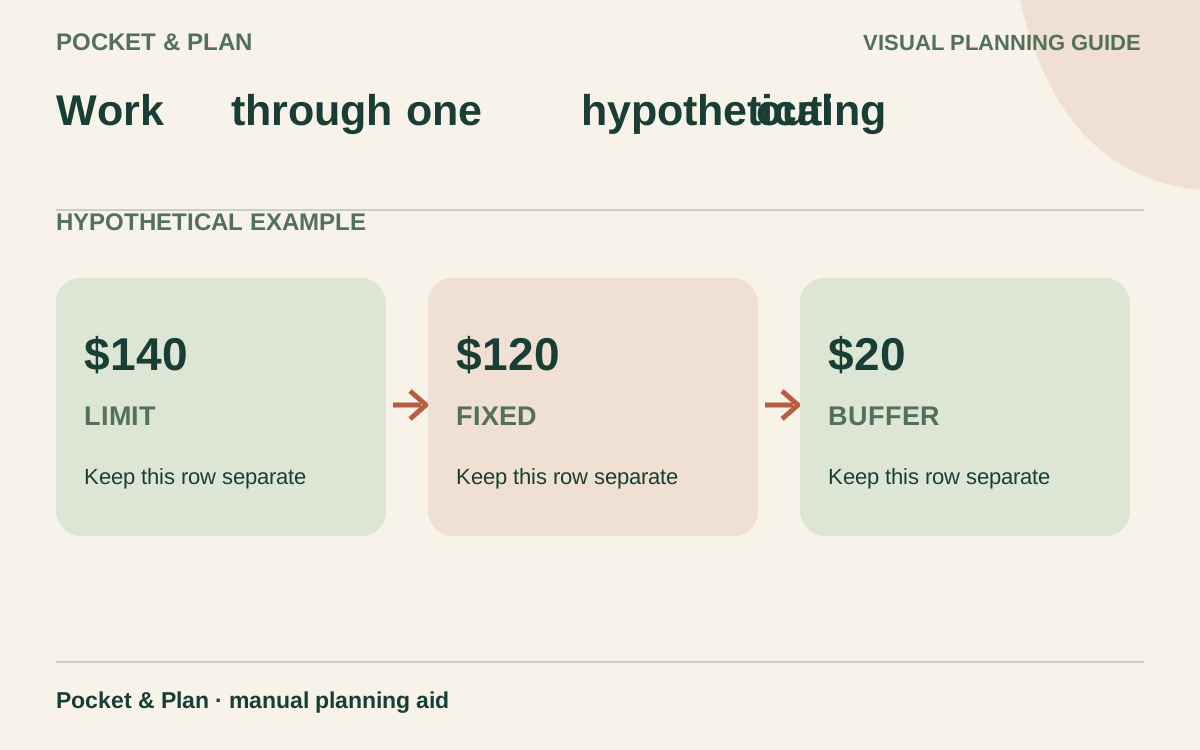
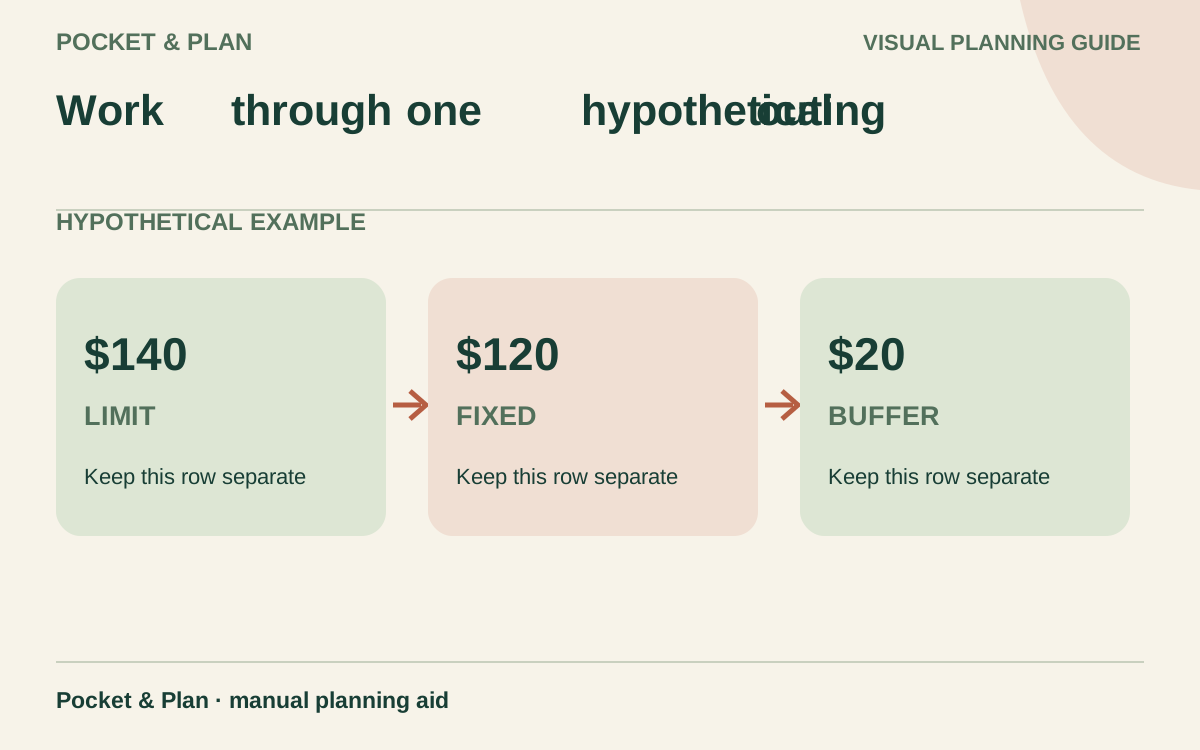
Imagine a fictional evening with a $140 limit. Transport is $24, food is $64, an activity is $32, and a buffer is $20. The planned total is exactly $140.
| Cost | Planned |
|---|---|
| Transport | $24 |
| Food and drinks | $64 |
| Activity | $32 |
| Buffer kept visible | $20 |
| Total limit | $140 |
Suppose the actual transport is $20 and food is $70. The activity remains $32, and the buffer is not automatically reclassified. Actual spending is $122, leaving $18 unassigned within the outing plan. Decide whether to keep it, return it to the broader budget, or use it for a clearly named extra after checking the date’s other commitments.
The amounts are fictional and demonstrate the arithmetic. They are not an expected restaurant, transport, or entertainment price.
Record reservations and payment timing
Write any deposit, cancellation deadline, or prepaid ticket separately from the final cost. A deposit may be part of the total while also creating a cash need before the event. Keep a pending refund or credit outside the available amount until received.
If a bill is paid with a card, record the outing purchase once in the event plan and later record the card payment as a cash movement in the appropriate budget or cash flow record. The daily expense tracker can hold the receipt and refund details without changing the date-night total.
Close the plan after the outing
Compare planned and actual amounts while the receipt is available. Mark what was paid, refunded, shared, or cancelled. A lower total is not automatically savings if a promised deposit or later charge remains pending. Note one useful adjustment for the next outing, such as choosing a different transport window or reserving a smaller activity.
If you are trying a temporary pause on optional purchases, the no-spend month guide can help define the rule and the exceptions. A date night plan can fit inside that rule only when the household has explicitly included it.
Sources & verification
These primary reference sources support the guide. Worked examples are our own illustrations, not national averages or reported personal results.
- Consumer.gov — Budget worksheet ↗Checked September 11, 2026
- CFPB — Budgeting: how to create a budget and stick with it ↗Checked September 11, 2026
Published · Last substantive update .
Found a factual error or a calculation that needs checking? Suggest a correction by email with this guide's link. The link opens a draft in your email app; you send it yourself. Contact details · Corrections policy