The short answer
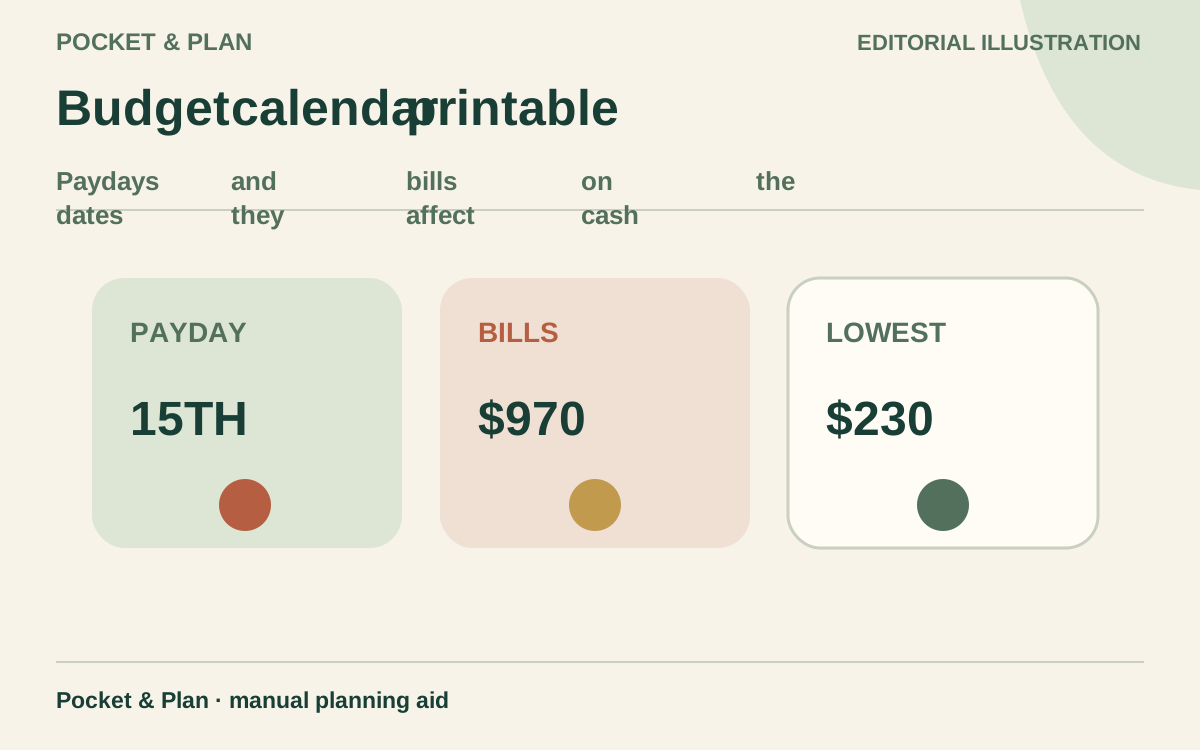
A calendar view adds dates and cash timing to a category plan so the next tight week is visible before it arrives.
General educational guide. Sources checked September 11, 2026. Examples are illustrative; amounts should be adjusted to your household. Read our disclosure.
A budget calendar printable gives each payday, bill, transfer, and planned purchase a real date. Category totals still matter, but the calendar answers a different question: what will the running balance be after the transactions scheduled before the next deposit?
Consumer.gov’s budget process starts with income and expenses and asks you to compare actual spending with the plan. The CFPB cash flow tool carries a period’s ending balance into the next period. A calendar is a practical way to place those same movements on dates.
Download the budget calendar printable for a monthly date grid and a dated cash ledger. It is a manual worksheet with no account connection or automatic alerts.
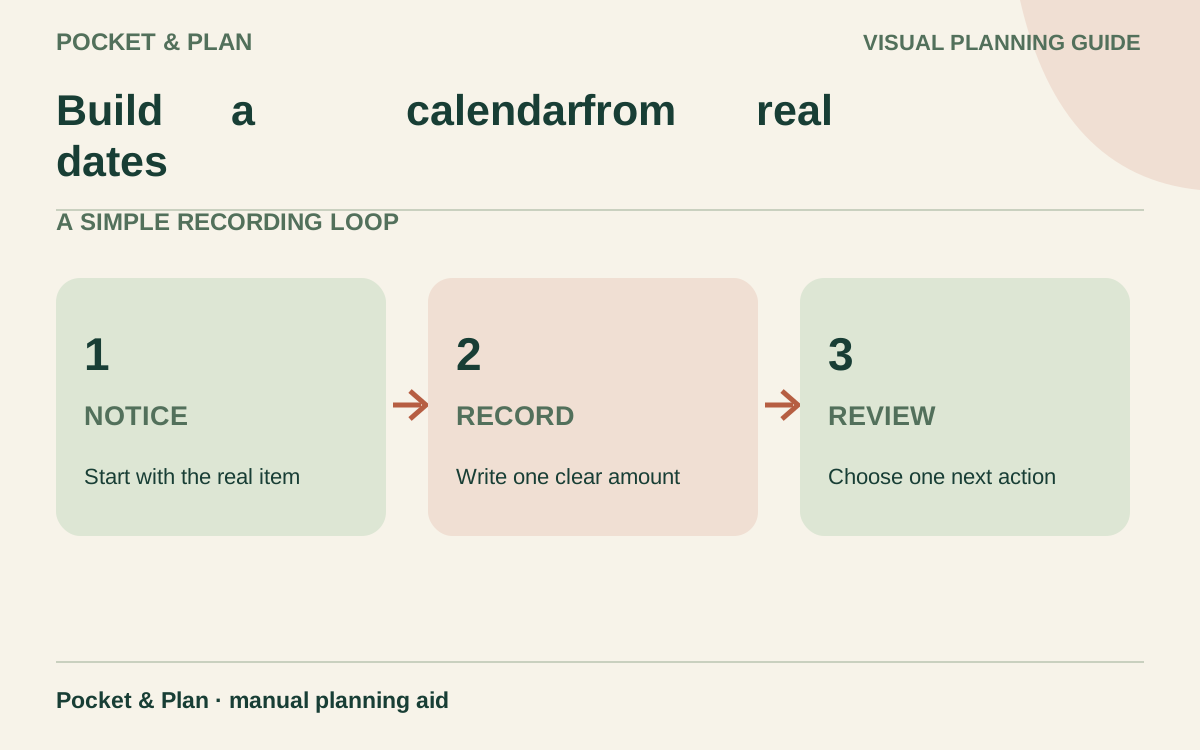
Build a calendar from real dates
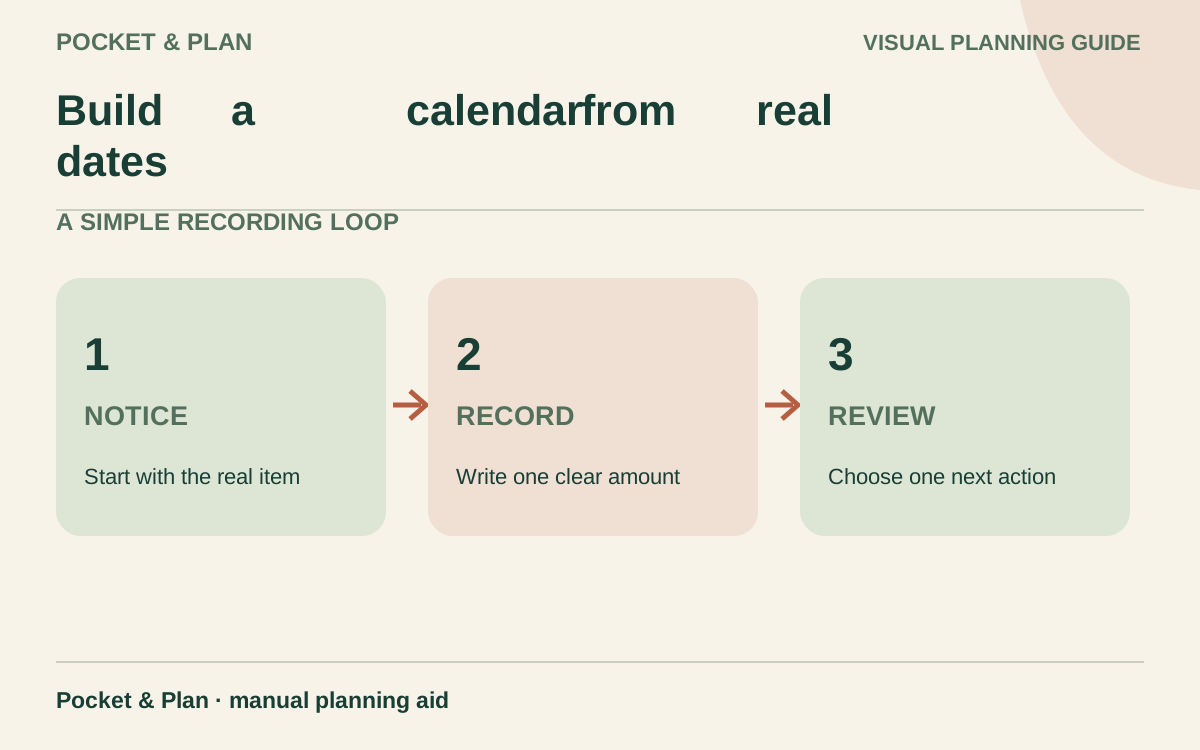
Write the month and the opening balance date first. Add confirmed paydays and label any expected income as pending. Then place bills on the dates funds will leave the account, not on the date you happen to remember them. Include automatic payments, card payments, transfers to a reserve, and recurring cash withdrawals when they reduce the balance you are forecasting.
Keep a bill’s status separate from its place on the calendar. The bill payment tracker can record whether a payment is scheduled, pending, cleared, or needs follow-up. The calendar’s job is to show when that outflow affects available cash.
If an amount is unknown, write “estimate” and preserve the row. Replacing an unknown with zero makes the running balance look safer than the evidence supports. Update the calendar when the statement or payment confirmation arrives.
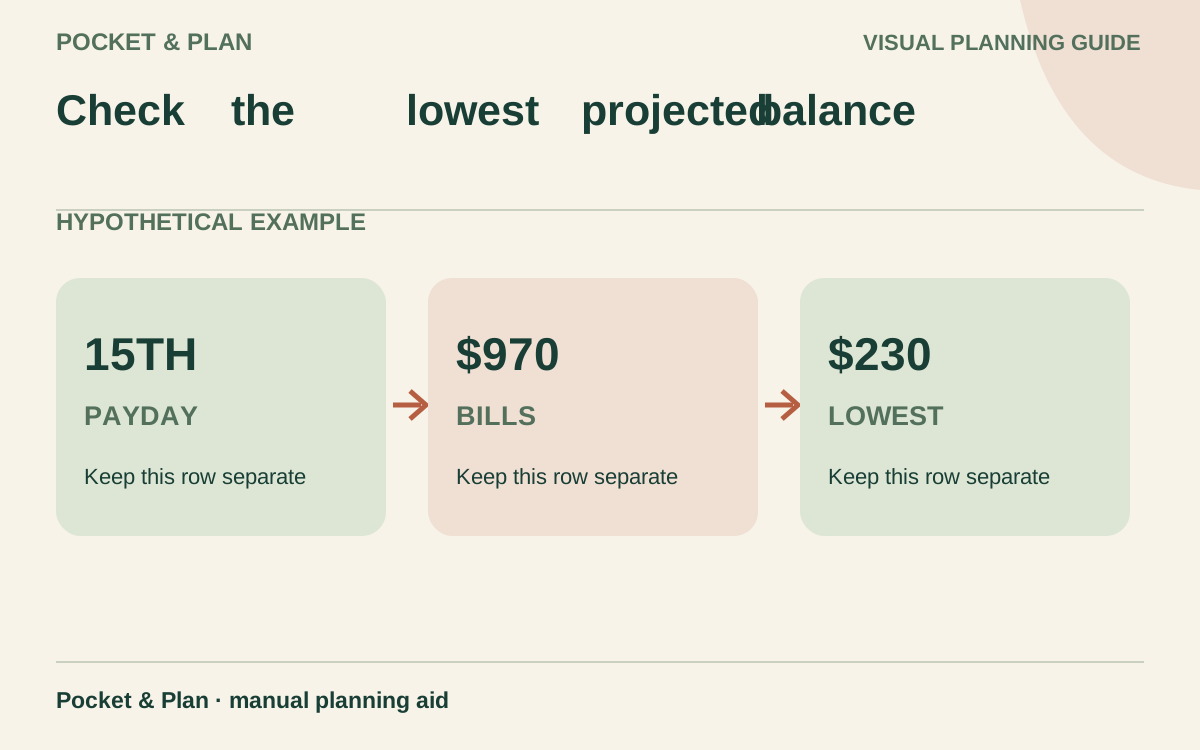
Check the lowest projected balance
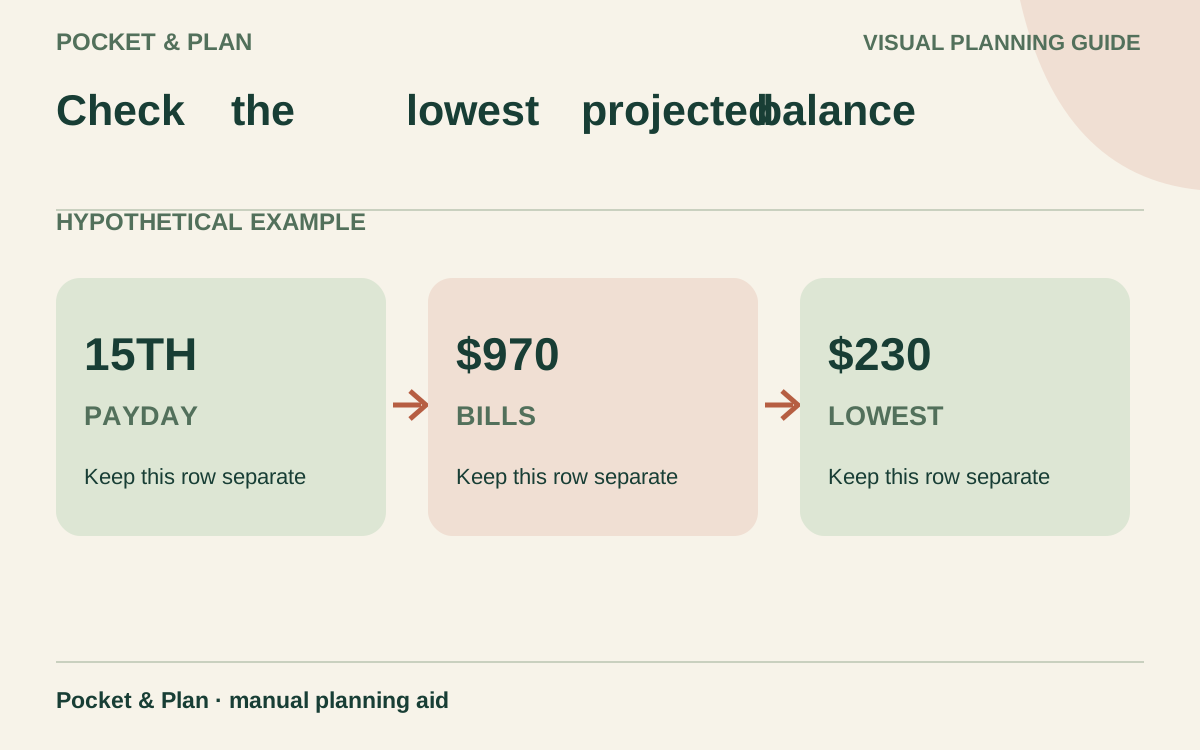
Imagine an invented month with $1,200 opening cash and an $1,800 payday on the 15th. Before that payday, rent of $850 and utilities of $120 leave $230. After the payday, a card payment of $300 and a planned grocery purchase of $180 are scheduled.
| Calendar line | Running balance |
|---|---|
| Opening cash | $1,200 |
| Rent and utilities before payday | $230 |
| Payday on the 15th | $2,030 |
| Card payment and groceries afterward | $1,550 |
The arithmetic shows why the lowest balance is $230, not the $1,550 end-of-month figure. A $230 low point may be workable or may require a change depending on the household’s other commitments. These amounts are fictional and demonstrate the date sequence only.
Keep category plans beside the dates
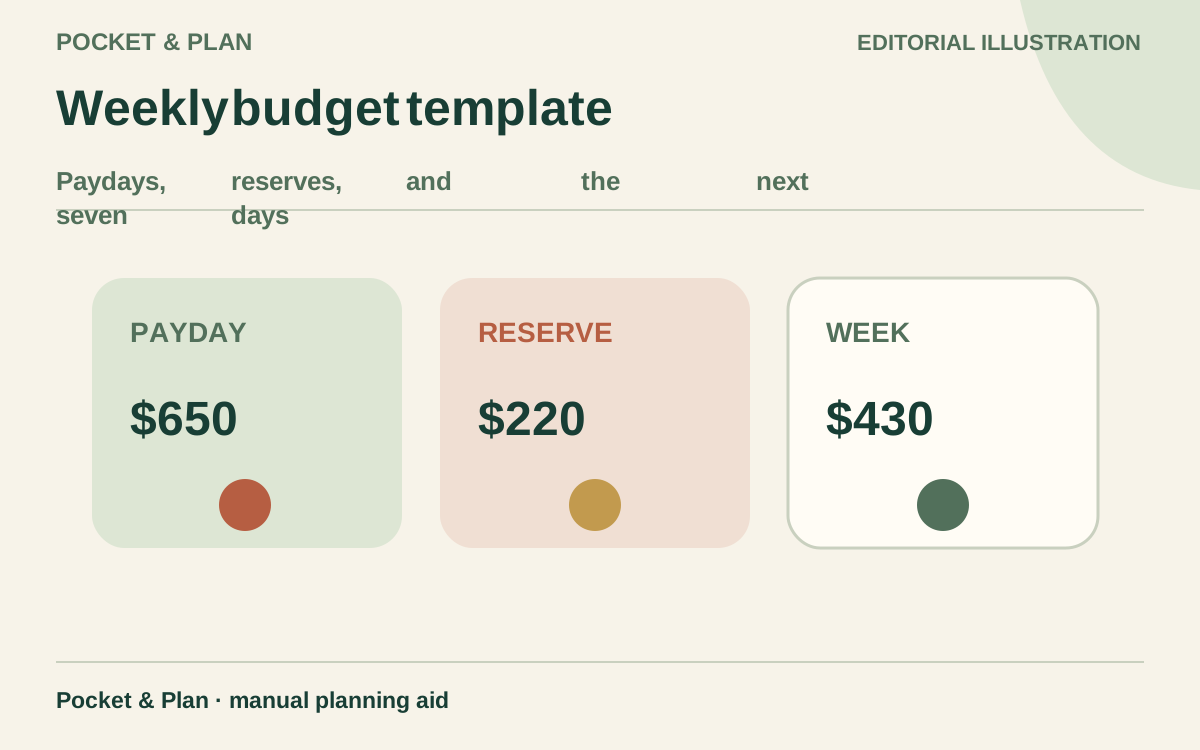
The calendar should link back to a category or purpose. For example, label the $180 grocery line with the meal plan or use the weekly budget template to show which payday funds it. This prevents the same amount from being assigned once by category and again as free cash on a date.
If a reserve is already held for a bill, keep it in the opening balance but mark it as unavailable for other uses. When the bill clears, record the outflow once. Do not subtract the reserve before the bill and then subtract the bill again unless the reserve is kept in a different account whose transfer is also being forecast.
Review the next tight date before it arrives
Scan for the lowest projected balance and for any date with multiple outflows. Confirm the source of each expected deposit, then write one action and its deadline: move an optional purchase, confirm a bill amount, or ask a provider a specific question. A calendar reveals the decision window; it does not decide which financial arrangement is suitable.
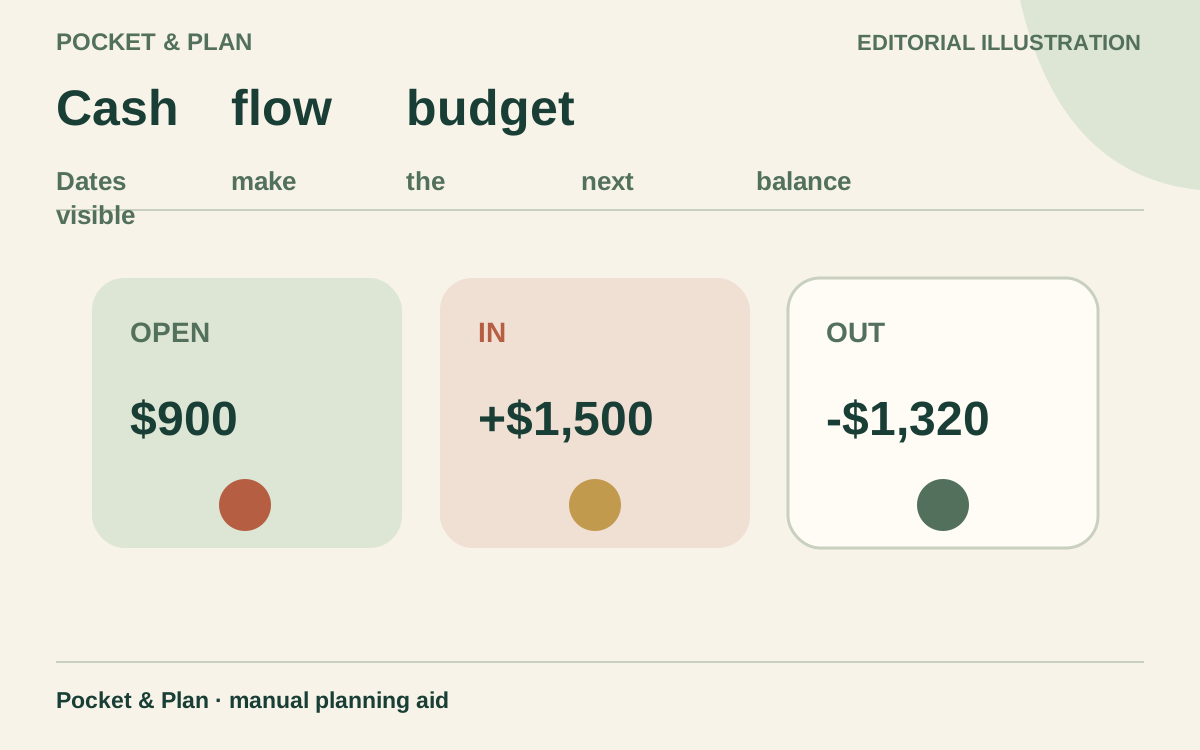
Carry completed dates into the next review with actual amounts. For a full week-by-week forecast, use the cash flow budget. For a four- or five-payday month, the weekly budget template keeps the monthly reserve visible while the calendar handles the exact dates.
Sources & verification
These primary reference sources support the guide. Worked examples are our own illustrations, not national averages or reported personal results.
- Consumer.gov — Making a budget ↗Checked September 11, 2026
- CFPB — Creating a cash flow budget ↗Checked September 11, 2026
Published · Last substantive update .
Found a factual error or a calculation that needs checking? Suggest a correction by email with this guide's link. The link opens a draft in your email app; you send it yourself. Contact details · Corrections policy