The short answer
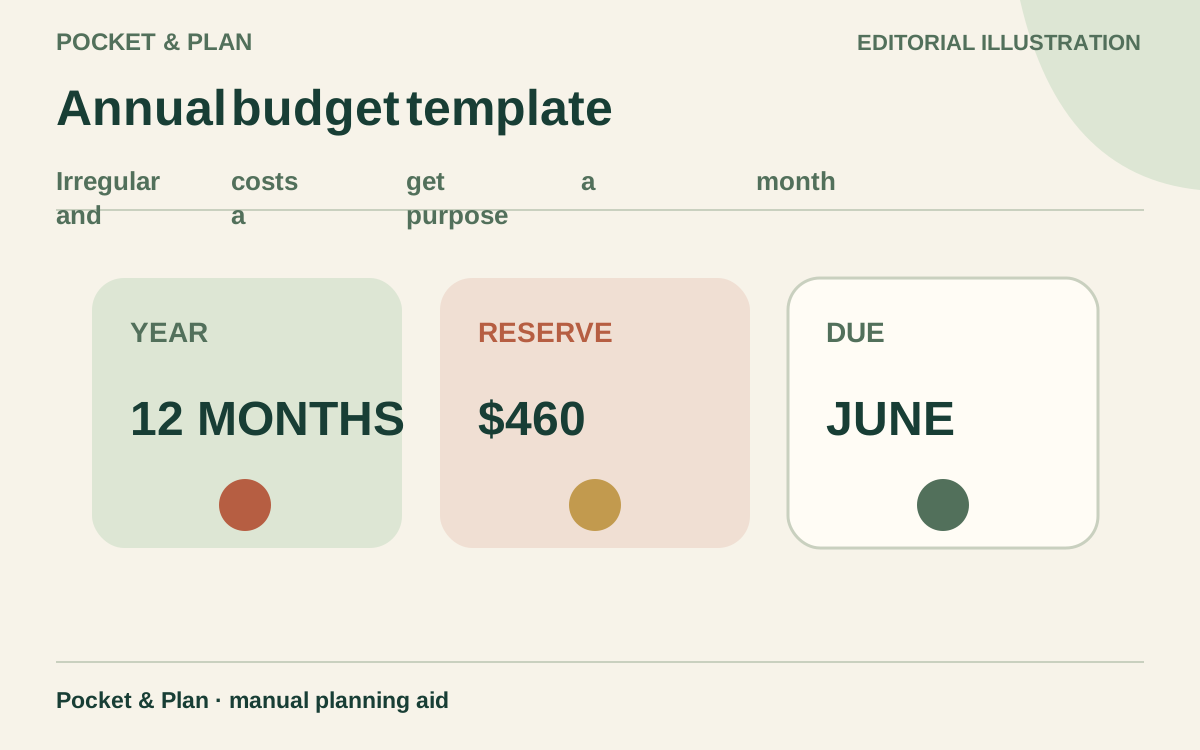
An annual budget gives infrequent costs a month, a purpose, and a funding decision without pretending every month looks the same.
General educational guide. Sources checked September 11, 2026. Examples are illustrative; amounts should be adjusted to your household. Read our disclosure.
An annual budget template is a map for costs that do not arrive every month. It can show a yearly total, the month a bill is expected, money already reserved, and the periods in which a contribution is realistic. It is a planning view, not a claim that income or expenses will remain unchanged.
The CFPB spending guide recommends looking back over several months so less frequent expenses such as insurance, gifts, school costs, and vacations are not missed. Consumer.gov’s budget worksheet provides the basic income-minus-expenses structure. The annual view adds a second layer for timing.
Download the annual budget template to list yearly costs and a funding schedule. It is a manual worksheet with no automatic forecasts or bank connection.
Start with a twelve-month evidence list
Choose the year and the household scope. Review statements, receipts, calendars, and existing agreements for the last several months. Write the cost, expected month, amount currently known, and whether it is recurring, one-time, or still uncertain.
Separate an annual bill from a monthly bill multiplied by twelve. A subscription that truly renews monthly belongs in the monthly plan; a renewal that occurs once a year needs its own due month and reserve. Keep the evidence date beside an estimate so the next review knows what to confirm.
Include irregular costs that are easy to forget: school supplies, registration, travel, gifts, insurance renewals, maintenance, and annual fees. A blank row is safer than silently assuming an irregular cost is zero.
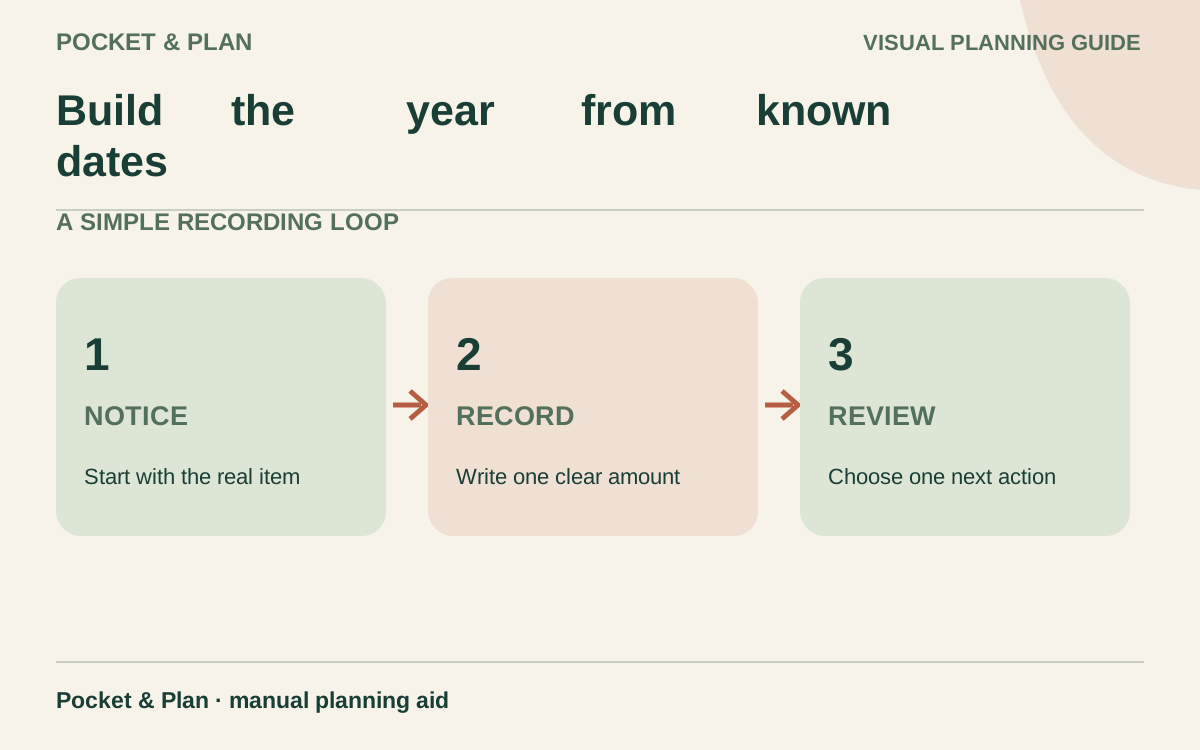
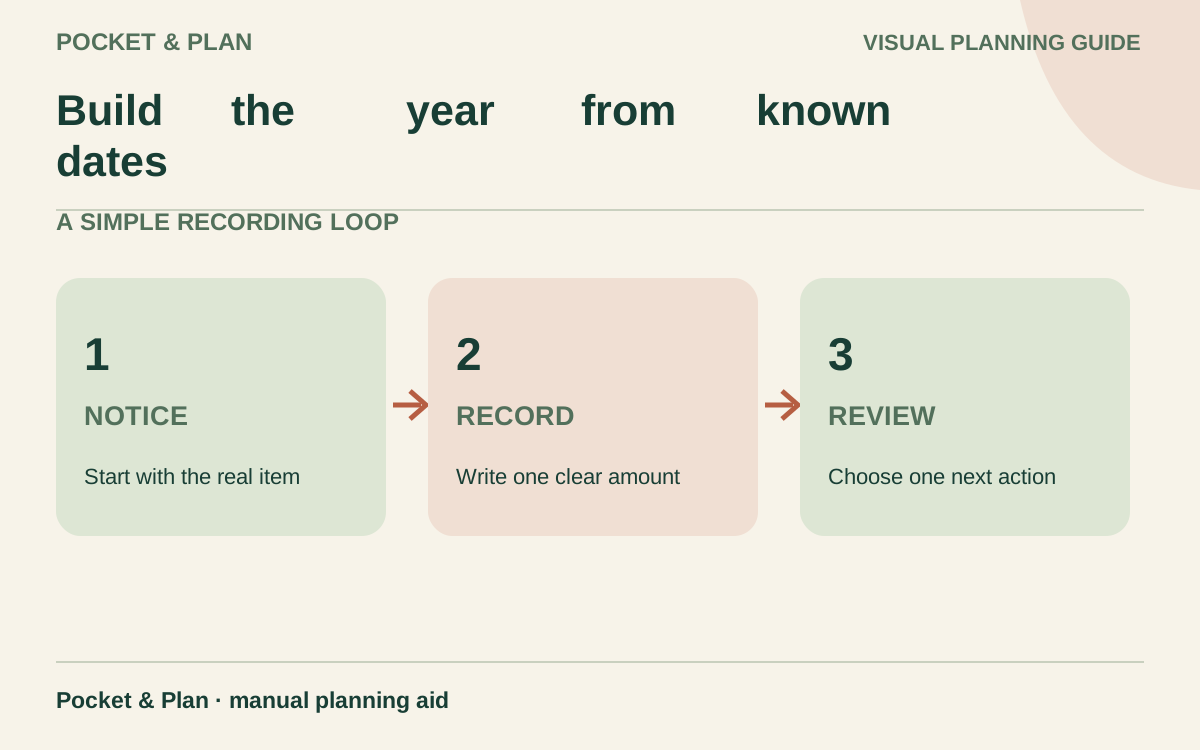
Build the year from known dates
For each line, record four decisions:
- What is the cost or target, and what source supports it?
- Which month or date needs the money?
- How much is already reserved for that purpose?
- Which future periods can contribute without creating a shortfall?
The sinking funds guide can hold a target for a known future cost. The annual worksheet keeps the broader calendar visible so several targets do not all appear to be funded by the same dollars.
If income is irregular, place contributions on actual expected deposit dates and label them as planned until received. Use the cash flow budget to check whether a contribution arrives before the bill. Do not smooth a seasonal bill into twelve equal payments unless that is a real choice your household can make.
Turn a yearly total into monthly actions
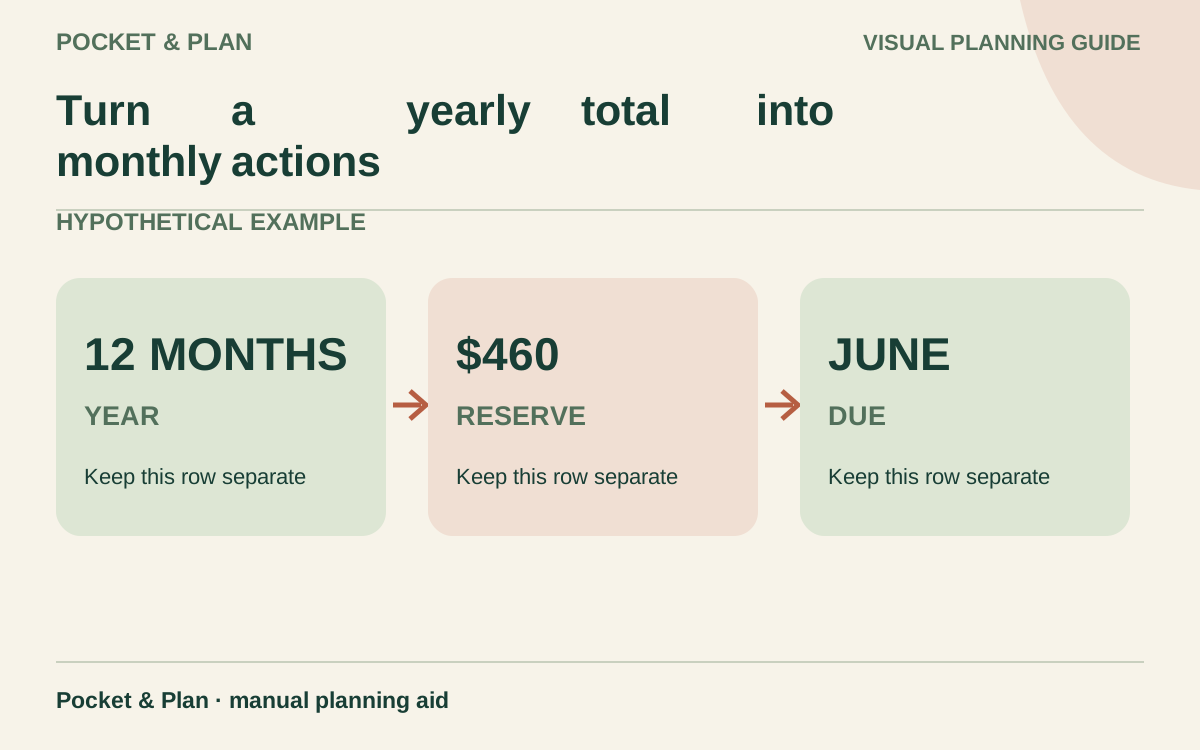
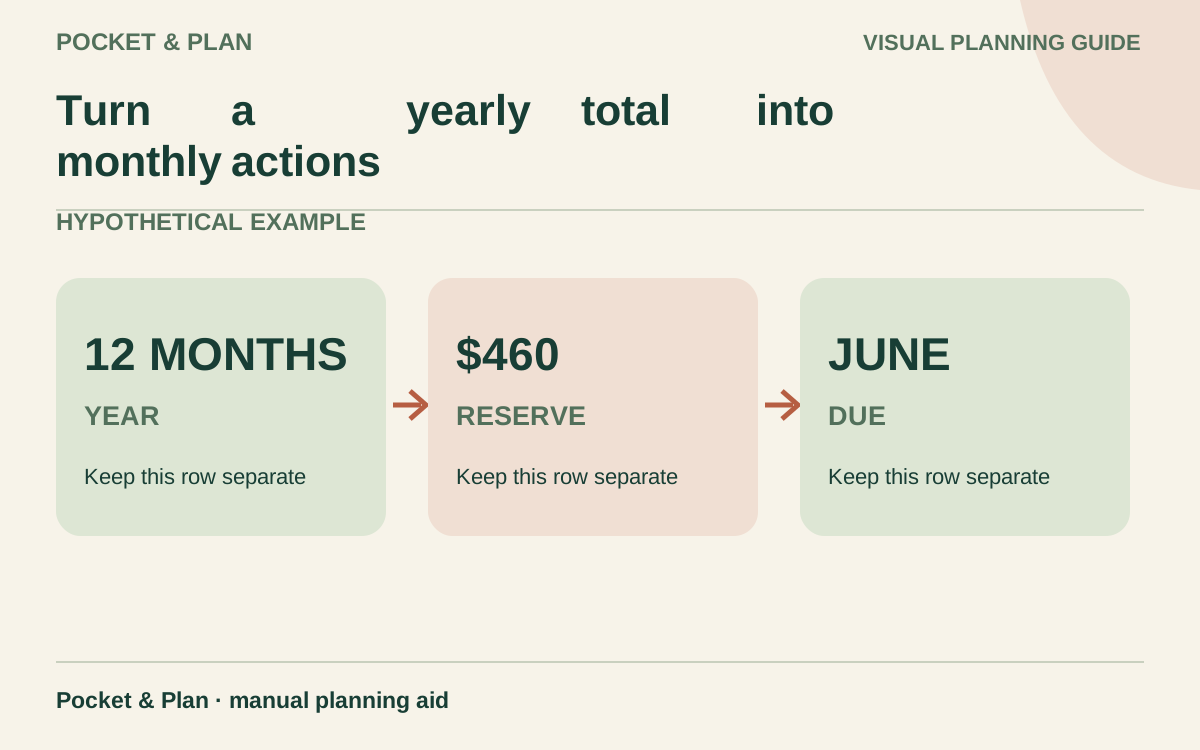
Imagine an invented plan with a $1,200 insurance renewal in June, $600 of gifts spread across November and December, and $360 of repairs in March and September. The annual total is $2,160. A simple even contribution would be $180 per month, but the household may already have a reserve and may not be able to contribute the same amount each month.
| Yearly line | Target | Reserved now | Remaining |
|---|---|---|---|
| Insurance renewal | $1,200 | $300 | $900 |
| Gifts | $600 | $100 | $500 |
| Repairs | $360 | $60 | $300 |
| Total | $2,160 | $460 | $1,700 |
One possible schedule assigns $300 over three months before the insurance date, $250 across five months before gifts, and $150 across six months before repairs. The arithmetic demonstrates how a target can become dated actions; it is not a recommended contribution or a typical cost.
Carry the annual plan into each month
At the start of a month, bring forward only the rows that affect that period. Confirm the amount, note the reserve, and connect the contribution or payment to the monthly budget. The monthly money reset is a useful checkpoint for reconciling what arrived and what remains assigned.
When a cost changes, update the annual total and the remaining funding gap. Do not delete the original estimate; a short note explains why the month changed. If a cost is no longer needed, mark the row closed and decide where genuinely unassigned money belongs.
Review the calendar quarterly and after a major income or household change. A sustainable annual budget is a maintained record with clear dates, sources, and decisions, rather than one fixed percentage applied to every month.
Sources & verification
These primary reference sources support the guide. Worked examples are our own illustrations, not national averages or reported personal results.
- CFPB — Assess your spending ↗Checked September 11, 2026
- Consumer.gov — Budget worksheet ↗Checked September 11, 2026
Published · Last substantive update .
Found a factual error or a calculation that needs checking? Suggest a correction by email with this guide's link. The link opens a draft in your email app; you send it yourself. Contact details · Corrections policy