The short answer
Understand the $5,050 arithmetic, choose a realistic contribution limit, and use a smaller or digital version when the classic challenge does not fit.
General educational guide. Sources checked September 10, 2026. Examples are illustrative; amounts should be adjusted to your household. Read our disclosure.
The classic 100 envelope savings challenge labels envelopes from 1 to 100 and puts the matching dollar amount in each one. Filling every envelope once produces $5,050 in contributions. You can track the same amounts digitally, change the scale, or take longer than 100 days.
The total is arithmetic, not a promise that the money will become affordable. Choose contributions from funds you can actually set aside after essential needs and commitments are covered.
Download the 100-envelope tracker PDF for the classic $1 to $100 amounts and a separate transaction record. Mark a label only when its exact printed amount is funded, and record withdrawals without erasing the history. Smaller versions need a separately labeled plan; this PDF uses the classic amounts only. It is a manual worksheet for handwriting, with no automatic calculations. Print on US Letter paper in portrait orientation.
Understand where the $5,050 comes from
Pair the first and last labels: 1 + 100 = 101. The next pair is 2 + 99 = 101. There are 50 pairs, so the total is 50 × $101 = $5,050.
This calculation assumes you fund every numbered envelope once and make no withdrawals. It excludes interest and fees. Buying a binder, downloading a tracker, or coloring a square does not create savings; the money must actually be reserved for the goal.
There is also no mathematical requirement to finish in 100 days. One envelope per deposit means 100 deposits. Your schedule depends on your available money and the amounts you select.
Choose the goal before choosing the pace
Give the challenge a purpose: a planned expense, a reserve, or another priority in your household budget. The CFPB’s savings-goal article discusses setting a goal and reviewing a plan against results. It does not specifically recommend the 100 envelope challenge.
Look at your next pay period before deciding how much to contribute. Keep housing, enough food, healthcare needs, necessary transportation, and required payments in the plan. Do not borrow money or leave essentials unfunded to complete a numbered envelope.
Compare smaller versions honestly
You can preserve the numbered format while scaling the dollar amount:
| Version | Amount for each label | Total if completed |
|---|---|---|
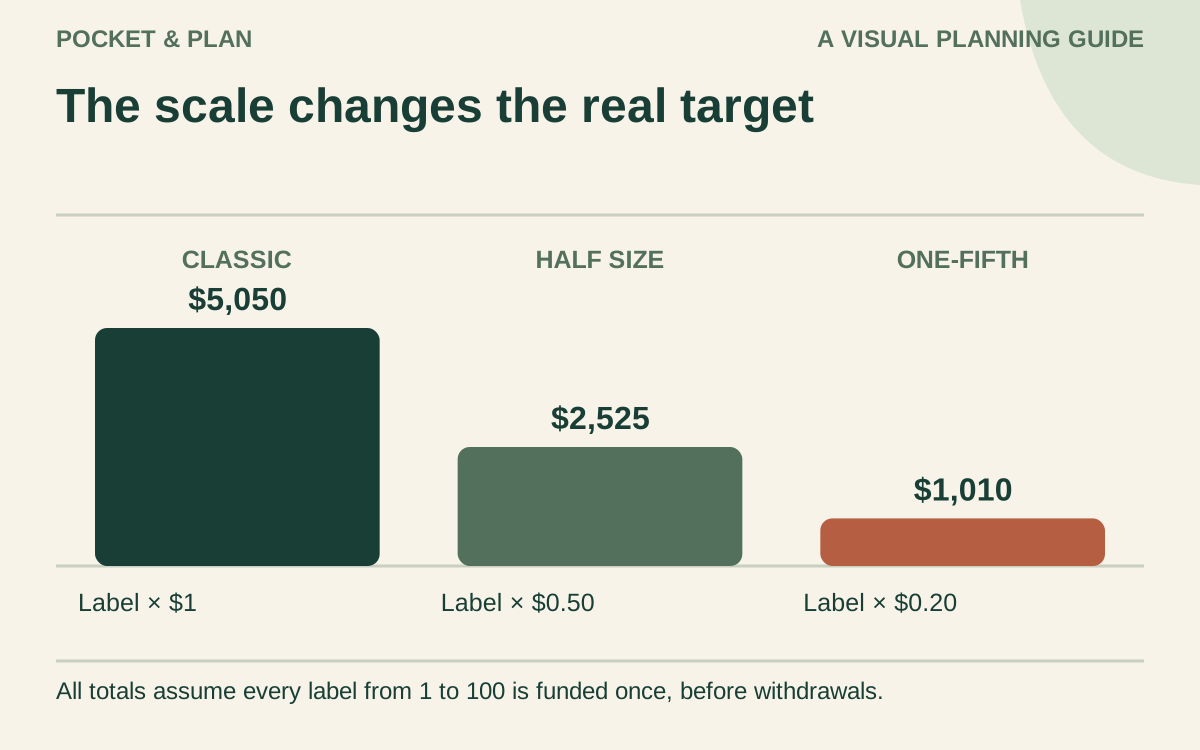
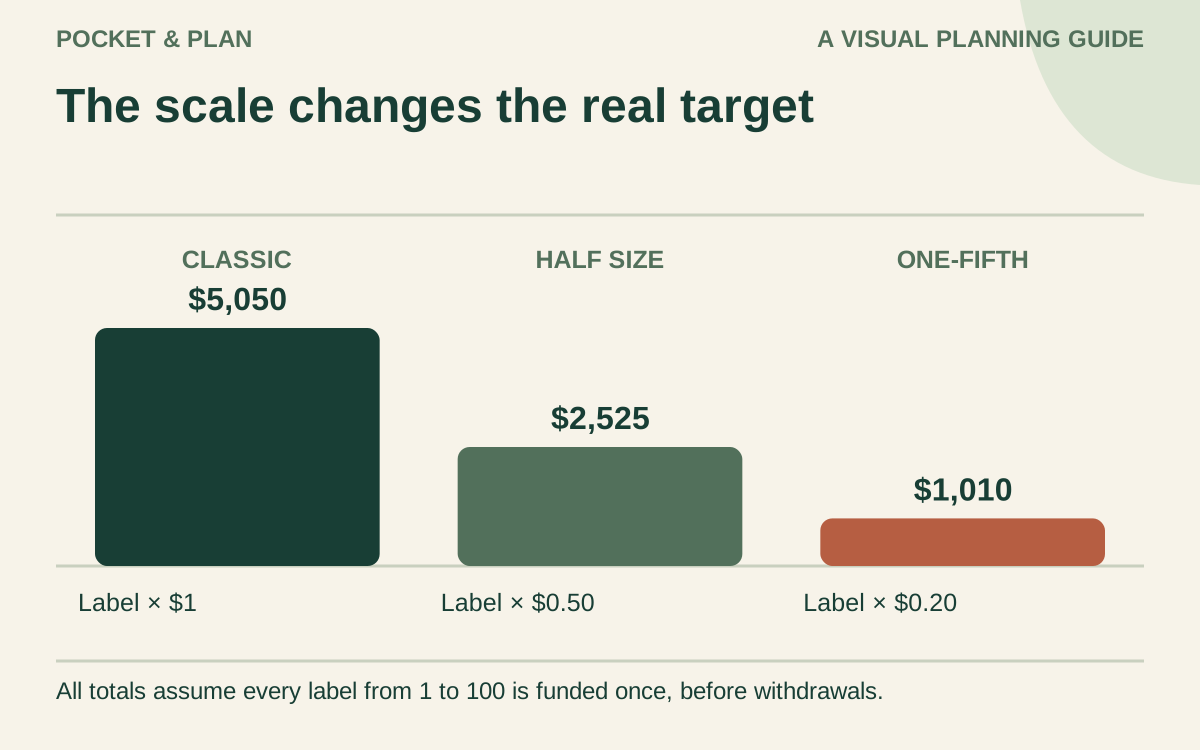
| Classic | Label × $1 | $5,050 |
| Half size | Label × $0.50 | $2,525 |
| One-fifth size | Label × $0.20 | $1,010 |
All three totals assume 100 completed labels and no withdrawals. A smaller version is a different savings target, so label it accurately rather than promising the classic total.
You can also choose a fixed contribution instead. Forty deposits of $25 total $1,000. That is not the classic challenge, but it may be easier to schedule. Use the savings planner to compare your target with an amount and timeline you can manage.
Walk through an affordable hypothetical deposit
Suppose Devon has reviewed the budget and can set aside up to $40 this payday. Devon chooses the one-fifth version, where each label is multiplied by $0.20.
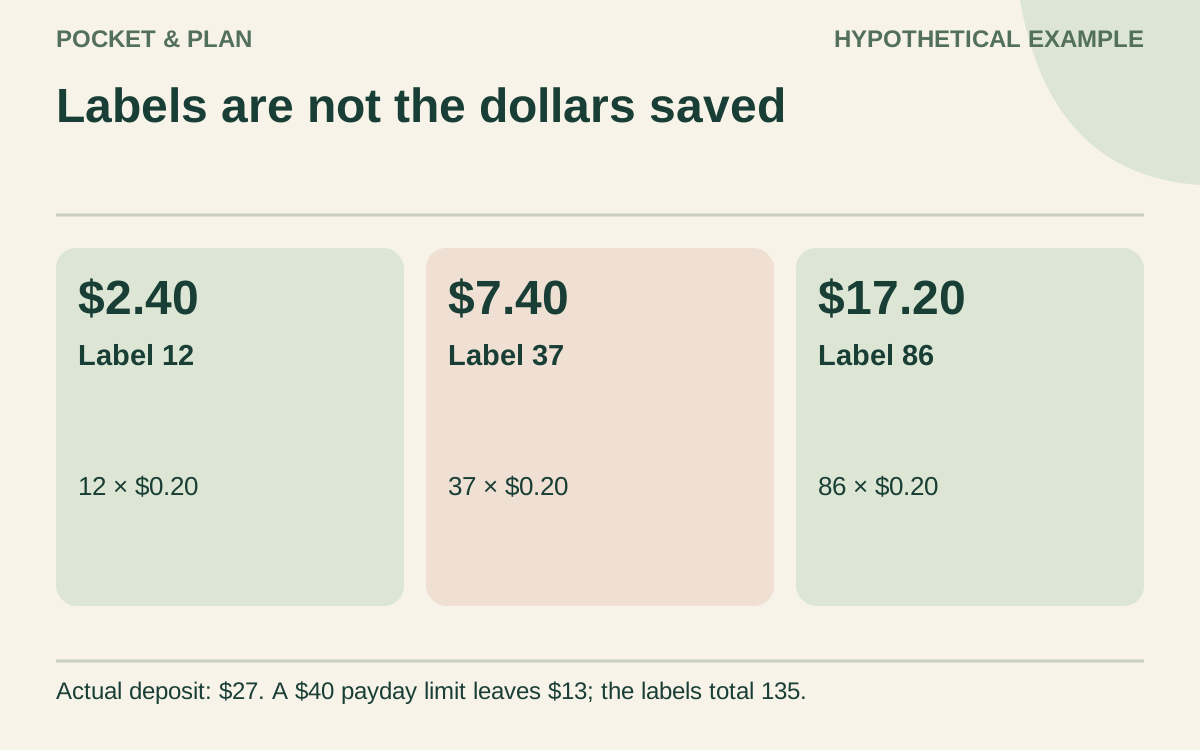
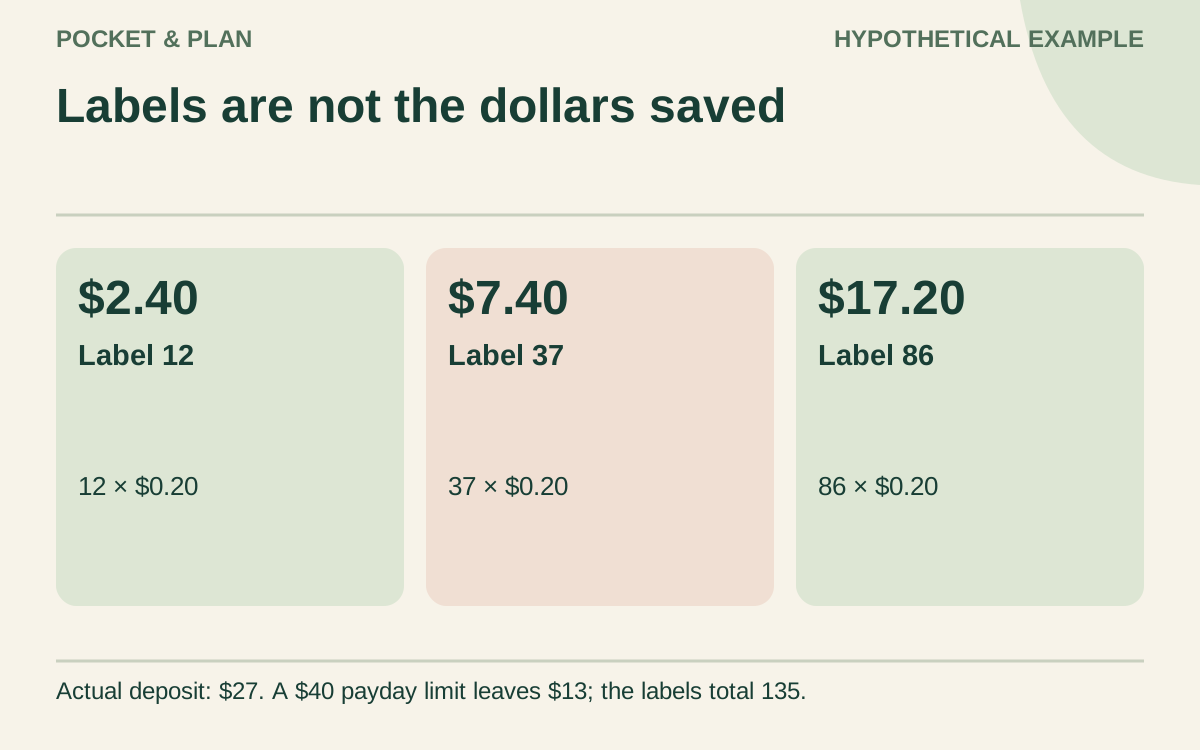
Funding labels 12, 37, and 86 requires $2.40 + $7.40 + $17.20 = $27. Devon transfers $27 into the chosen savings location and marks those three labels complete. There is $13 left within the $40 limit; it can remain unassigned or receive another deliberate purpose.
Devon does not mark $135 saved just because the label numbers add to 135. The actual contribution is $27. If the next payday has no available contribution, pausing keeps the record accurate without creating a new obligation.
Choose the amounts instead of forcing a random draw
Random selection can make the next required amount unpredictable. Selecting unfunded labels that fit the current contribution limit is another option. Keep a record of completed labels so you do not count one twice.
Avoid leaving only large amounts for a deadline you cannot meet. Review the remaining target periodically and adjust the timeline or scale if needed. Our biweekly budget template helps place contributions beside the rest of each paycheck’s assignments.
Keep the money and the tracker in agreement
Paper envelopes are optional. A numbered sheet can track contributions held elsewhere. If you use cash, consider how much to keep at home: the CFPB emergency-fund guide notes that physical cash can be lost, stolen, or destroyed.
Reconcile the tracker’s total with the money actually reserved. If you need to withdraw some, record it and show the new balance. Your goal is money available for its purpose, not an uninterrupted display of completed squares. For a known future bill, connect the balance to a named sinking fund.
Keep a savings transaction ledger beside the numbered sheet so deposits and withdrawals explain the current balance even when completed challenge marks stay visible.
For a smaller numbered target with a weekly cadence, compare the 52-week savings plan: its classic schedule totals $1,378, with fixed and reduced-contribution versions you can assess against your budget.
Sources & verification
These primary reference sources support the guide. Worked examples are our own illustrations, not national averages or reported personal results.
- CFPB — Set a goal, make a plan, and save automatically ↗Checked September 10, 2026
- CFPB — An essential guide to building an emergency fund ↗Checked September 10, 2026
Published · Last substantive update .
Found a factual error or a calculation that needs checking? Suggest a correction by email with this guide's link. The link opens a draft in your email app; you send it yourself. Contact details · Corrections policy